Barracudas
barracuda
Sphyraena argentea
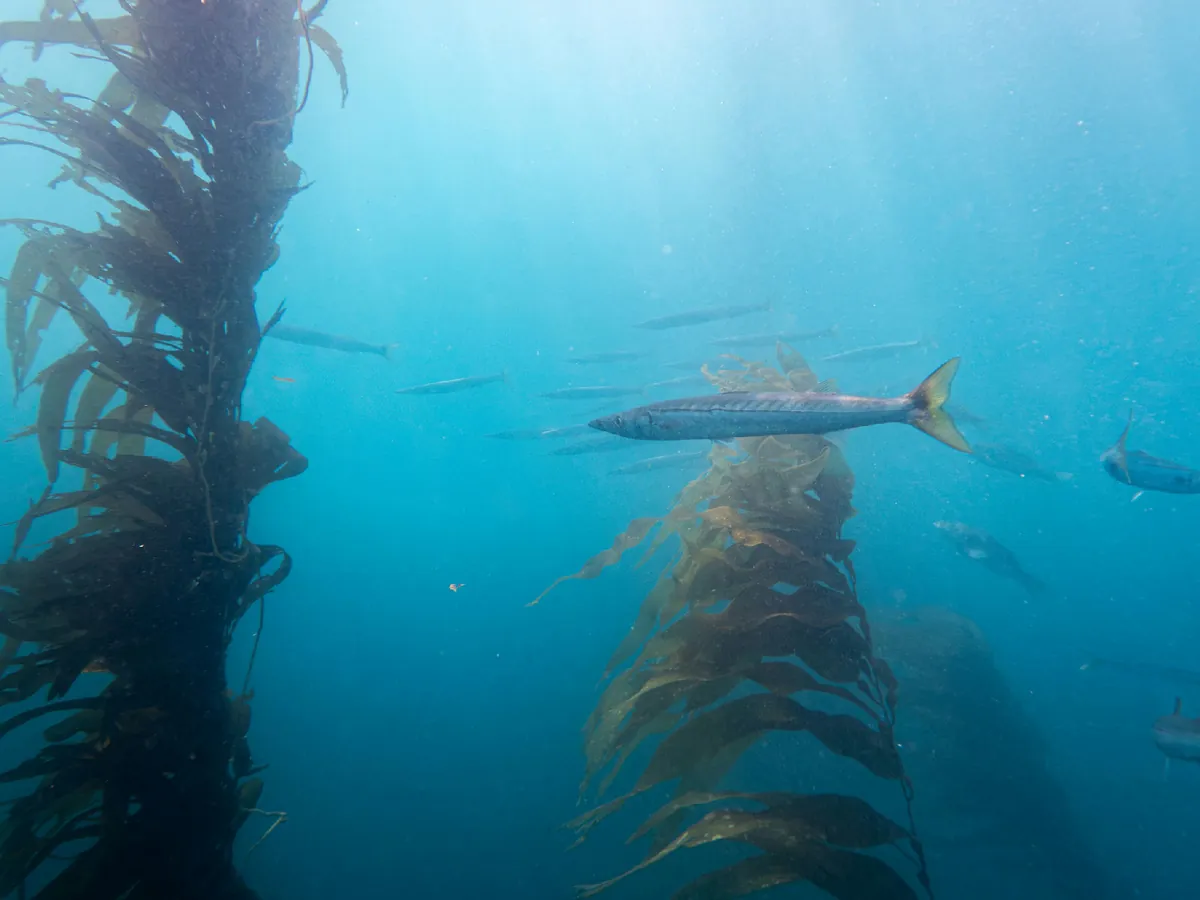
The Pacific barracuda is a slim, fast-swimming predator of the northeast Pacific and a favourite catch for anglers in Southern California. Despite its fearsome mouth, it is far less dangerous to people than its Atlantic cousin, the great barracuda.
Also known as: california barracuda
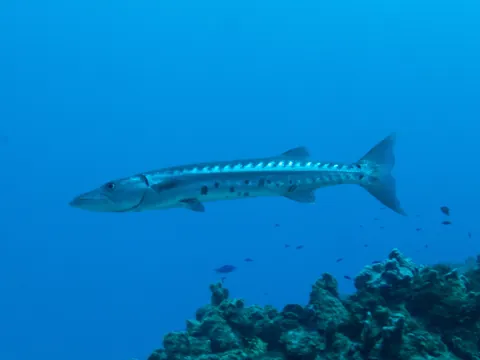
Barracudas are often confused with each other, but this species has no dark bars or spots anywhere on its body, unlike the great barracuda and most other barracuda species, and its back has a distinct silvery shine.
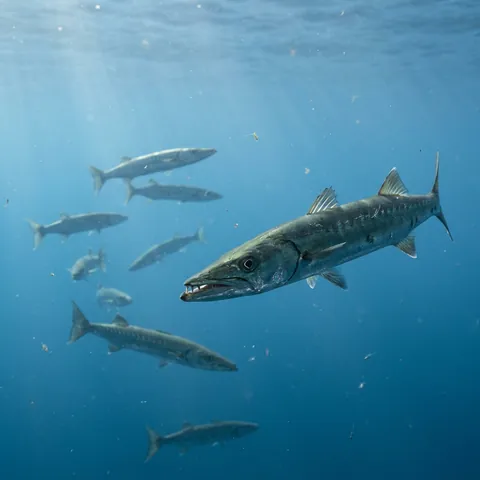
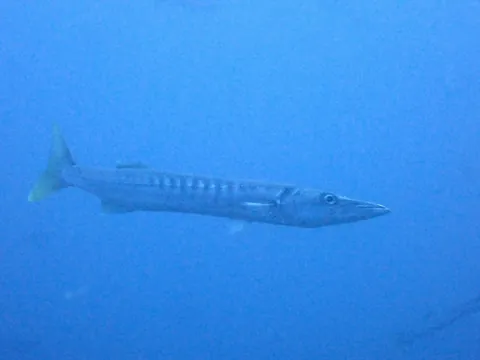
This fish has a long, slender, cylindrical body and a long, pointed snout. It is pale bluish to pale brown along its front sides with a shiny, silvery back, small scales, and no bars or spots anywhere on its body. Its mouth is packed with sharp, fang-like teeth, and its lower jaw juts out past the upper one. The tail fin is deeply forked, and its two dorsal fins sit well apart from each other.
It lives in offshore waters of the northeast Pacific, mainly along the California coast down to the tip of Baja California, though it can range as far north as Alaska and south to Panama. Adults tend to stay closer to shore, while young fish sometimes turn up in shallow bays, lagoons, and brackish water. In winter, shoals migrate south toward Baja California.
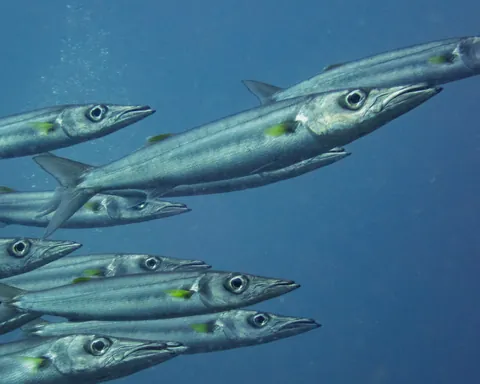
This is an aggressive hunter of small fish such as anchovies, mackerel, grunion, and squid, along with even younger barracuda. It hunts in tight schools that herd prey into shallow water, using sharp eyesight to spot movement and flashes of light. Despite its fierce look, it is harmless to anything larger than its prey and will swim off if approached, later rejoining its school.
Females mature young and release very large numbers of eggs into open water, with older females producing far more than younger ones. Eggs are fertilised outside the body and simply scattered in the water column, with no nest and no parental care afterward. Males and females can be told apart by fin colour: females have a dark, charcoal edge on their pelvic fins, while males have a yellow or olive edge.
This species is not listed as threatened. Heavy net fishing in the early 1900s drove its numbers down, but size limits and fishing-method rules brought the population back to near record levels, and it remains stable today. It is safe to eat, though it is often avoided in the US because of its association with ciguatera poisoning in its relative, the great barracuda.
You can tell the sexes apart by their fins: females have a dark, charcoal edge on their pelvic fins, while males show a yellow or olive edge instead.
Describe what you saw and we name it, then keep every species you find in your Oceandex.