Barracudas
barracuda
Sphyraena barracuda
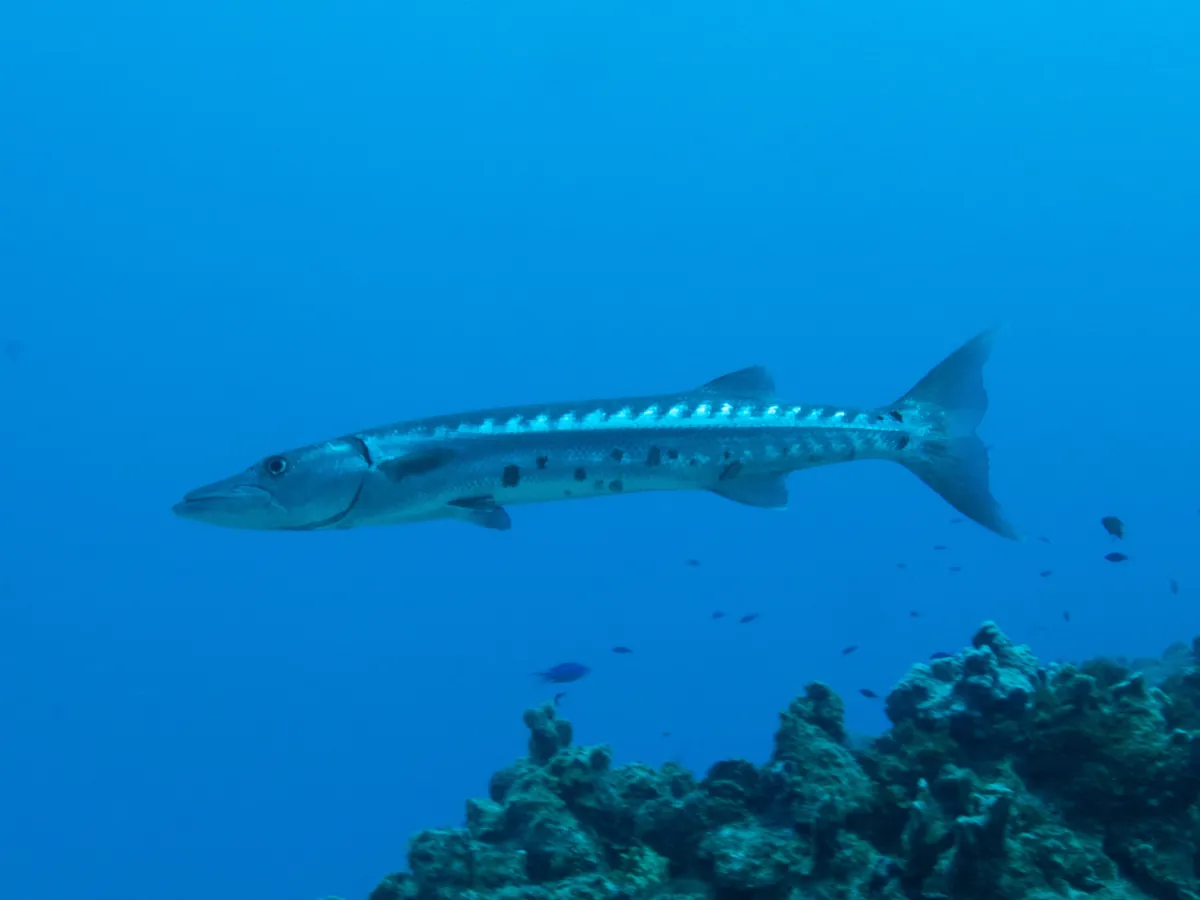
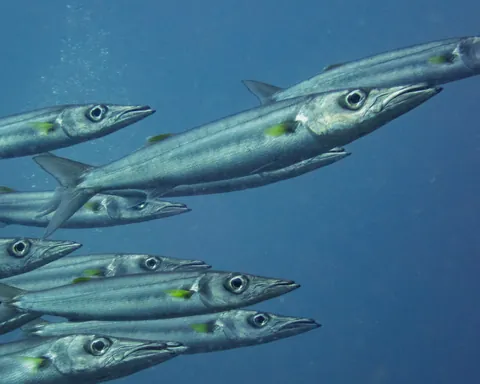
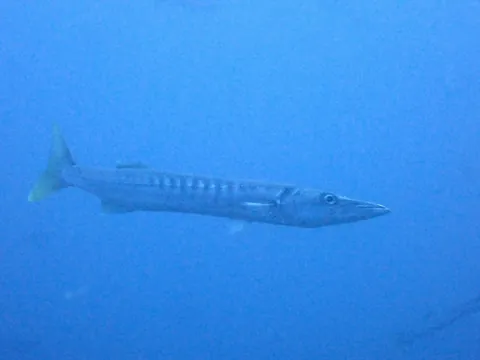
The great barracuda is the largest of the barracudas, a long, silver, torpedo-shaped hunter of warm seas. It reaches 200 cm and 50 kg, with 140 cm a common adult length. It is usually seen between 3 and 30 m and has been recorded from the surface down to 100 m. Divers often meet it hanging almost motionless near a wreck or drop-off, watching. It rarely attacks people; when it does, it is a single quick strike, which is serious but seldom fatal.
Also known as: sphyraena barracuda, barra, barracuda, commerson's sea pike, great barra cuda, short barracuda, striped seapike
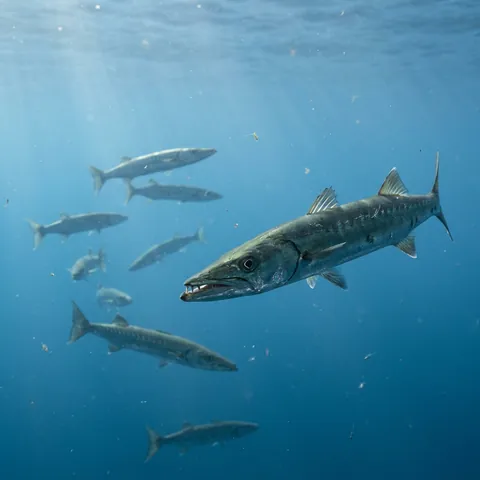
Look at the jaw line and the fins. The lower jaw juts clearly beyond the upper, giving an underbite you can see from several metres away. The tail and the rear fins are dark with white tips, and the two fins on the back are widely separated, unlike most large silver reef fish. Scattered black blotches low on the sides confirm it.
The body is long and thin with a large, pointed, pike-like head. The mouth is big and the lower jaw sticks out past the upper one, showing fang-like teeth of unequal size. The back is blue-grey, the flanks silver, the belly chalky white. There may be darker stripes on the upper side and scattered black blotches low on each side. The second dorsal fin on the back, the anal fin underneath and the tail are dark violet to black with white tips. The two dorsal fins are set far apart, and the tail is forked.
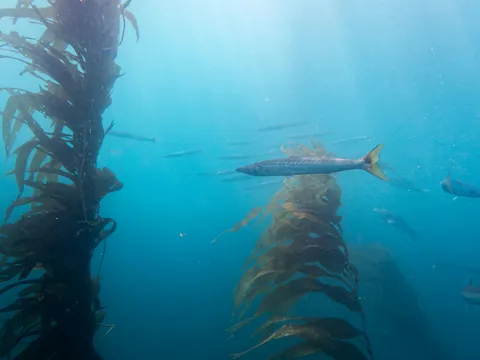
It lives in tropical and warm temperate seas of the Indian, Pacific and Atlantic oceans. Young fish and small adults stay close to shore among mangroves, seagrass meadows and sheltered inner reef. Adults move away from shore to reefs, rock outcrops and man-made structures, which they use as cover, and range from murky harbours to open water. It is often found at or near the surface.
It is an ambush predator. It relies on surprise and short bursts of speed rather than on turning ability, and takes small prey in a single engulfing bite. It hunts by day and eats fish, squid and octopus, and sometimes shrimp. Adults are mostly solitary, though small groups occur; young and half-grown fish often school. Tagging work in the Bahamas showed most fish stay in one home area for long periods, while a few travel far.
traumatogenic
The IUCN lists it as Least Concern. Numbers are reported to be falling in Florida, where catch limits are under consideration. Research shows that the stress of being caught reduces a barracuda's ability to reach shelter afterwards, leaving it more open to predators.
This is a warm-water fish that keeps turning up in cold places. Great barracudas have been sighted and caught well outside their normal tropical and subtropical range, including Canadian waters and the north-east Atlantic.
Describe what you saw and we name it, then keep every species you find in your Oceandex.