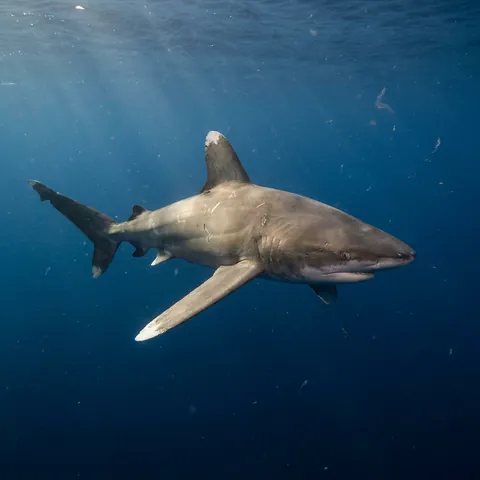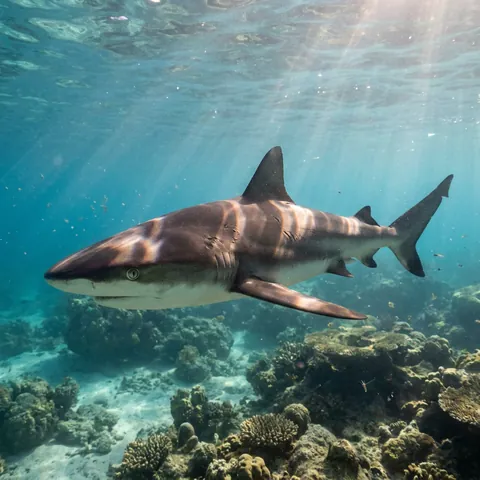
Blacktip reef shark
Carcharhinus melanopterus
Carcharhinus limbatus
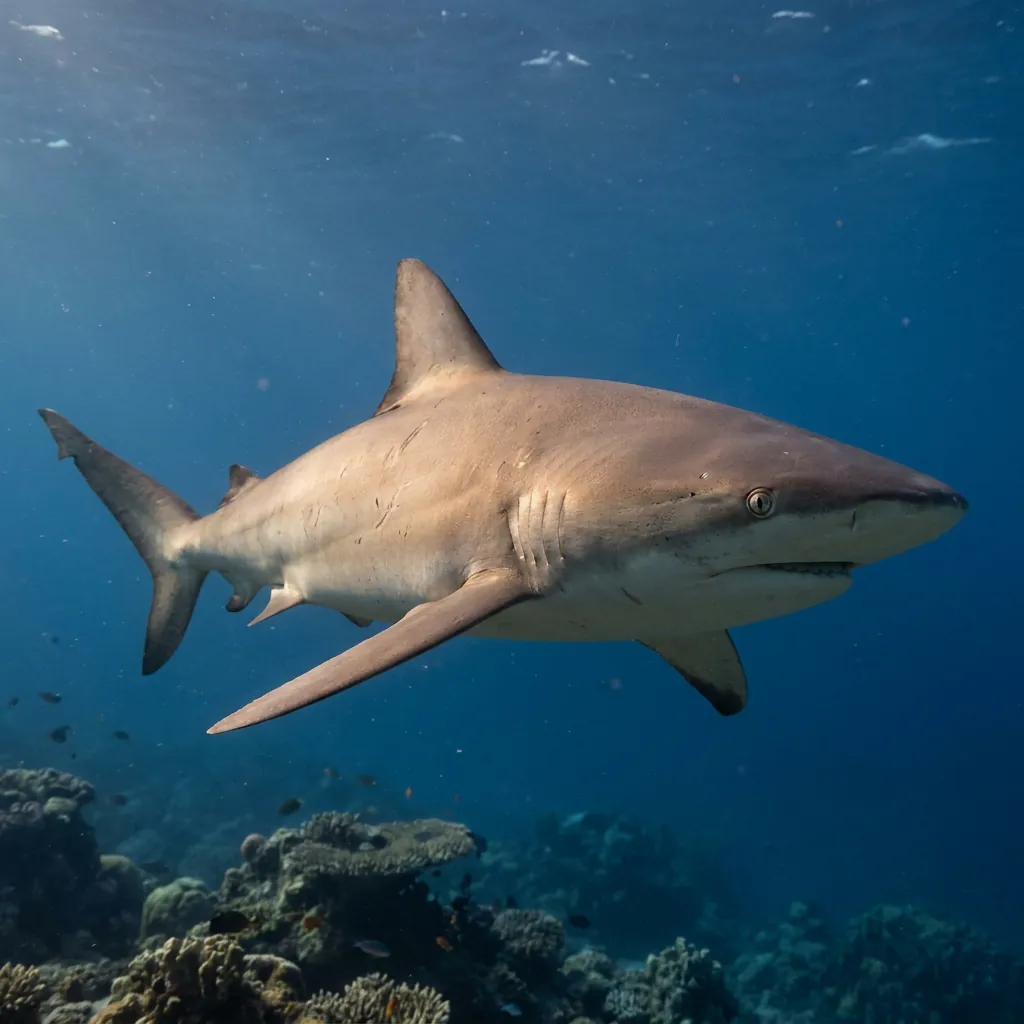
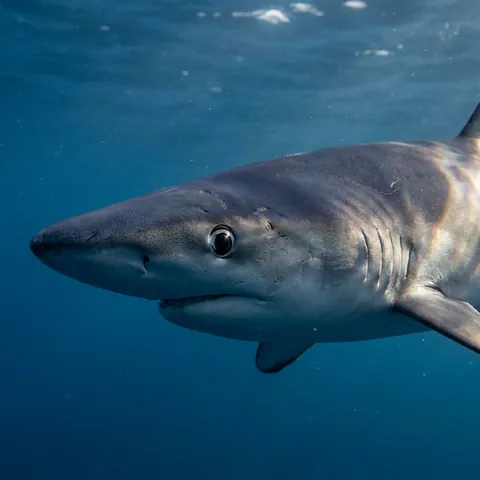
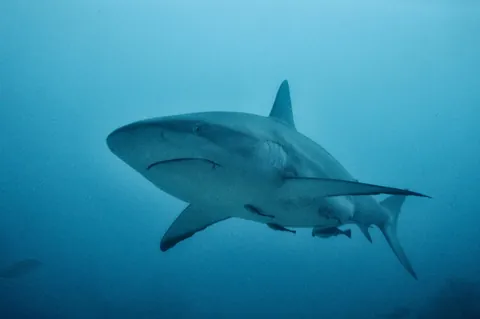
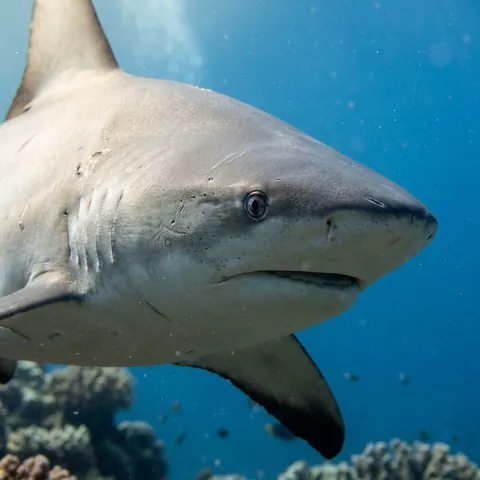
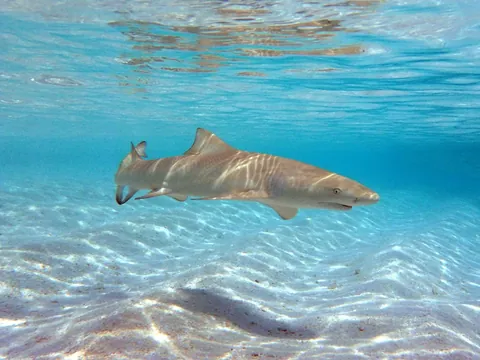
Fast, restless, and always on the move, the blacktip shark is one of the more energetic sharks divers encounter on tropical reefs. It grows to as much as 275 cm, though most adults seen are closer to 150 cm.
Also known as: carcharhinus limbatus, australian blacktip shark, black fin shark, black tip, black tip shark, black-tip shark, black-tipped shark, blackfin shark, blacktip reef shark, blacktip shark, blacktip shark, blackfin shark, blacktip whaler, common blacktip shark, graceful shark, grey shark, requiem shark, shark, small black tipped shark, small blacktip shark, spinner shark, spot-fin ground shark
Its black fin tips are shared by several other fast, similar-looking requiem sharks, including the spinner shark, which has the same leaping habit. Check the back between the two dorsal fins: the blacktip shark has no ridge running along it there, a detail worth confirming before assuming which black-tipped shark you are looking at.
This shark has a solid, torpedo-shaped body with a pointed snout and long gill slits. Its most obvious feature is the black tips and edges on its pectoral, dorsal, pelvic, and tail fins, set against an otherwise plain grey body. There is no raised ridge running along the back between its two dorsal fins.
It favors shallow water less than 30 m deep along continental and island shelves: muddy bays, island lagoons, and the drop-offs beside coral reefs. It also tolerates low salt levels well enough to enter river mouths, estuaries, and mangrove swamps, and young sharks are often seen close to beaches. It is not found far out in open ocean.
Blacktip sharks are fast, high-energy hunters that usually travel in groups rather than alone. They are best known for spinning leaps clear of the water, corkscrewing up to three or four times in the air, often as the final burst of a feeding run through a school of fish. Despite this dramatic hunting style, they have a cautious, timid nature around larger sharks and around divers, and rarely act aggressively unless food is present.
Fish make up the great majority of its diet, including sardines, herring, anchovies, mullet, and mackerel-type fish, along with rays, small sharks, crustaceans, and squid. It hunts most actively at dawn and dusk, and can turn into an excited feeding frenzy when a lot of food appears at once, such as around a fishing boat's discarded catch.
generally not aggressive but skittish — observe calmly
Female blacktip sharks do not always need a mate. In captivity, females kept without any males have still given birth, reproducing on their own through parthenogenesis (asexual, virgin-birth reproduction).
Describe what you saw and we name it, then keep every species you find in your Oceandex.