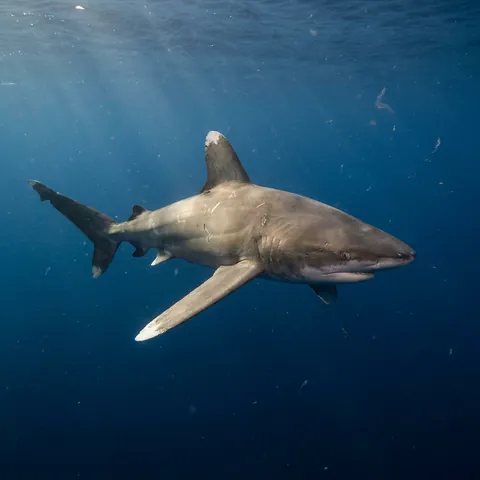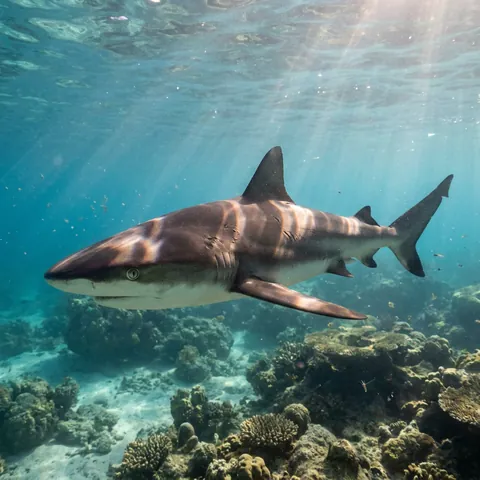
Blacktip reef shark
Carcharhinus melanopterus
Carcharhinus amblyrhynchos
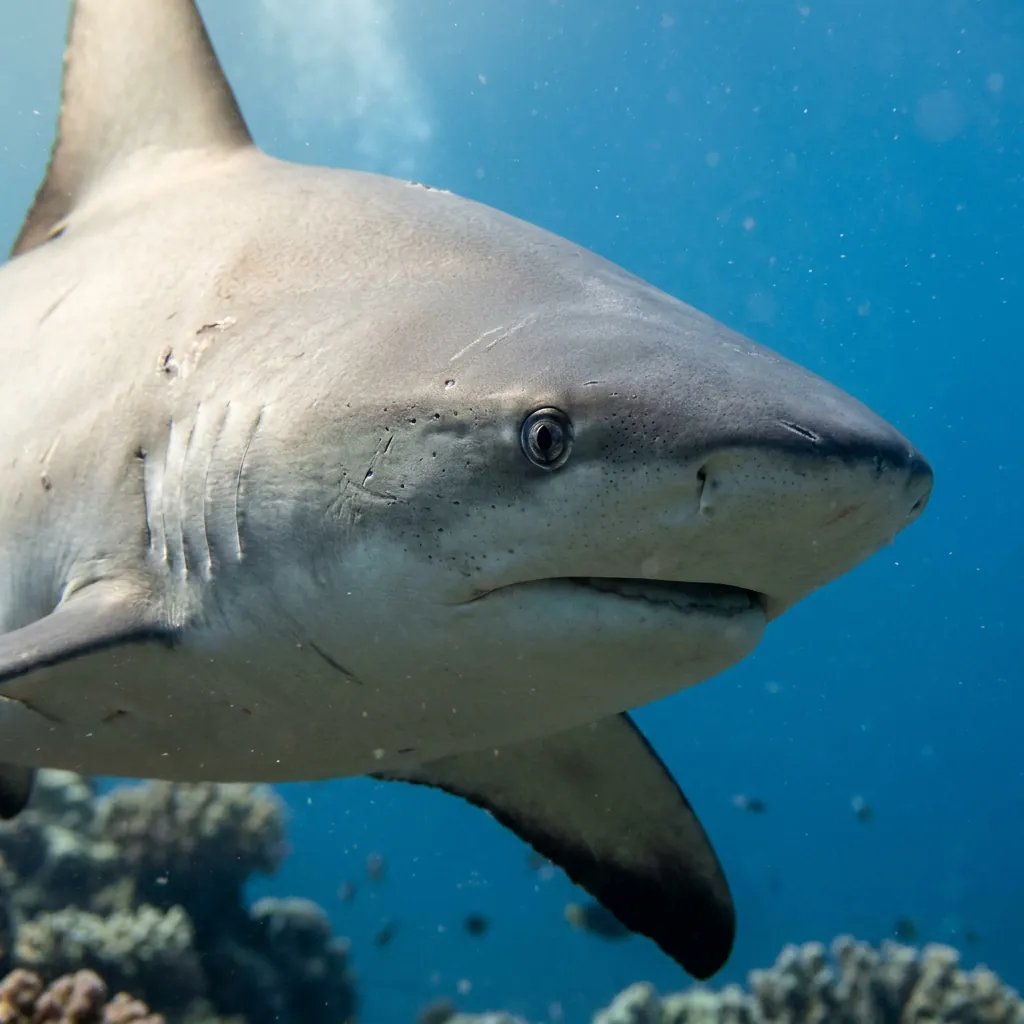
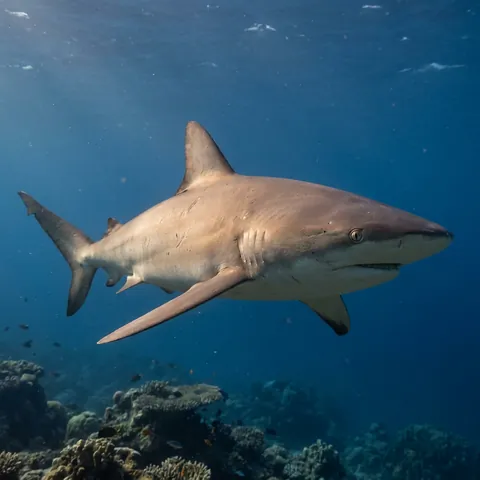
The grey reef shark is a bold, fast-moving predator of Indo-Pacific reef edges, often the shark that comes closest to check out a diver drifting along a current-swept drop-off.
Also known as: carcharhinus amblyrhynchos, black-tip reef shark, black-vee whaler, blacktail reef shark, blacktip reef shark, bronze whaler, fowler's whaler shark, graceful shark, graceful whaler shark, gray reef shark, grey shark, grey shark, blacktail reef shark, grey reef shark, grey whaler shark, longnose blacktail shark, school shark, shark, shortnose blacktail, shortnose blacktail shark, whaler shark
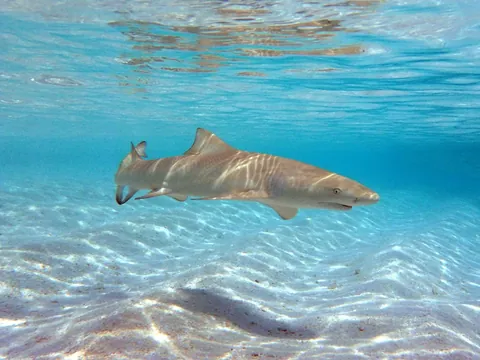
This shark is often confused with the blacktip and whitetip reef sharks it shares reefs with. The tail band described above is the giveaway: neither of those two carries black across the whole rear edge of the tail fin.
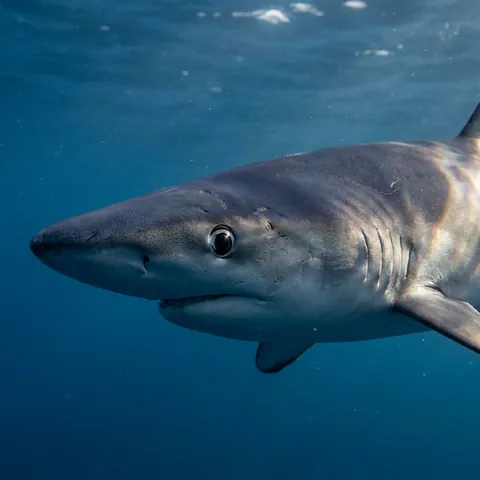
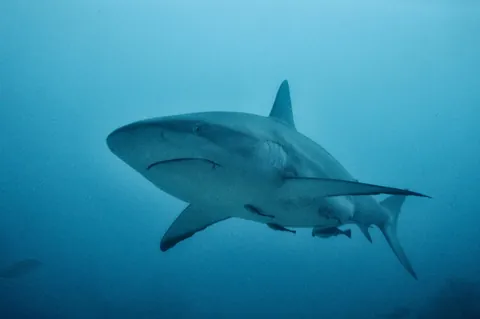
This shark has a streamlined, moderately stout body with a long, blunt snout and large round eyes. The pectoral fins are narrow and sickle-shaped, and the first dorsal fin is medium-sized with no ridge running back to the second dorsal fin. It is grey above, sometimes with a bronze sheen, and white below. The whole rear edge of the tail fin carries a broad black band, and the pectoral, pelvic, second dorsal, and anal fins all have dusky-to-black tips. It can grow up to about 2.55 m long and weigh as much as 33.7 kg.
Grey reef sharks live across the Indo-Pacific, mostly in shallow coastal water on continental and island shelves. They favour the current-facing edges of coral reefs with clear water and rugged terrain, especially near steep drop-offs and reef channels, and are less often seen inside lagoons. Although usually found above 280 m, they have been recorded diving as deep as 1,000 m.
The grey reef shark is one of the three most common sharks on Indo-Pacific reefs, and it tends to dominate the deeper reef edge, while the blacktip reef shark keeps to the shallows where the two overlap. It is territorial toward other sharks, often driving off species even larger than itself from its favoured ground, and it regularly gathers with others of its kind in daytime groups at preferred sites.
Grey reef sharks feed mainly on bony reef fish, with squid and octopus as a secondary food source, and crabs, lobsters, and shrimp making up the rest. They hunt alone or in groups, sometimes pinning schools of fish against the reef wall, and are especially effective at catching fish out in the open water above the reef.
generally not aggressive but will defend space — heed its threat display
At certain reef passes, such as Fakarava in French Polynesia, grey reef sharks gather in some of the largest hunting groups of any shark species, moving together with the current to ambush fish in the channel.
Describe what you saw and we name it, then keep every species you find in your Oceandex.