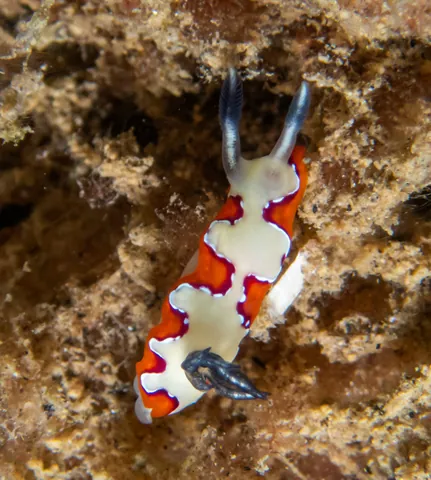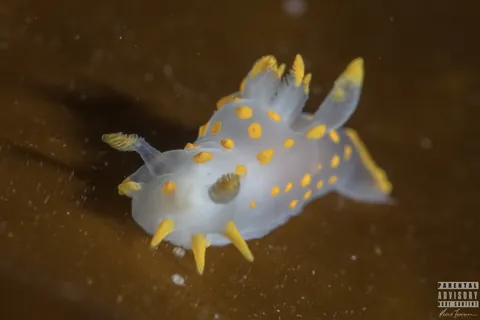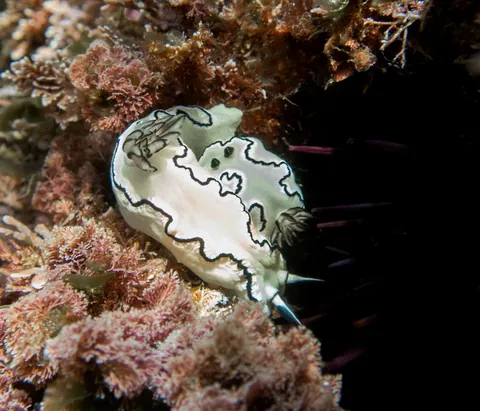
Black-margined Nudibranch
Doriprismatica atromarginata
nudibranch
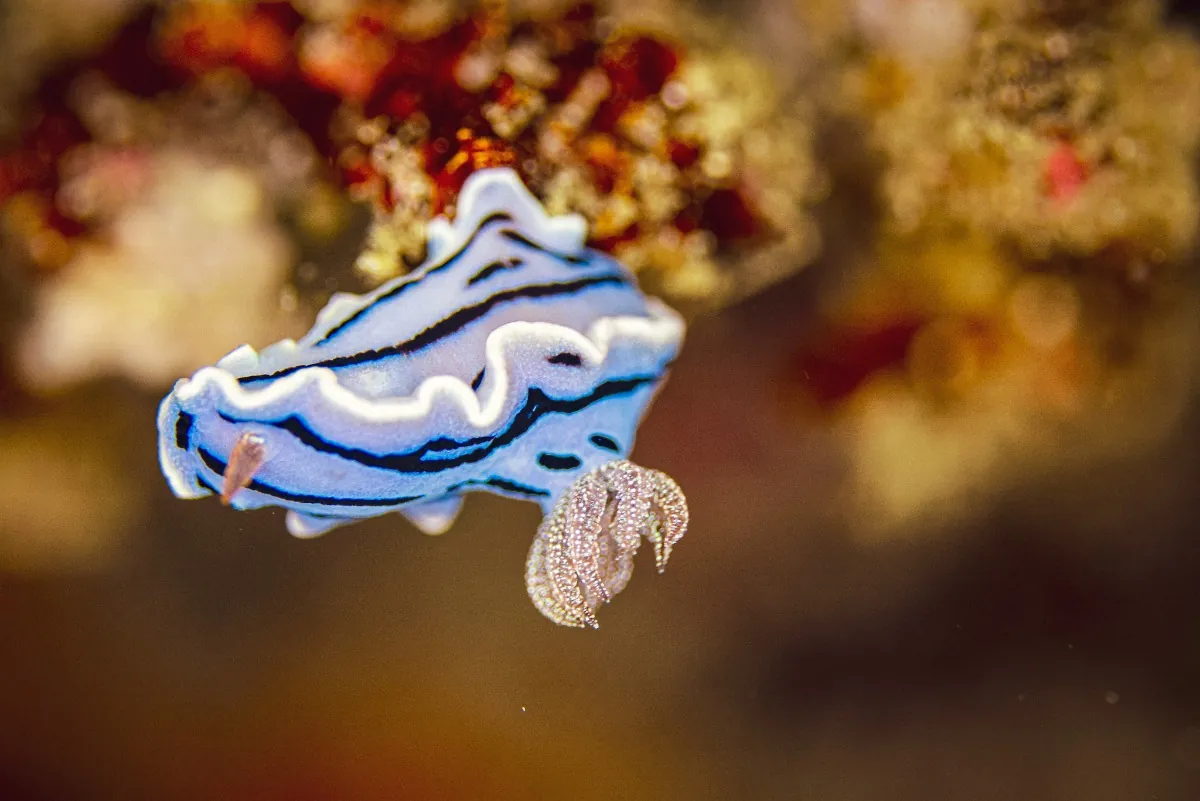
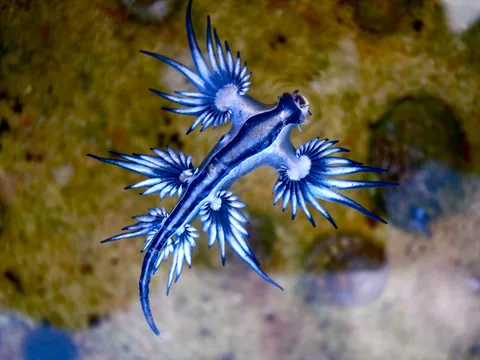
Nudibranchs are soft-bodied sea slugs, often brightly coloured, with no shell as adults. In this app the group includes the Fried Egg Nudibranch, the Blue Dragon, and the Geometric Goniobranchus.
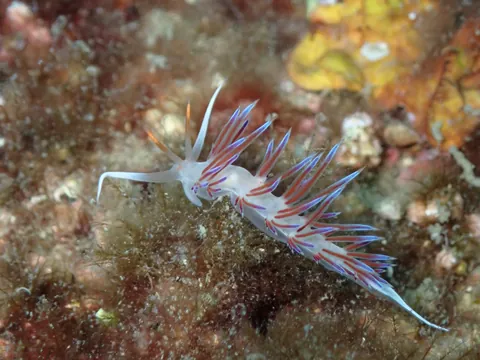
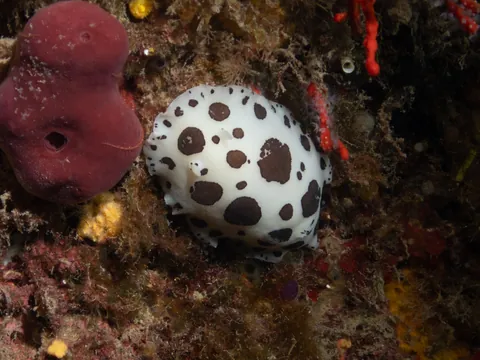
No shell, a soft slug-like body, and feathery gills or cerata on the back mark this group apart from any snail or sea hare. Members are told apart mainly by colour pattern, body shape, and whether the back is smooth, feathery, or covered in finger-like cerata.
A nudibranch is a soft-bodied slug with no shell, ranging from about 4 mm to 600 mm long. Most have feathery gills or finger-like projections, called cerata, on their back, and colours and patterns vary hugely between species.
Nudibranchs live in seas worldwide, from the Arctic to Antarctica, almost always in salt water. They are found from the shallows to very deep water, but the most species are seen on warm, shallow reefs, crawling over the seabed or reef surface.
Most nudibranchs crawl slowly over the reef or seabed. Many defend themselves with bright warning colours or by blending in with the sponges and corals they live on, rather than by fleeing.
All nudibranchs are meat-eaters. Different species feed on sponges, hydroids, bryozoans, sea squirts, barnacles, anemones, or even other sea slugs and their eggs.
The name 'nudibranch' means 'naked gill', because many of these sea slugs breathe through gills that sit openly on their back instead of being hidden inside a shell.
Describe what you saw and we name it, then keep every species you find in your Oceandex.