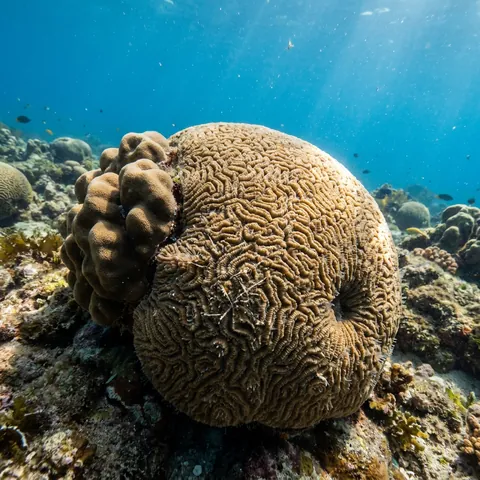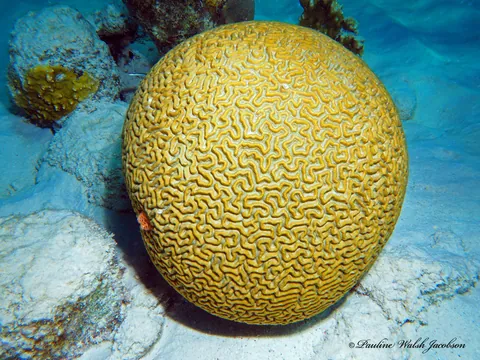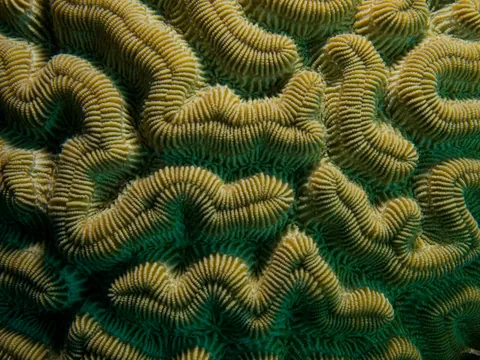
Boulder Brain Coral
Colpophyllia natans
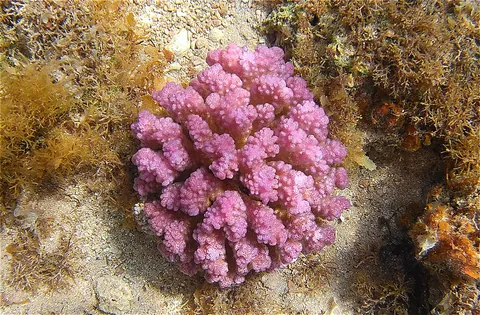
Porites astreoides
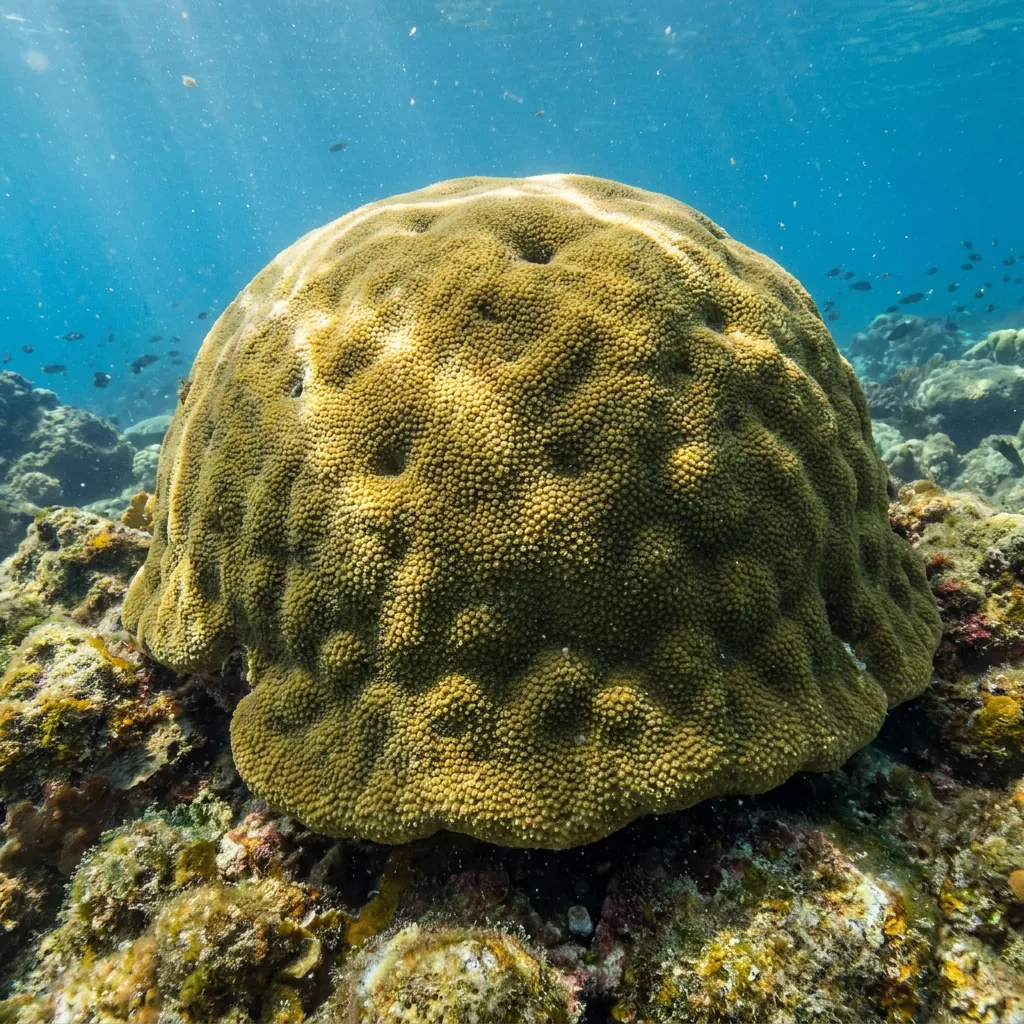
Mustard hill coral is one of the most common stony corals on Caribbean and tropical Atlantic reefs. It forms smooth yellow domes and thin crusty sheets wherever there is a hard surface to grow on.
Also known as: yellow porites
Nearly every other Porites coral grows in branching, finger-like shapes. This species is different: it always grows as a dome, plate, or crusty sheet.
In shallow, fast-moving water, this coral grows as a thin crusty sheet. In calmer, mid-depth water it forms smooth, rounded domes. In deeper water it flattens into plates, sometimes angled in caves or under ledges to catch more light. Its surface looks finely porous (full of tiny holes), built from small, tightly packed skeleton cups. Its colour is yellow, yellow-green, pale grey, or pale brown, coloured by the algae living in its tissue. The polyps (the coral's small living animals), each with six tentacles, usually stay pulled in during the day.
This coral grows on all parts of the reef and in lagoons across the Caribbean, the tropical western Atlantic, and tropical West Africa. It is usually found in shallow water, but has been found as deep as 70 m. It sometimes grows loose and unattached, on bits of coral, pebbles, or shells.
Its polyps feed mainly at night. They stretch out their tentacles to catch zooplankton (tiny drifting animals) and bacteria. During the day, algae living in its tissue give it extra energy through photosynthesis (making energy from sunlight). Stinging cells help keep away predators such as stoplight parrotfish, other reef fish, snails, worms, and starfish. It often shares its underside with the sponge Mycale laevis, and is often found alongside fan worms.
This coral releases sperm into the water around the new moon, then releases the larvae it has been brooding internally around the following full moon.
Describe what you saw and we name it, then keep every species you find in your Oceandex.