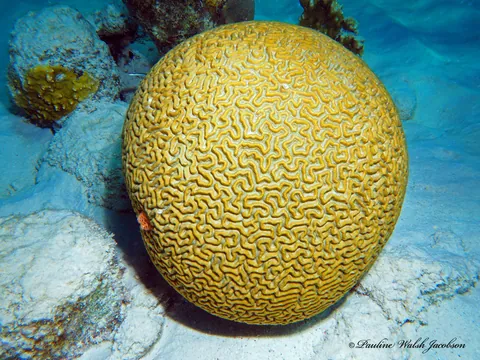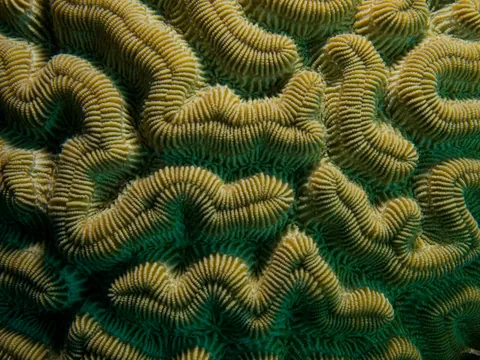
Boulder Brain Coral
Colpophyllia natans
Pseudodiploria clivosa
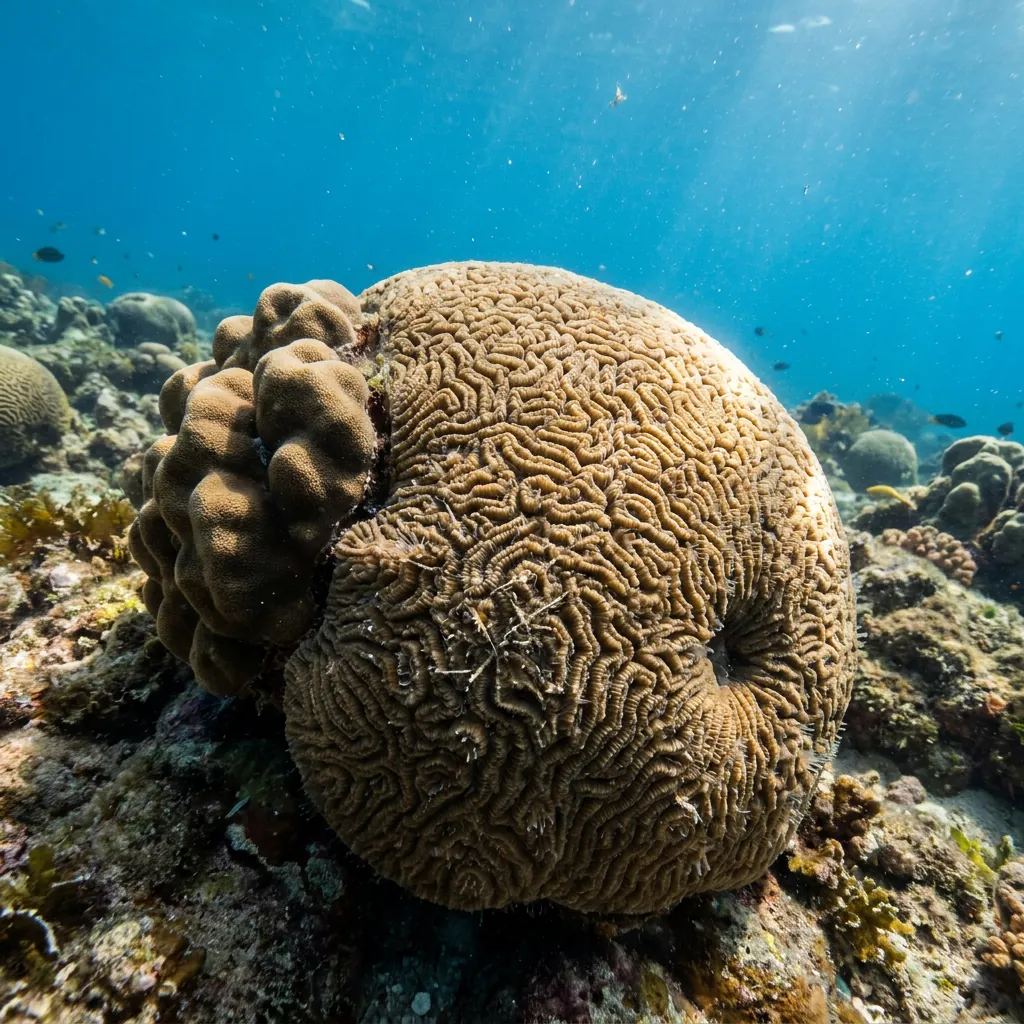
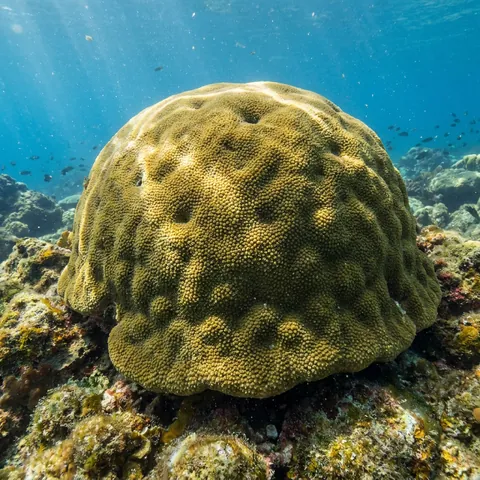
A slow-growing, dome-shaped reef builder of the Caribbean, the knobby brain coral gets its name from the bulges and ridges that cover its surface like a maze.
It is easily confused with the similar-looking grooved brain coral. Check the top of a ridge: the grooved brain coral has a trough running along it, while the knobby brain coral's ridge top has no such groove.
This coral forms rounded, hemispherical domes, or, in rough water, spreads into flatter plates over the seabed. Its surface is covered in sharply defined, winding ridges with valleys between them, often studded with knobs and bulges. Tiny coral polyps sit in small stony cups along the valley floors, joined to their neighbours by thin ridges of skeleton that stop and start rather than running continuously. Colour is usually some shade of yellowish or greenish brown.
The knobby brain coral is common in southern Florida, the Caribbean Sea, and the Bahamas. It grows on reefs, in seagrass meadows, in lagoons, and sometimes on mangrove roots, from very shallow water down to about 41 metres, though it is most common in the shallows.
By day, this coral's polyps stay withdrawn inside their stony cups. At night they extend their tentacles to feed. It also gets food from algae living in its tissue, which use sunlight to produce nutrients that are shared with the coral. Growth is very slow, through the gradual budding of new polyps and laying down of new skeleton. New colonies start when gametes released into the water form drifting larvae that settle on the seabed.
Describe what you saw and we name it, then keep every species you find in your Oceandex.