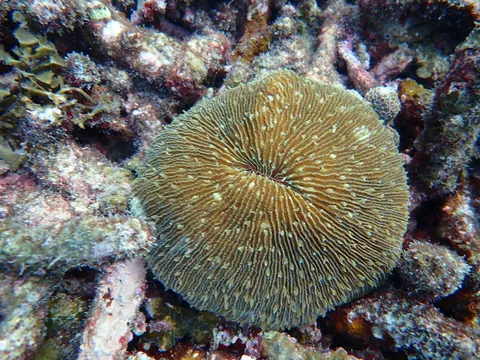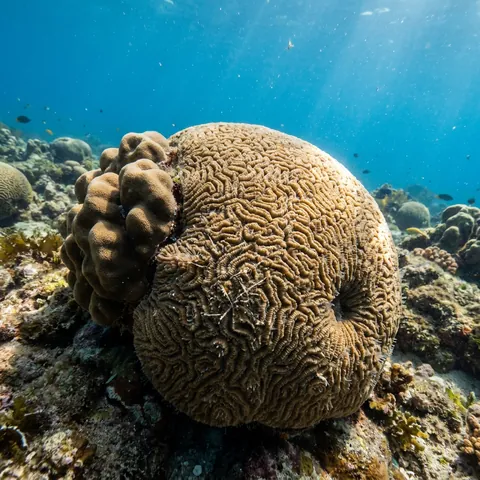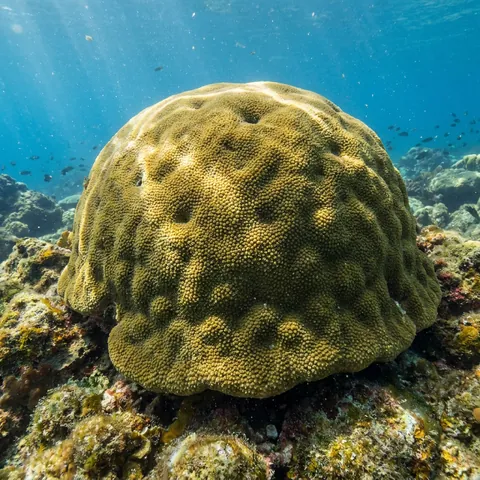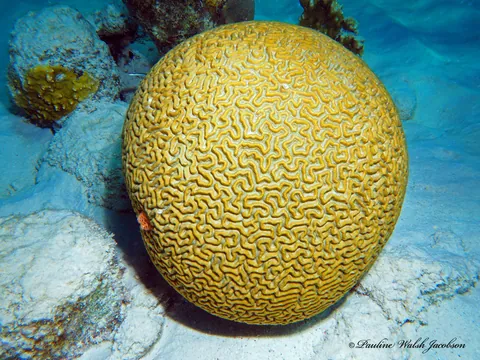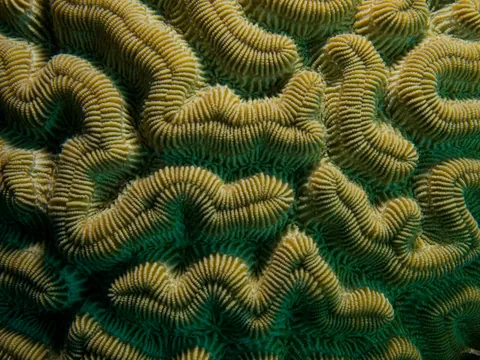
Boulder Brain Coral
Colpophyllia natans
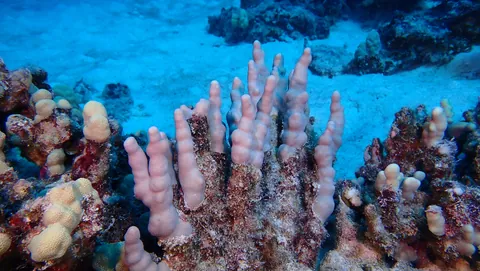
Pocillopora verrucosa
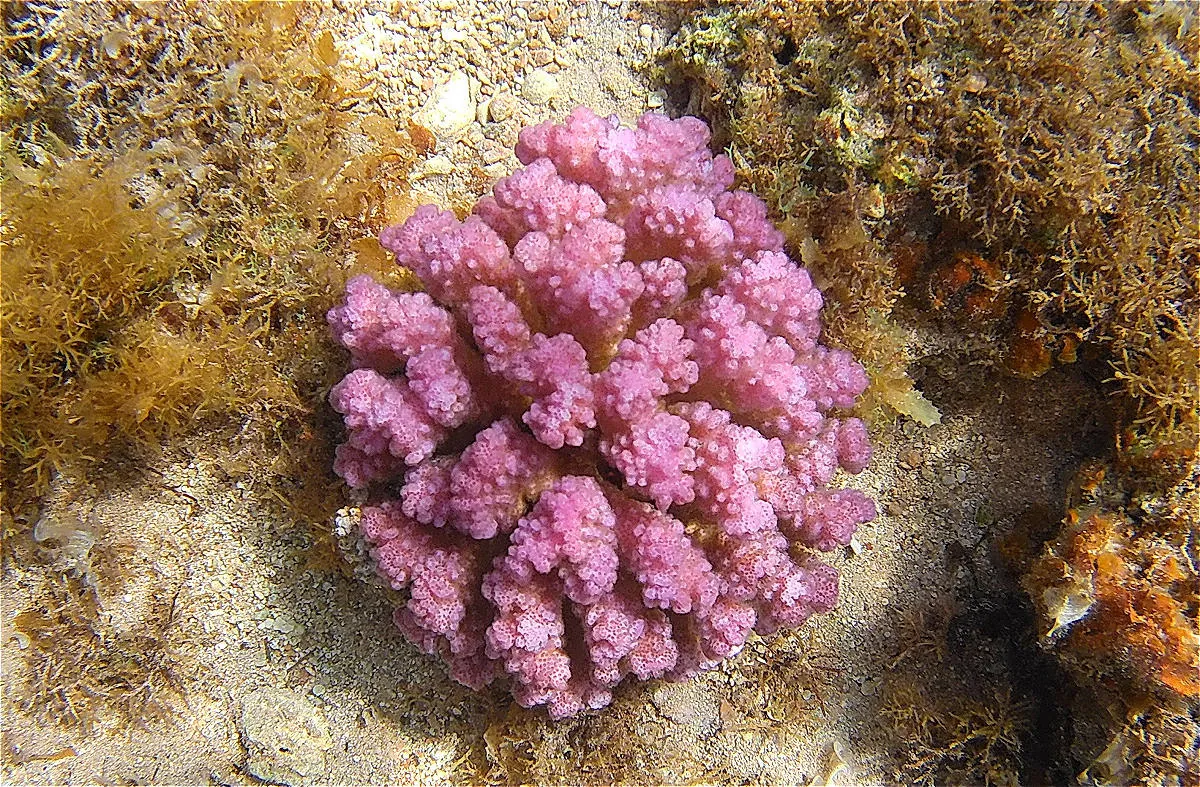
Cauliflower coral is a stony coral of the tropical and subtropical Indian and Pacific Oceans. It is a colony: many tiny animals called polyps sit in stony cups they build themselves, and together they form a rounded, branching lump. It is common through most of its range and is one of the corals divers see most often on shallow reef fronts. It has been recorded down to about 54 m.
Look for a rounded, head-sized clump of short, thick branches whose tips are blunt and widened, like clubs rather than points. Then look closely at the surface: it is covered in evenly sized, evenly spaced wart-like bumps. That regular, bumpy texture with club tips separates it from the finer, more delicate cauliflower corals beside it. Colour is no help; it varies.
Colonies grow as rounded, hemispherical clumps of short, thick branches. The branch tips are broad and blunt, like small clubs. The whole surface is covered with wart-like bumps, called verrucae, which are fairly even in size and spacing. The colour varies and may be yellowish green, pink, brown or bluish brown. A closely related cauliflower coral has thinner branches with less regular bumps.
It grows on fringing reefs, on moderately exposed reef fronts, and on rocky ground. It copes less well with sediment than its close relatives, so it is less common inside lagoons. Its shape tells you about the water around it: colonies in shallow or wave-swept places grow thick, sturdy branches, while those in deep, calm water grow thinner ones.
Like most reef corals, it holds microscopic algae, called zooxanthellae, inside its tissue. These algae use sunlight to make food that the coral takes up, which is why the species needs clear, lit water. It can also reproduce without sex: a broken-off fragment can grow into a new colony. Each colony is both male and female at the same time, with ovaries and sperm-producing organs inside the same polyp.
This coral keeps live-in bodyguards. Tiny Trapezia crabs and snapping shrimps live among its branches and attack the crown-of-thorns starfish that would otherwise eat away its living tissue.
Describe what you saw and we name it, then keep every species you find in your Oceandex.