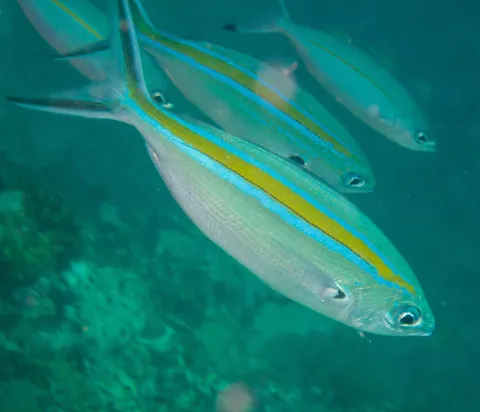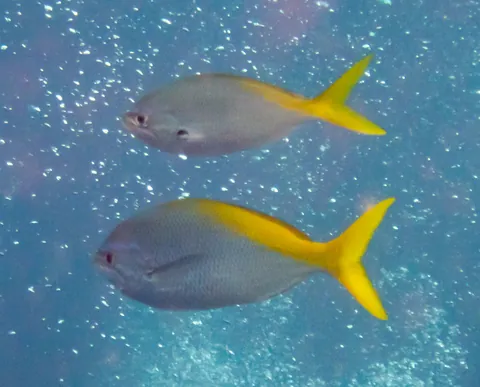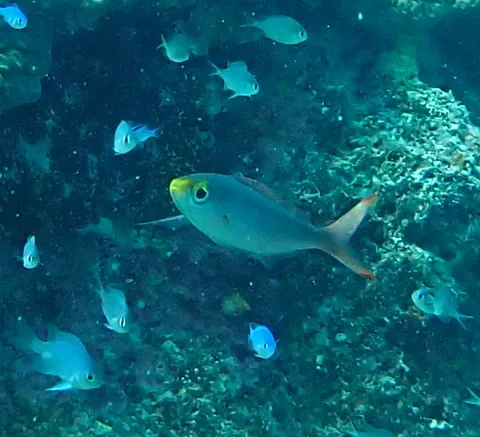
Banana fusilier
Pterocaesio pisang
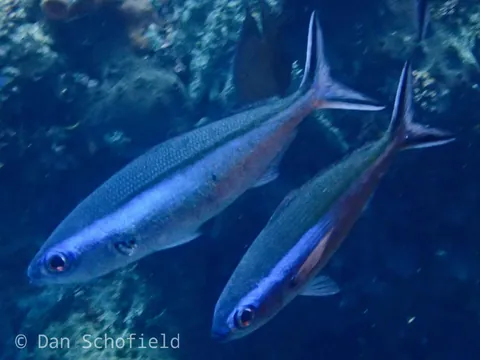
Caesio lunaris
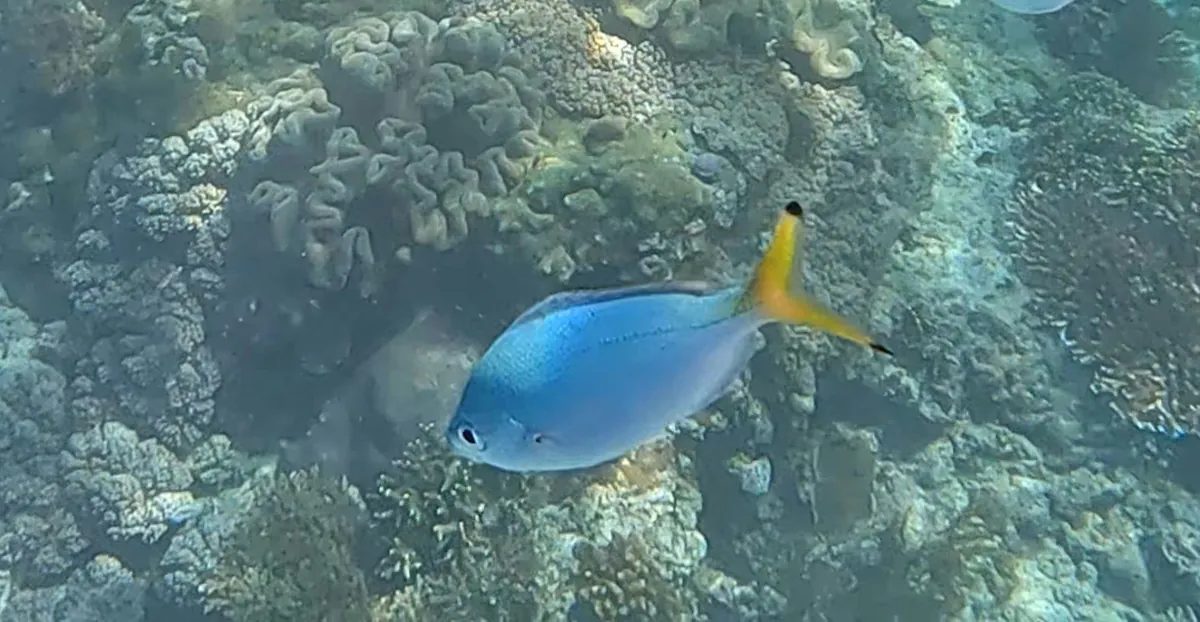
A streamlined, sky-blue fish that streams past reef edges in shimmering schools, often mixed in with other fusiliers as they patrol the open water above the reef. It grows to about 40 cm.
Also known as: blue fusilier, moon fusilier, moon caesio, moon fusilier, blue fusilier, moon caesio, fusilier
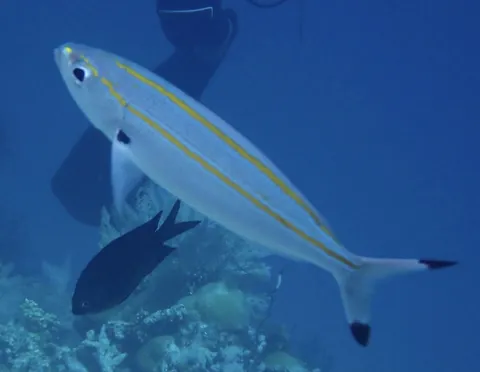
Several fusilier species school together and share a similar blue, streamlined shape. Look at the tail: this species has a black tip on each lobe of the tail fin, a mark most other fusiliers lack.
A torpedo-shaped, laterally flattened body in an overall bluish colour, paler on the belly. The pectoral, pelvic, and anal fins are white to pale blue, and the back (dorsal) fin is bluish. Young fish often show yellow on the tail and the base of the tail.
Found across the tropical Indo-West Pacific, mainly near coral reefs in inshore waters. It favours steep seaward reef slopes over sheltered lagoons, schooling in midwater along the upper edge of drop-offs and around patch reefs.
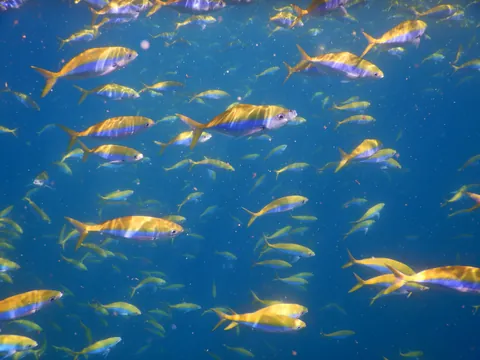
This species swims in large schools, often mixing with other fusiliers. Adults range into open water away from the reef by day to feed on zooplankton, then return to shelter within the reef at night. Juveniles stay close to the reef at all times, often schooling alongside young of another fusilier species.
Juvenile lunar fusiliers commonly school together with young fusiliers of a different species, Caesio cuning, rather than staying only with their own kind.
Describe what you saw and we name it, then keep every species you find in your Oceandex.