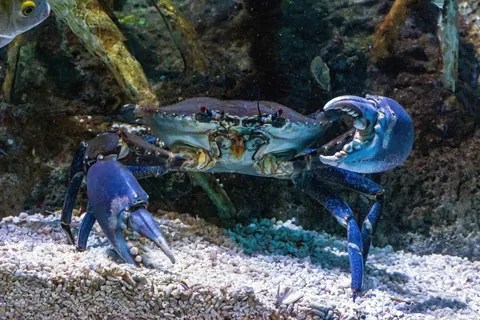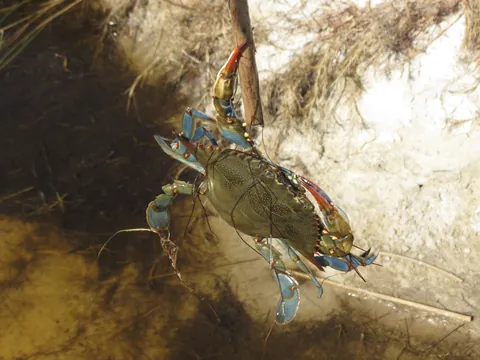
Atlantic Blue Crab
Callinectes sapidus
Pagurus longicarpus
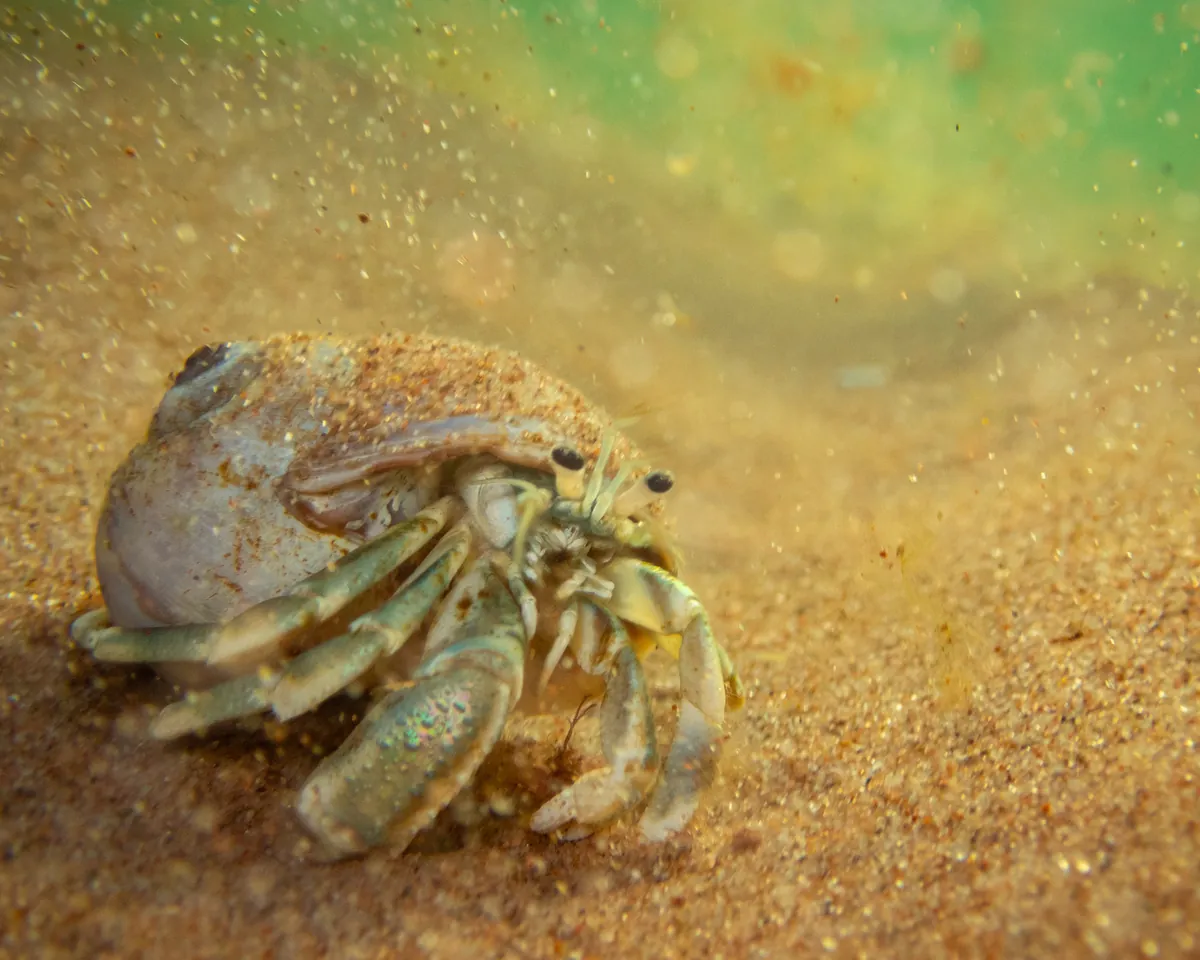
The long-claw hermit crab is a small scavenger that never builds its own home, instead borrowing empty snail shells for shelter. Its survival depends almost entirely on finding a shell that fits just right.
Also known as: small hermit crab, longwrist hermit, long-armed hermit crab, longclaw hermit crab, longclaw hermit
Many small hermit crabs look alike at a glance, but the strongly oversized right claw with a pale stripe down its middle is the mark that sets this one apart.
The body is usually grey, green, or white. The right claw is much larger than the left, and each claw carries a tan or grey stripe running down the middle.
This crab lives along the Atlantic coast from Nova Scotia to northeastern Florida and along the Gulf coast to Texas. It is found on many kinds of seabed, from tide pools down to about 200 m, moving into deeper, warmer water during the colder months.
Competition over shells is common, since a poor fit can mean starvation or an easy meal for predators. Crabs with a less suitable shell will sometimes grab hold of another crab's claws and legs to force it out and take its shell.
It scavenges detritus, organic matter from sea foam, small crustaceans, and algae. It scoops up material from the seabed with its claws, tears it apart, and passes it to its mouth.
This crab is so dependent on a properly sized shell that it will refuse to feed at all while living in one that fits poorly, risking starvation rather than eat in the wrong home.
Describe what you saw and we name it, then keep every species you find in your Oceandex.