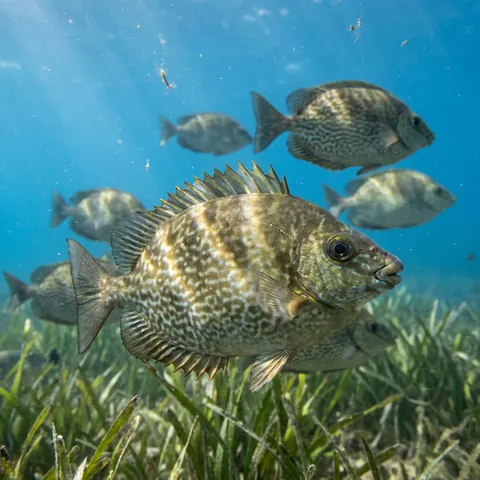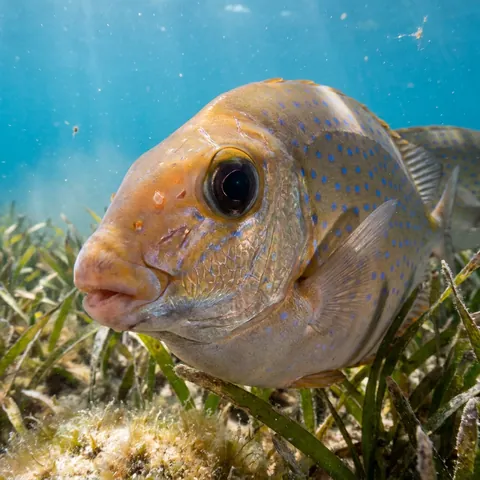
Blue-spotted spinefoot
Siganus corallinus
Siganus spinus
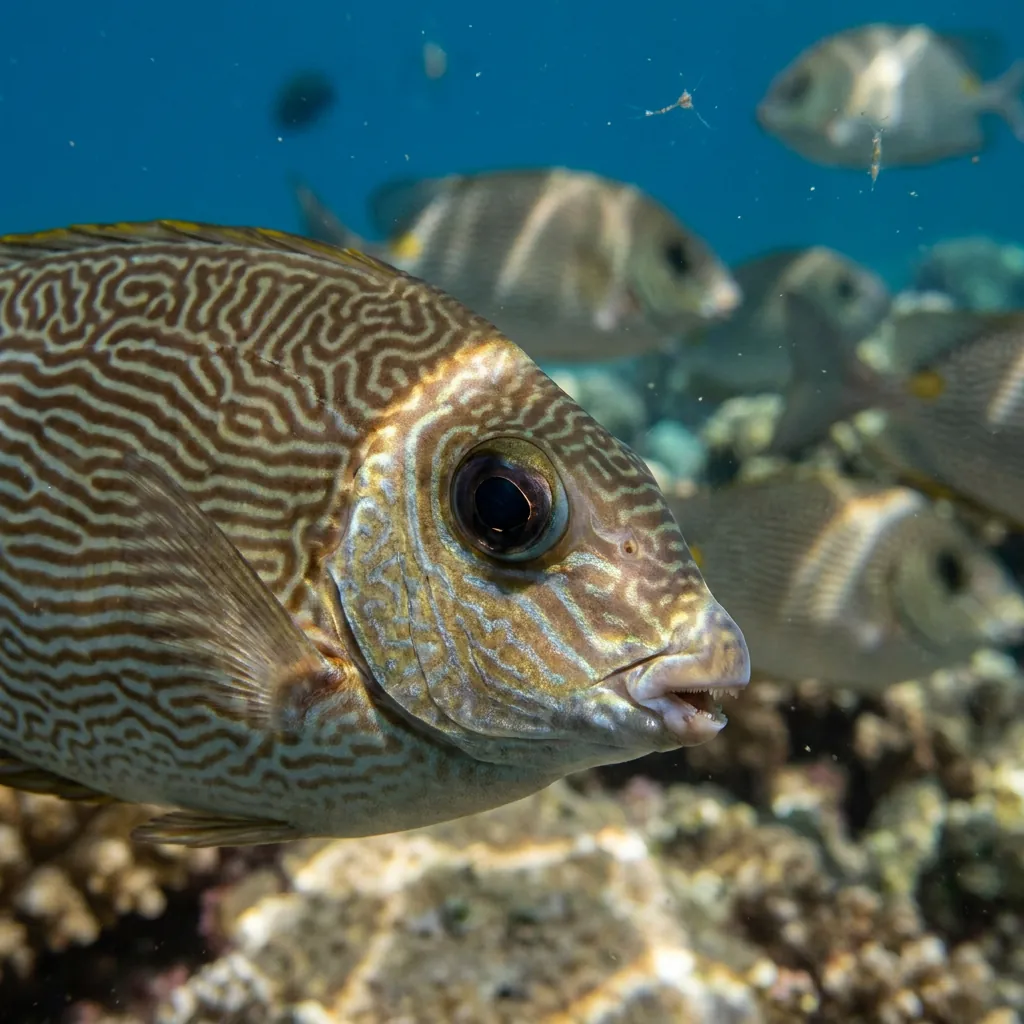
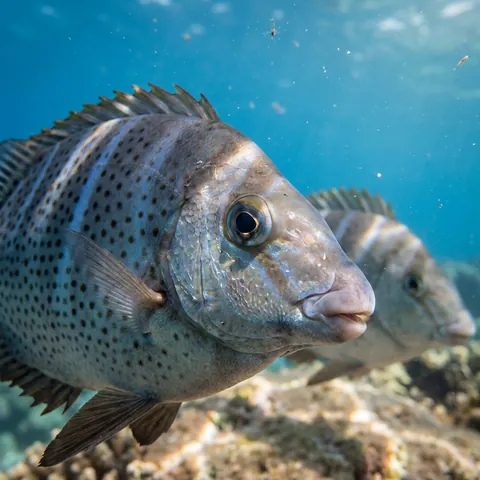
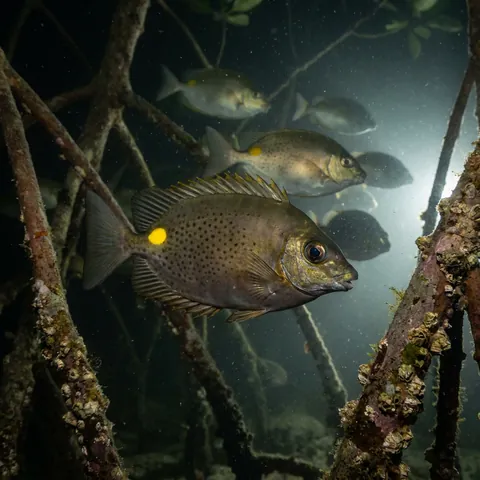
A small schooling reef grazer with skin like a maze of fine lines, this rabbitfish spends its days picking algae off the reef flat. It commonly reaches about 18 cm and can grow up to 28 cm.
Also known as: spiny rabbitfish, little spinefoot, bluntnosed spinefish, rabbitfish, spinefoot, marbled-spine foot, black trevally, happy moments, spiny rabbitfish, little spinefoot, mi-mi, vermiculated spinefoot, scribbled spinefoot, bluntnosed spinefoot, blue-spotted trevally, mottled spinefoot, black spinefoot, blunt-nosed spinefoot, little spinefoot, scribbled rabbit-fish, spiny spinefoot, spiny rabbitfish
Its shifting camouflage pattern is shared by other rabbitfish and changes with mood, so it is not a reliable guide. Instead, look at the eye up close: the iris is golden, crossed by a distinctive chocolate-brown cross.
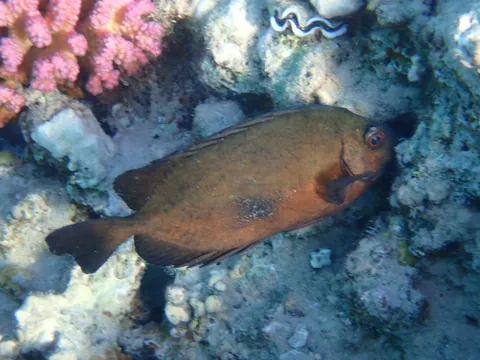
A slender, laterally flattened body with a blunt, rounded snout. The skin carries a labyrinth-like pattern of narrow brown lines that can shift between off-white, pale grey, and shades of brown, extending onto the fins. There are usually four or five faint pale bars near the base of the tail. The spines in its fins are venomous and can deliver a painful sting.
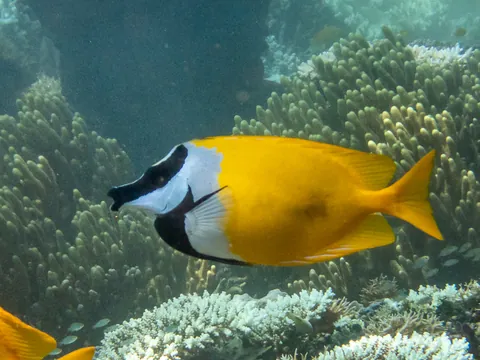
Found across the tropical Indo-Pacific on shallow coral reef flats, in water between about 24 and 28°C and generally no deeper than 20 m. Juveniles gather in greater numbers around corals where algae grows at the base.
This species feeds by day throughout its life. Young fish graze on fine, thread-like algae, switching to coarser algae as they grow. It lives in small schools, usually fewer than ten fish, though juveniles form larger groups than adults do.
Carl Linnaeus named this fish spinus, meaning "thorn" or "spine", in 1758 - most likely pointing to the single forward-facing spine in front of its dorsal fin, the only spine he described at the time.
Describe what you saw and we name it, then keep every species you find in your Oceandex.