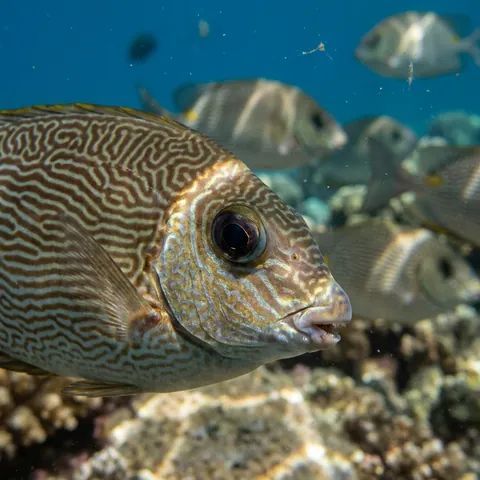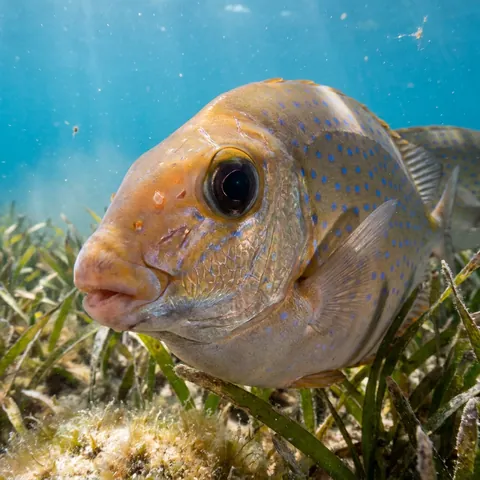
Blue-spotted spinefoot
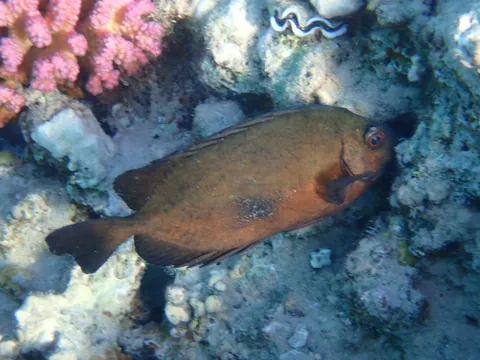
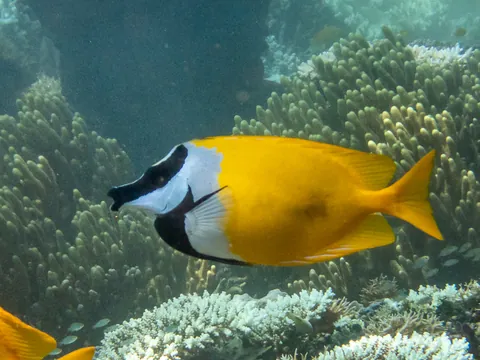
Siganus corallinus
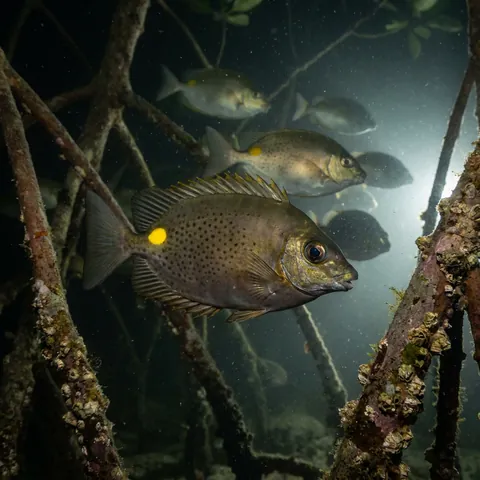
Siganus fuscescens
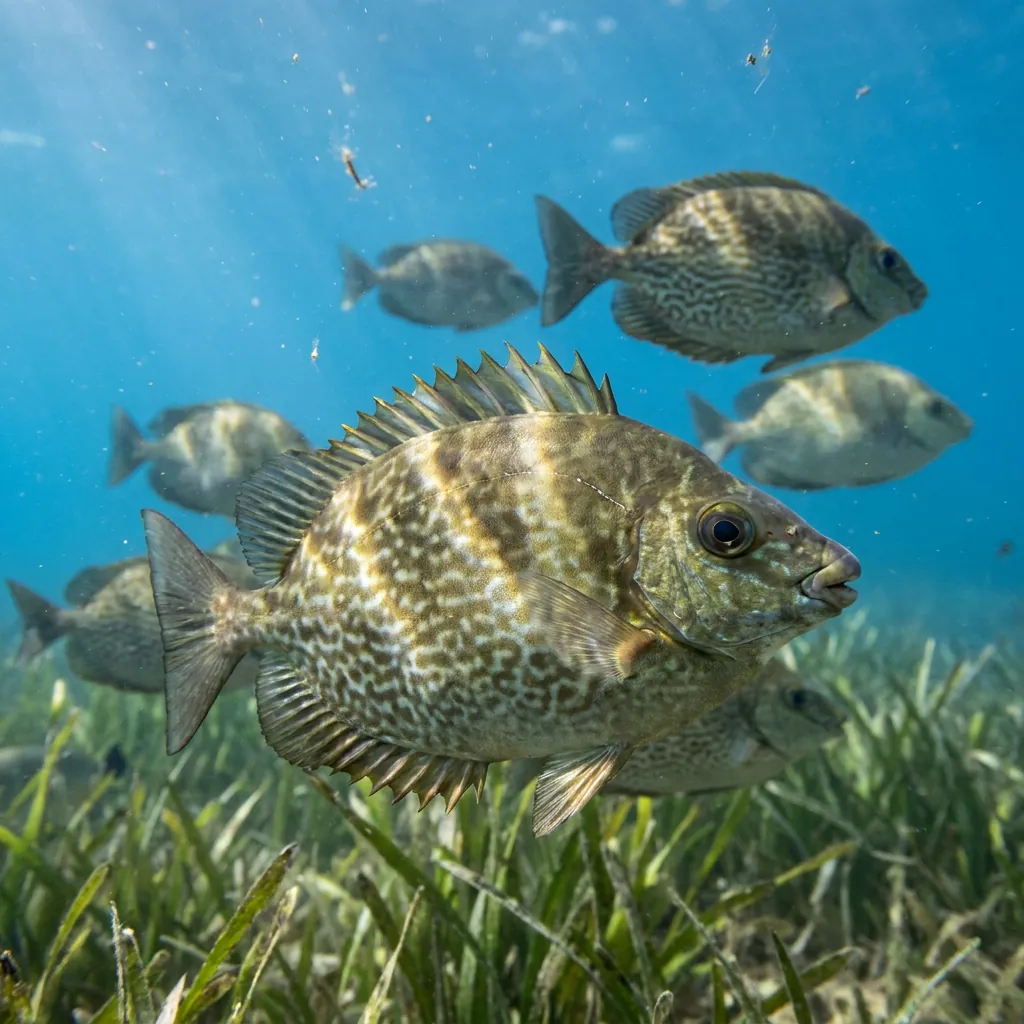
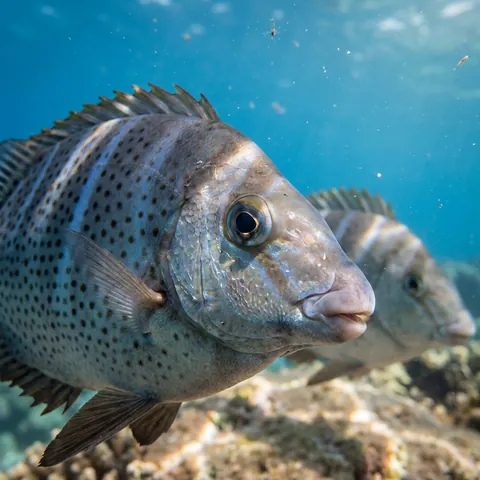
The mottled spinefoot is a common schooling rabbitfish of shallow coastal reefs, growing to about 40 cm, though most are seen closer to 25 cm.
Also known as: dusky spinefoot, sandy spinefoot, dusky spinefoot, white-spotted spinefoot, spinefoot, rabbitfish, dusky rabbitfish, pinspotted spinefoot, fuscescens rabbitfish, fuscous spinefoot, doctor fish, marbled spinefoot, little spinefoot, dusky rabbitfish, pin-spotted spinefoot, west australian rabbitfish, stinging bream, mi mi, fuscous rabbitfish, blue-spotted trevally, black trevally, black spinefoot, black rabbitfish, happy moments
Several spotted rabbitfish species can look similar in a school. Check for a dark patch right where the lateral line begins: this species usually has one, while similar spinefoots often do not.
This fish has a slender, flattened body in greenish-grey to brown, fading to silvery on the lower half. Small, light bluish spots cover the flanks, and a slender brown bar runs along the upper edge of the gill cover. Many individuals also show a dark patch right where the lateral line, the sensory stripe along the side, begins. When resting or threatened, it can switch to a blotchy, mottled pattern.
Mottled spinefoots live over algae beds, seagrass flats, and coral or rocky reefs in shallow coastal waters, from about 1 to 50 m deep. They are often found in large estuaries as well as on open reef flats.
This is a schooling, day-active fish. Juveniles feed mostly on fine, thread-like algae, while adults switch to leafier algae and seagrass. Before spawning, groups gather on raised parts of the inner reef flat and release their eggs near the reef edge around the new moon. Like other rabbitfish, it carries venomous spines in its dorsal and pelvic fins and should not be handled.
This rabbitfish's venom has been found to be similar to that of the stonefish, one of the most venomous fish in the sea, though its sting is not usually lethal to people.
Describe what you saw and we name it, then keep every species you find in your Oceandex.