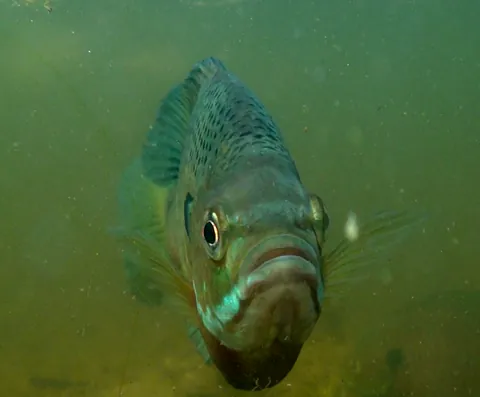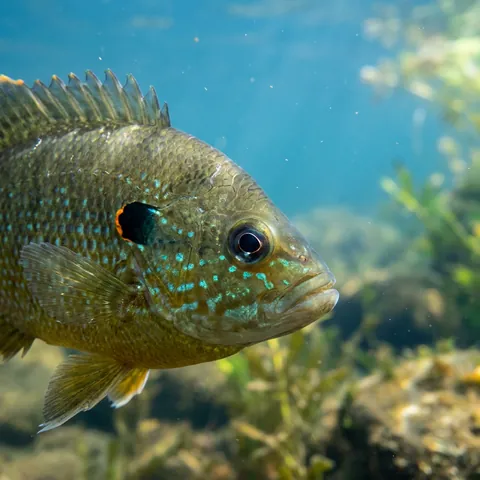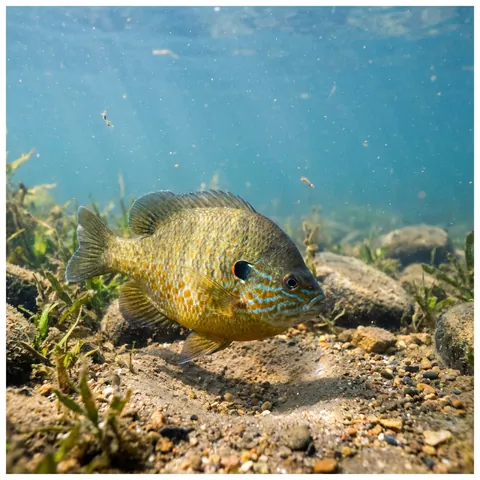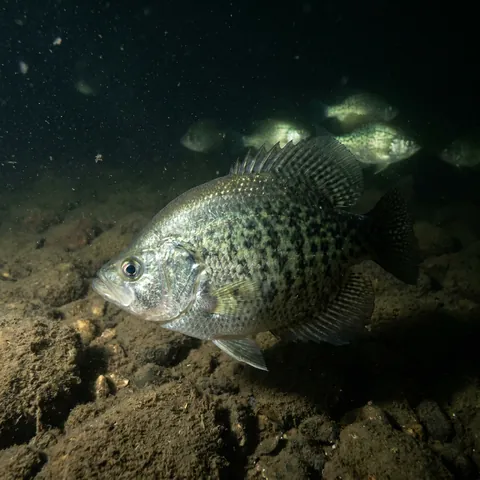
Black Crappie
Pomoxis nigromaculatus
Micropterus nigricans
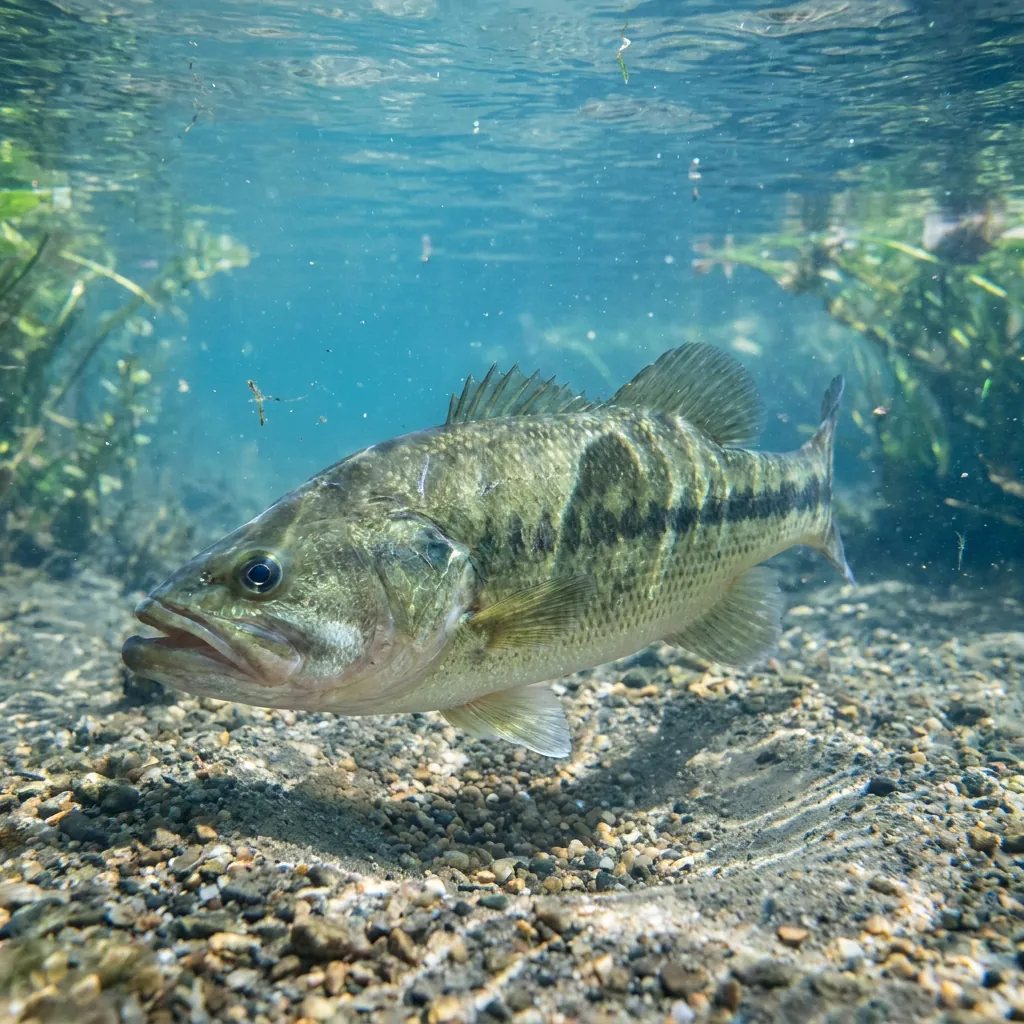
The largemouth bass is a bold, ambush-hunting freshwater fish that waits in weed beds and along drop-offs for prey to pass by. Its huge mouth and quick strike have made it one of the most sought-after fish for anglers across North America.
Also known as: northern largemouth bass, large-mouth black bass
It is the largest of the black bass group, and the only one whose upper jaw reaches back past the eye - a fixed mark that holds even when the body colour changes.
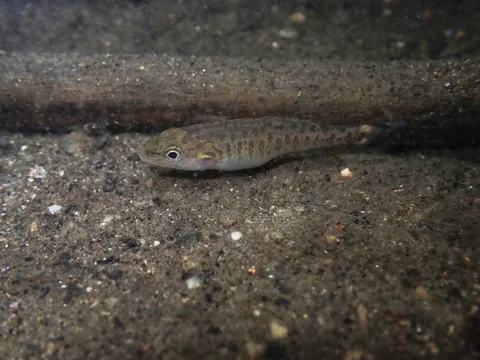
This fish is olive green to greenish-gray, with a row of dark blotches down each side that often join into a jagged stripe. Females grow larger than males.
Young largemouth bass eat small baitfish, water fleas, and insects. Adults switch to bigger prey, such as shad, sunfish, crawfish, frogs, and even young bass. They can take prey half their own body length or longer, and they hunt using sight, sound, smell, and vibration from cover like weed beds and submerged branches.
Bass reach breeding age at about one year old. Spawning starts once the water has warmed enough in spring, earlier in the south than in the north. The male clears a nest on the bottom, mates with a female over it, then guards the eggs alone until they hatch a few days later and the young can swim off on their own.
The largemouth bass is listed as Least Concern. It has been introduced far beyond its native range as a sport fish, and in many of those new waters it preys on and outcompetes native fish, sometimes causing sharp declines in local species.
Largemouth bass introduced to Lake Atitlan in Guatemala have been blamed for wiping out the Atitlan grebe, a large waterbird that once lived only there.
Describe what you saw and we name it, then keep every species you find in your Oceandex.