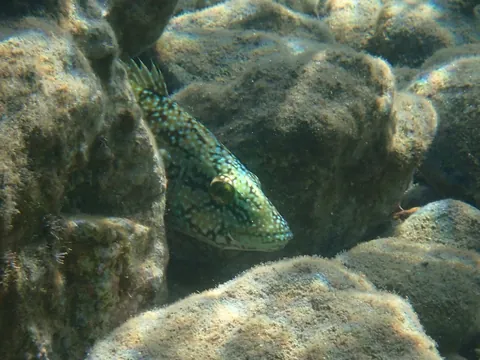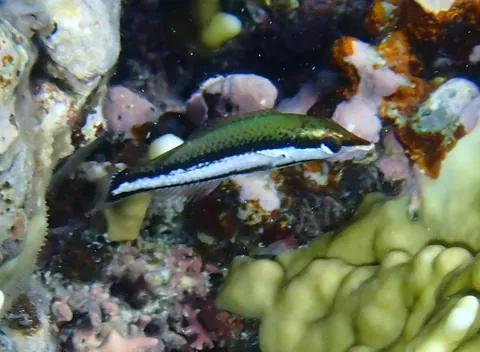
Bird wrasse
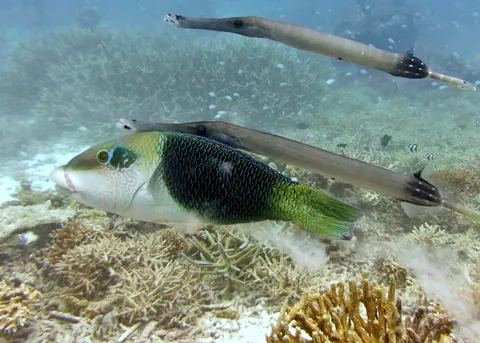
Gomphosus varius
Cheilinus undulatus
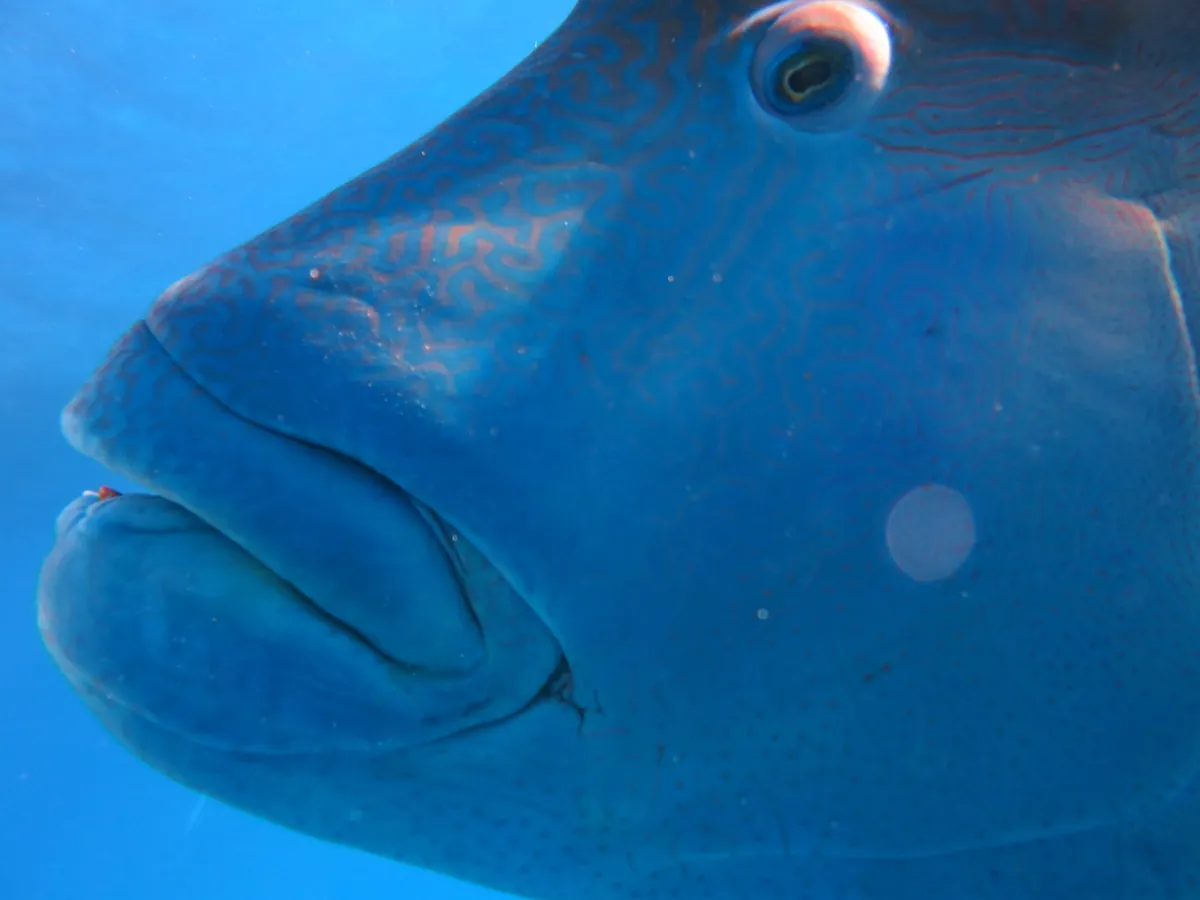
The humphead wrasse is a giant among reef fish, sometimes weighing as much as a grown man. Divers prize an encounter with this gentle giant, which will often approach and watch a diver as much as the diver watches it.
Also known as: cheilinus undulatus, blue-tooth groper, double-headed maori wrasse, double-headed parrot-fish, double-headed wrasse, giant humphead wrasse, giant maori wrasse, giant wrasse, humhead wrasse, hump-headed wrasse, humpback wrasse, humphead, humphead maori wrasse, maori wrasse, napoleon maori-wrasse, napoleon wrasse, napoleonfish, wrasse
No other reef fish reaches this size with thick lips and a forehead hump; on smaller individuals without a hump yet, the two dark lines behind the eye confirm the species.
This is the largest wrasse alive, reaching up to 229 cm and 191 kg, though most individuals seen are closer to 60 cm. It has thick, fleshy lips, two black lines running behind each eye, and older adults grow a pronounced bump on the forehead. Colour ranges from olive to bright green or purplish blue, with a maze of yellow squiggly lines across the head.
Young fish shelter in shallow, sandy areas next to reefs, while adults roam steep outer reef slopes, channels and lagoons down to about 100 m, resting in caves and under ledges at night.
Adults usually swim alone or in a male-female pair, occasionally in small groups. They are opportunistic hunters, cracking open sea urchins by smashing them against rocks and sometimes hunting alongside roving coral groupers. They are one of the few predators willing to eat toxic prey such as sea hares, boxfish and crown-of-thorns starfish.
This is a slow breeder. Fish mature at five to seven years old, and some individuals change from female to male at around nine years. Adults gather at the down-current end of a reef to spawn in groups, releasing eggs and larvae that drift before settling near coral.
reports of ciguatera poisoning
This species is endangered. Heavy targeted fishing for the live reef food trade, along with destructive fishing methods, habitat loss and illegal fishing, has driven steep declines across its range, and management remains patchy.
In Sabah, on Borneo, unchecked export for the live-fish trade caused the local humphead wrasse population to crash by roughly 99% before a ban was put in place.
Describe what you saw and we name it, then keep every species you find in your Oceandex.