Bleak
Alburnus alburnus
Gobio gobio
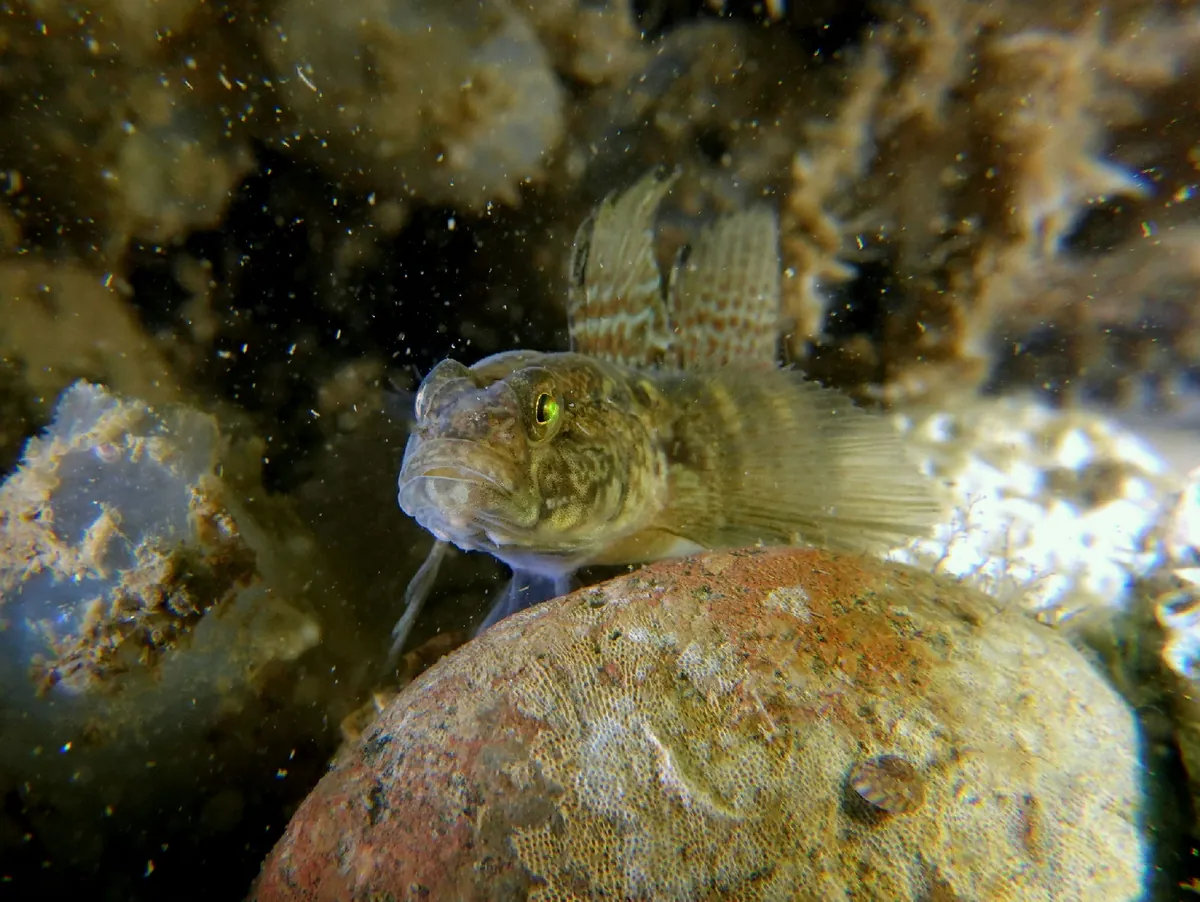
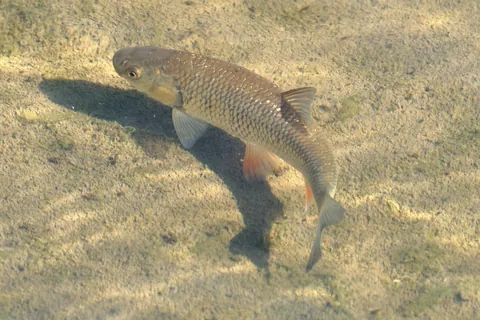
The gudgeon is a small, slender river fish found across much of Europe, usually moving in tight shoals just above the bottom. It rarely grows past 21 cm, and most you meet will be much smaller.
Also known as: Gobio gobio; goujon; common gudgeon
It can look like other small, silvery river fish at a glance, but few of those have a barbel at each corner of the mouth like this species does.
It has a long, slender, rounded body, greenish-brown on top and silvery on the sides, with a row of faint dark blotches running along its flank and a white belly. Its head is wide and flat with a short barbel, a small whisker-like feeler, at each corner of the mouth.
It lives in rivers, streams, and lakes across central and temperate Europe, from small mountain streams to large lowland rivers, usually down to about 4 metres and in water from 4 to 24 degrees Celsius. It prefers sandy or gravelly bottoms, in both flowing and still water.
Gudgeon move in shoals over sandy and gravelly bottoms and are active mostly during the day, though they can shift to dimmer hours if disturbed by predators. They feed on worms, insects and their larvae, small molluscs, and fish eggs and fry.
Breeding takes place over stones, sand, or plants in shallow water between spring and late summer. Eggs are released just above the bottom and drift briefly before sticking to the substrate, and larvae then settle into sandy, detritus-rich spots with little current.
Harmless.
It can make squeaking sounds underwater, thought to be a way of communicating with other gudgeon nearby.
Describe what you saw and we name it, then keep every species you find in your Oceandex.