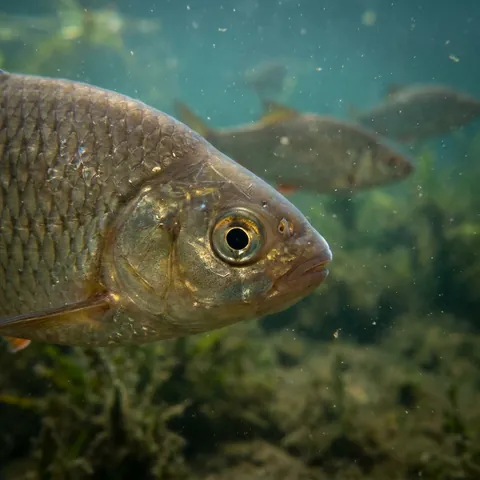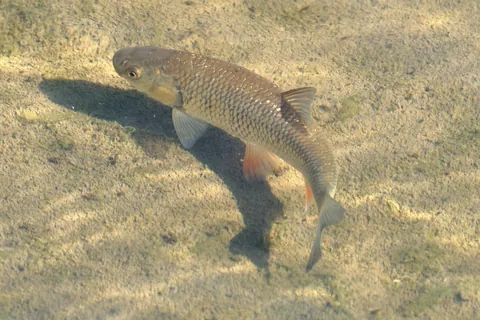
Chub
Squalius cephalus
Alburnus alburnus
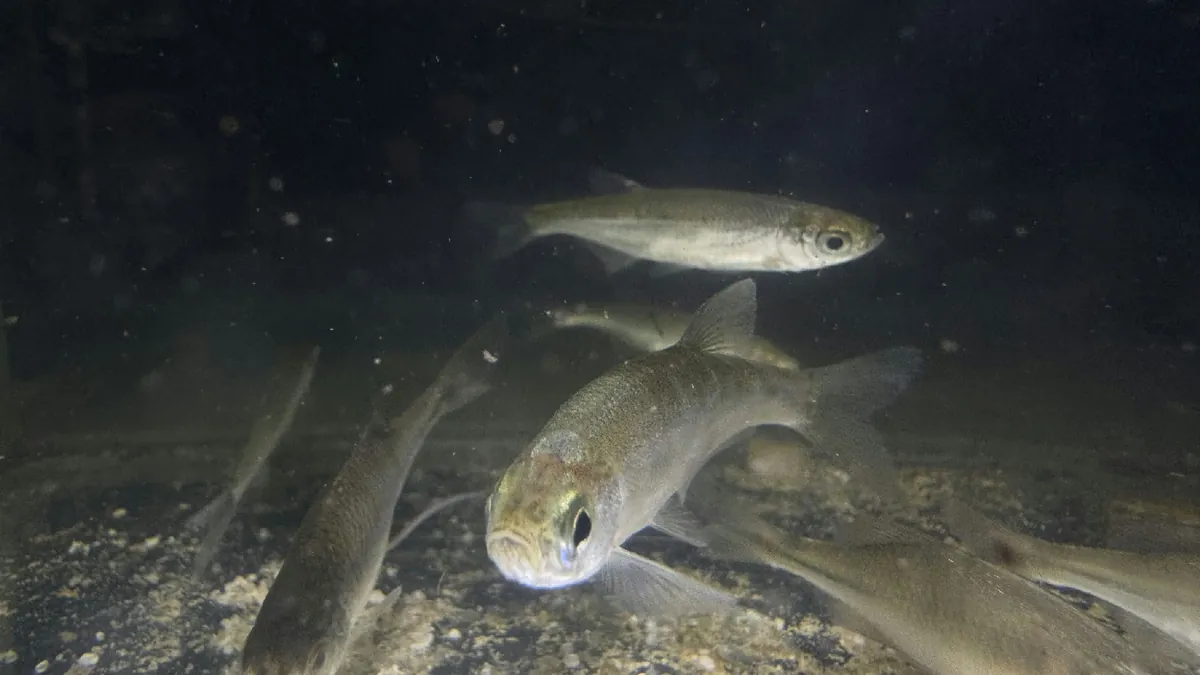
The bleak is a small, silvery schooling fish that gathers in huge numbers near the surface of European lakes and rivers. It usually grows to about 12 cm, with a maximum size of 25 cm and 60 g.
Also known as: Alburnus alburnus; ablette; common bleak
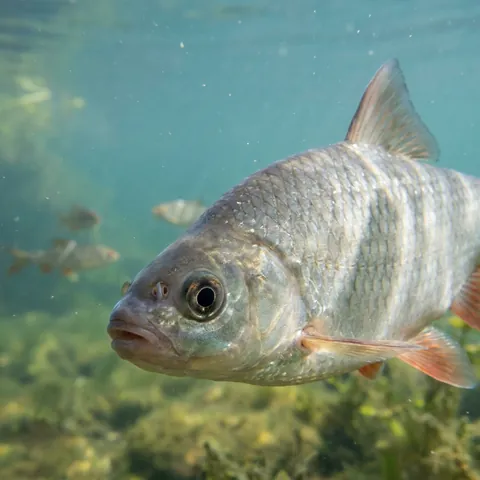
Young bleak are often mistaken for young bream or silver bream, and can look like roach or ruffe too. The bleak's small, pointed mouth turns sharply upward, a feature that already sets it apart even in young fish.
The bleak has a flat, elongated body with a shiny silver colour and pointed, colourless fins. Its head is pointed too, ending in a small mouth that turns upward. The anal fin along its underside is noticeably long.
Bleak live in open water in streams, lakes, and medium to large rivers, forming large shoals near the surface. They gather where food washes in, such as below weirs or near pumping-station outflows, and pack into still backwaters over winter.
Bleak spawn near the shore in shallow water, often over stony ground or submerged plants, though the type of substrate does not seem to matter much. A female lays her eggs in several batches, and breeding males develop small bumps on the back and flanks along with orange-tinted fins.
Harmless.
Bleak scales were once scraped off and used to make a crystalline coating called essence d'Orient, applied to glass beads to create imitation pearls.
Describe what you saw and we name it, then keep every species you find in your Oceandex.