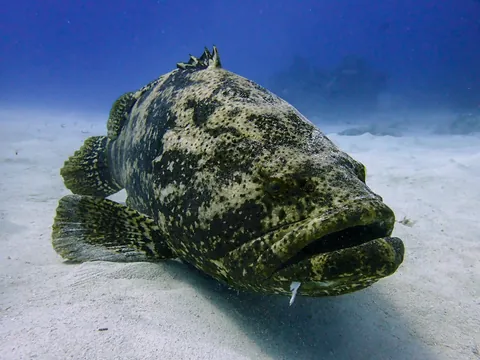
Atlantic goliath grouper
Epinephelus itajara
grouper_basslets
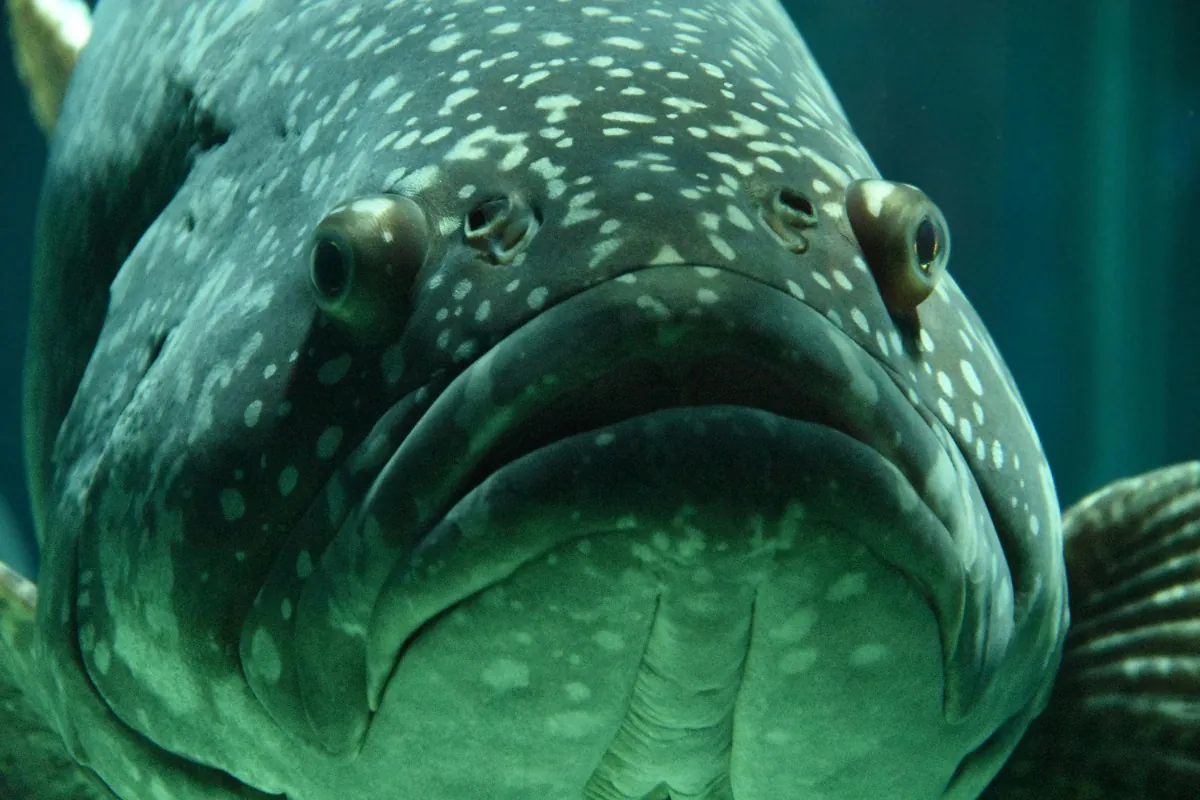
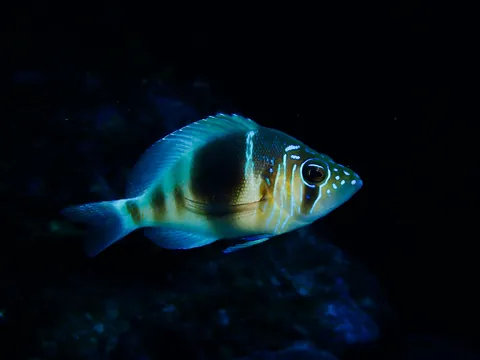
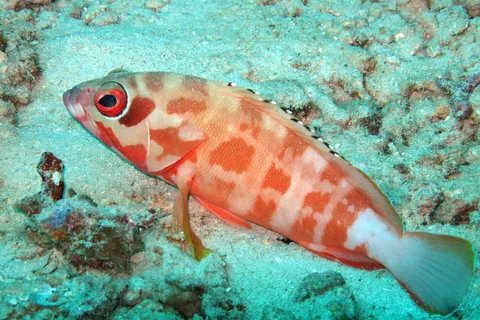
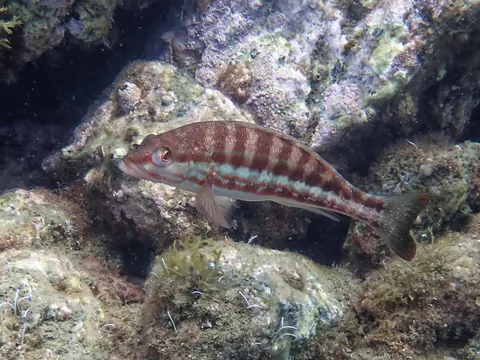
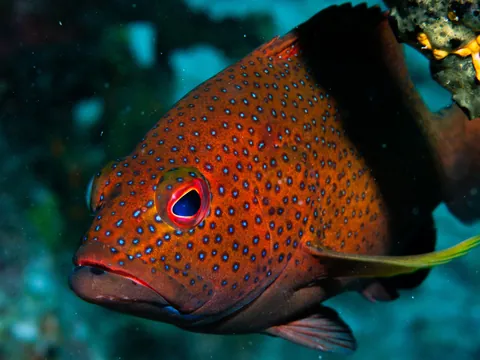
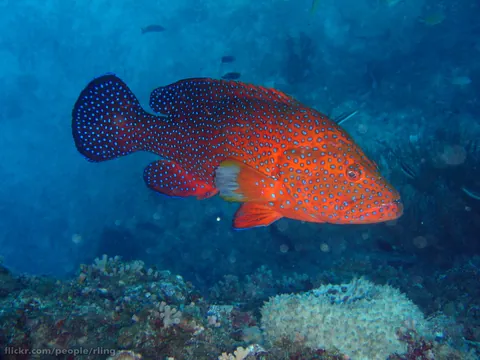
Groupers are heavy-bodied fish with a big mouth, often seen resting near reef structure. In this app the group includes the Dusky Grouper, the Honeycomb Grouper, and the Peacock Hind.
A stout body, a big mouth, and a slow, hovering way of resting near rocks or coral point to a grouper rather than a slimmer, faster-swimming reef fish. Size is the easiest way to tell the different kinds apart, from small hinds under a metre to giant species several times that length.
Groupers have a stout, thick body and a large mouth, built for a quick strike rather than fast swimming. Size varies a great deal across the group: some species stay under a metre, while the largest, the Atlantic goliath grouper, can reach nearly 2.5 metres and almost 400 kilograms.
Groupers often shelter under big rocks or ledges, sometimes digging out sand from underneath with a jet of water from their gills to make a den.
Groupers swallow their prey whole rather than biting off pieces, pulling it in with a strong sucking action of the mouth and gills. Some species lie in wait and ambush prey, while others hunt more actively. A few kinds, such as the roving coralgrouper, are known to hunt together with moray eels.
Groupers feed on fish, octopuses, and crustaceans. They have few teeth at the edge of the jaw but strong crushing tooth plates further back in the throat. Groupers are also one of the few animals known to eat invasive red lionfish.
Most groupers start life as females and can later change into males; large males often keep a harem of many females. A grouper usually only changes sex once it reaches a certain size. Some grouper species instead keep two separate sexes for life.
generally harmless (very large individuals deserve respect)
Groupers are a common source of a foodborne illness called ciguatera poisoning, caused by toxins that build up in their flesh over time.
Describe what you saw and we name it, then keep every species you find in your Oceandex.