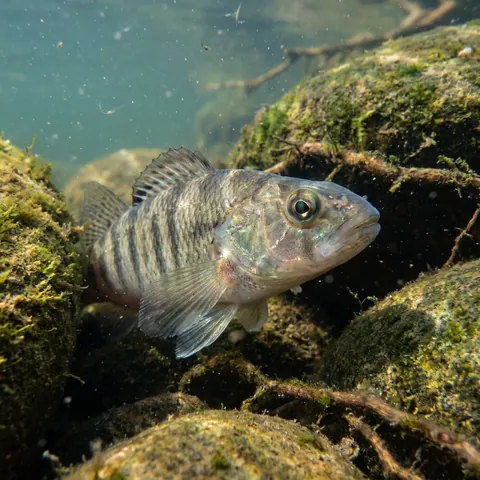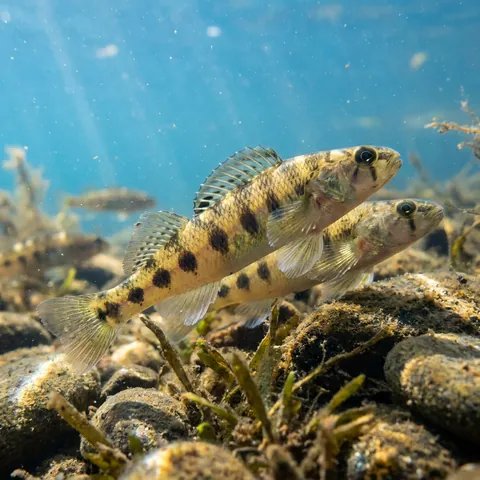
Blackbanded Darter
Percina nigrofasciata
Etheostoma blennioides
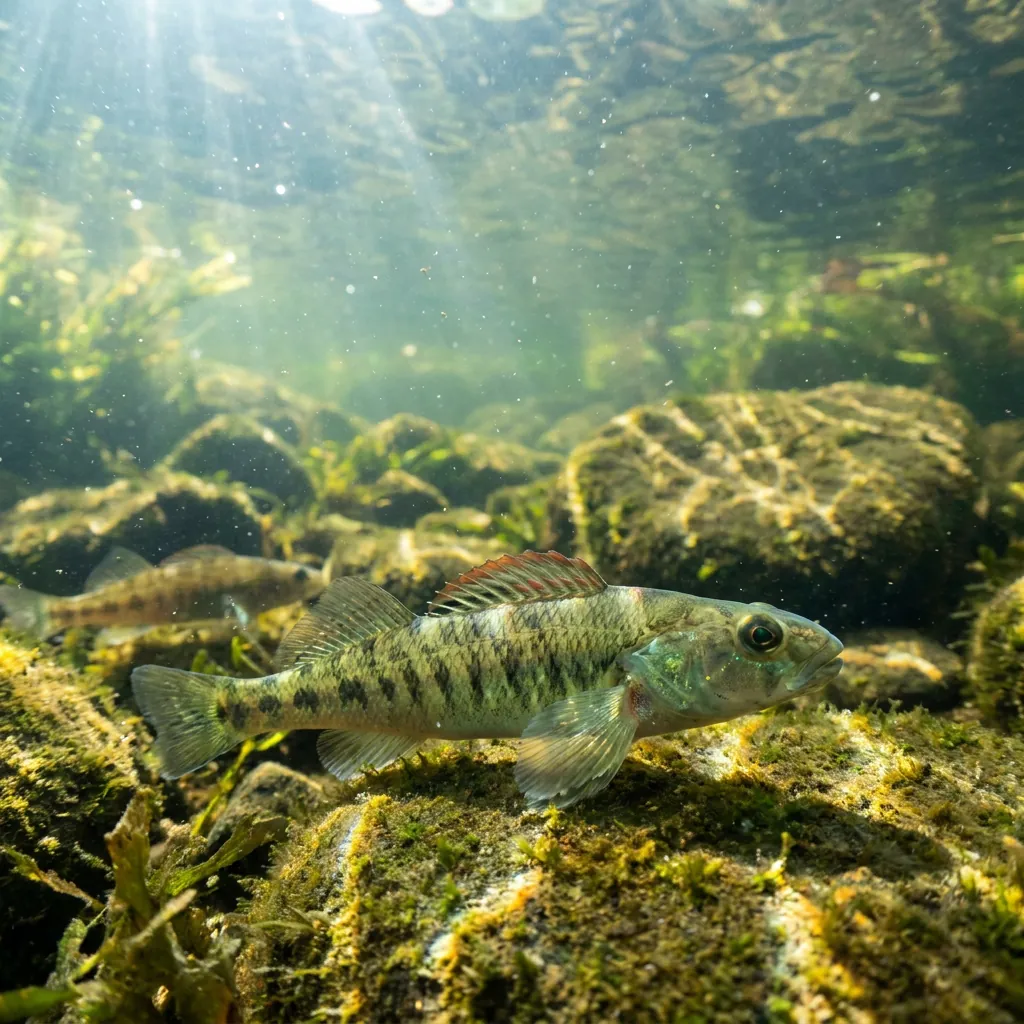
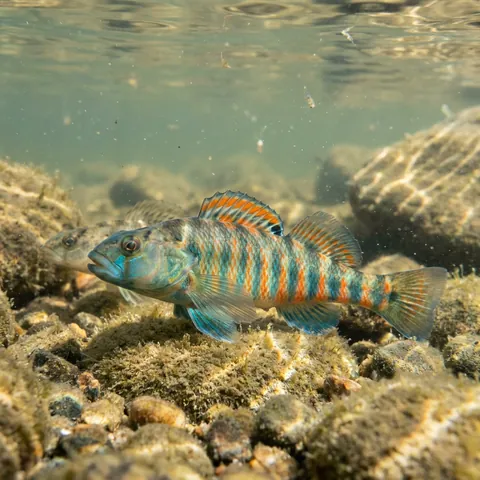
This darter gets its name from the row of green markings down its sides, a pattern that turns even brighter on breeding males guarding a patch of riffle.
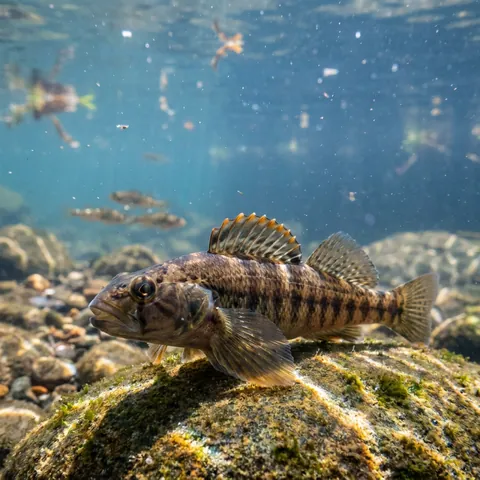
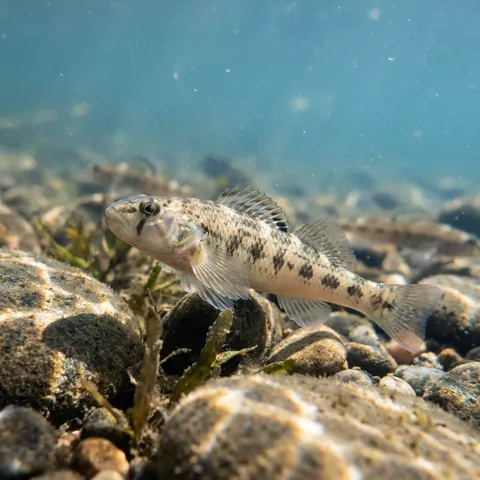
The clearest mark is the row of dark green U- or W-shaped blotches along the sides, set against a greenish-brown back with squared saddle marks. This combination sets it apart from the many similar stream darters sharing its riffles.
A long, slender fish with a long, rounded snout. The back is greenish-brown with several dark, squared saddle marks, and the sides carry dark green blotches shaped like U's or W's. Breeding males show bright green fins, a red band at the base of the dorsal fin, and blue-green colour on the head, sometimes with black markings.
Lives in gravel riffles of large creeks and medium rivers in the eastern United States and southern Ontario. It favours swift water over large boulders and rubble.
It eats insects, feeding on black fly and midge larvae along with mayfly and caddisfly nymphs. It breeds from February to April; males guard territory in deep, swift riffles, and females move in from pools below when ready to spawn. The eggs stick together in clumps on algae, moss, or riverweed covering the rocks.
When Constantine Rafinesque first described this darter in 1819, he used it to set up the entire genus Etheostoma. Decades later, scientists picked this species as the official type specimen that defines what an Etheostoma darter is.
Describe what you saw and we name it, then keep every species you find in your Oceandex.