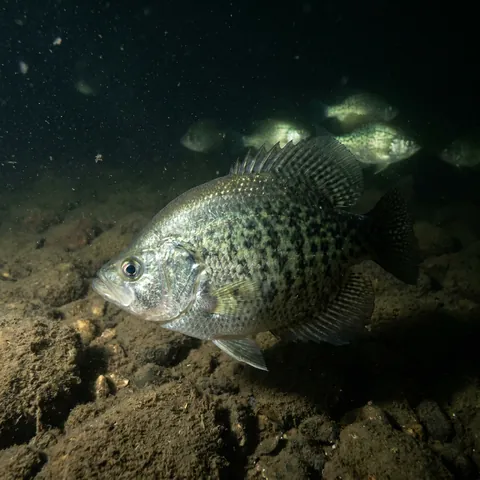
Black Crappie
Pomoxis nigromaculatus
Lepomis cyanellus
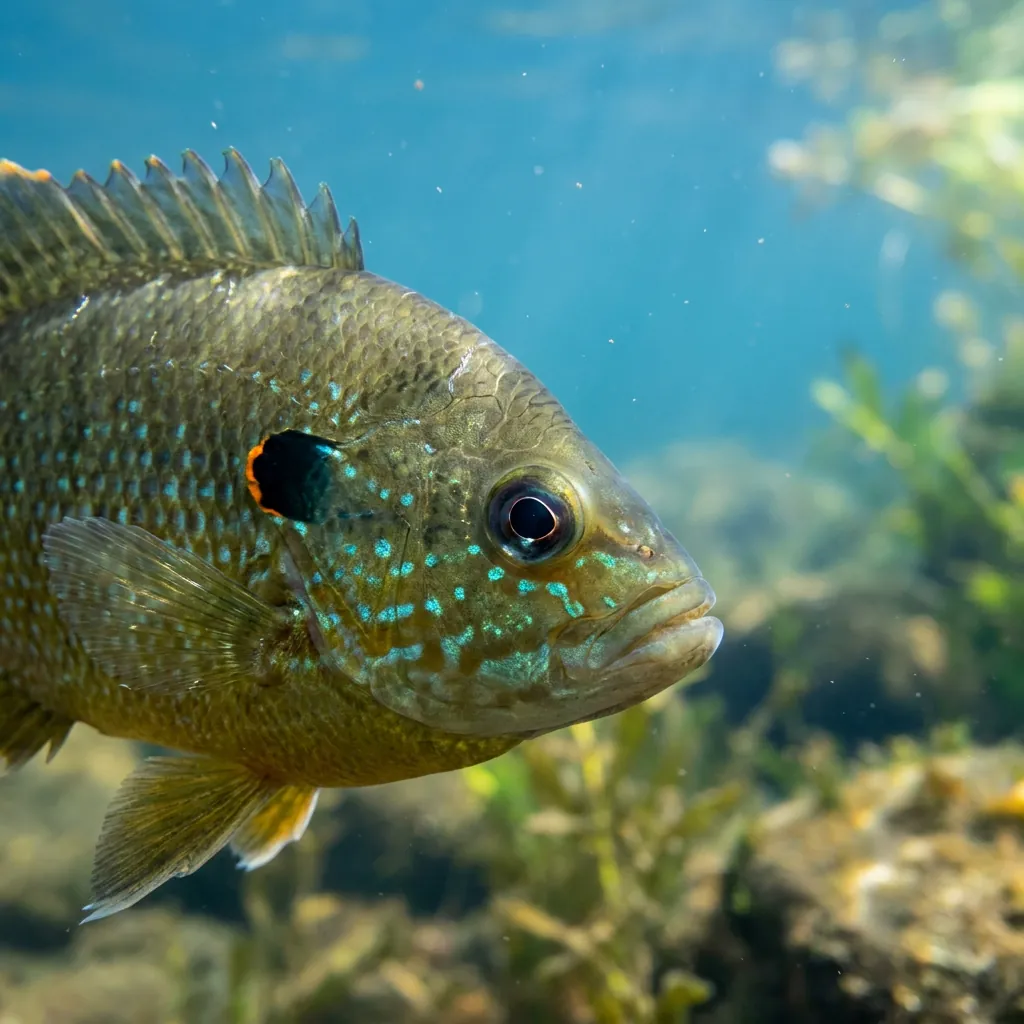
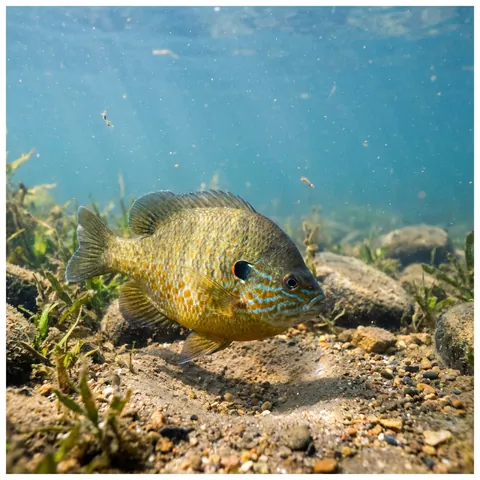
The green sunfish is a scrappy, big-mouthed panfish of ponds and slow rivers, quick to chase off other fish from a good hiding spot. Its bright blue face markings make it one of the more colourful sunfish in the water.
Also known as: green perch
The blue facial stripes make it easy to mistake for a bluegill. Check the mouth instead: the green sunfish's mouth and snout are noticeably larger, reaching back under the middle of the eye.
Its back and sides are blue-green, flecked with yellow, and the belly is yellow too. Broken, bright blue stripes cross the gill covers and sides of the head. It carries a dark spot near the back of the dorsal fin, another at the base of the anal fin, and one on the flap of the gill cover. The soft rear edges of the dorsal, tail, and other fins are washed with orange or yellow, brightest when the fish is breeding. Its mouth is large and its snout is long, reaching back to below the middle of the eye.
It is native across a wide stretch of North America, from the Rocky Mountains east to the Appalachians and from the Hudson Bay basin south to the Gulf Coast and northern Mexico. It has also been introduced to many other waters and now lives well beyond its original range. It favours sluggish backwaters, lakes, and ponds with gravel, sand, or bedrock bottoms, tolerates muddy conditions, and stays close to cover such as rocks, logs, and plants.
Males build a nest by clearing a shallow depression in the bottom, often next to shelter like rocks or a log, and defend it against rival males with displays and, if needed, force. A male may court a female with grunting sounds and lead her to the nest, where she lays her eggs before leaving. He then guards the eggs alone, fanning them with his fins to keep them clean and supplied with oxygen until they hatch, and the fry stay near the nest for a few days afterward.
Because it often nests close to other sunfish species, a female will sometimes lay her eggs in another species' nest, producing hybrid offspring that can look like a blend of both parents.
Describe what you saw and we name it, then keep every species you find in your Oceandex.