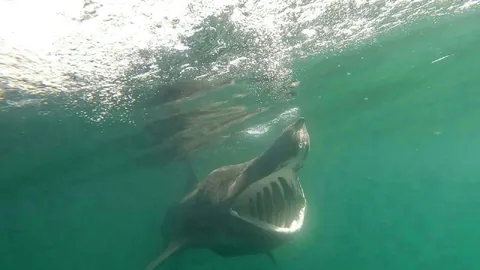
Basking Shark
Cetorhinus maximus
Carcharodon carcharias
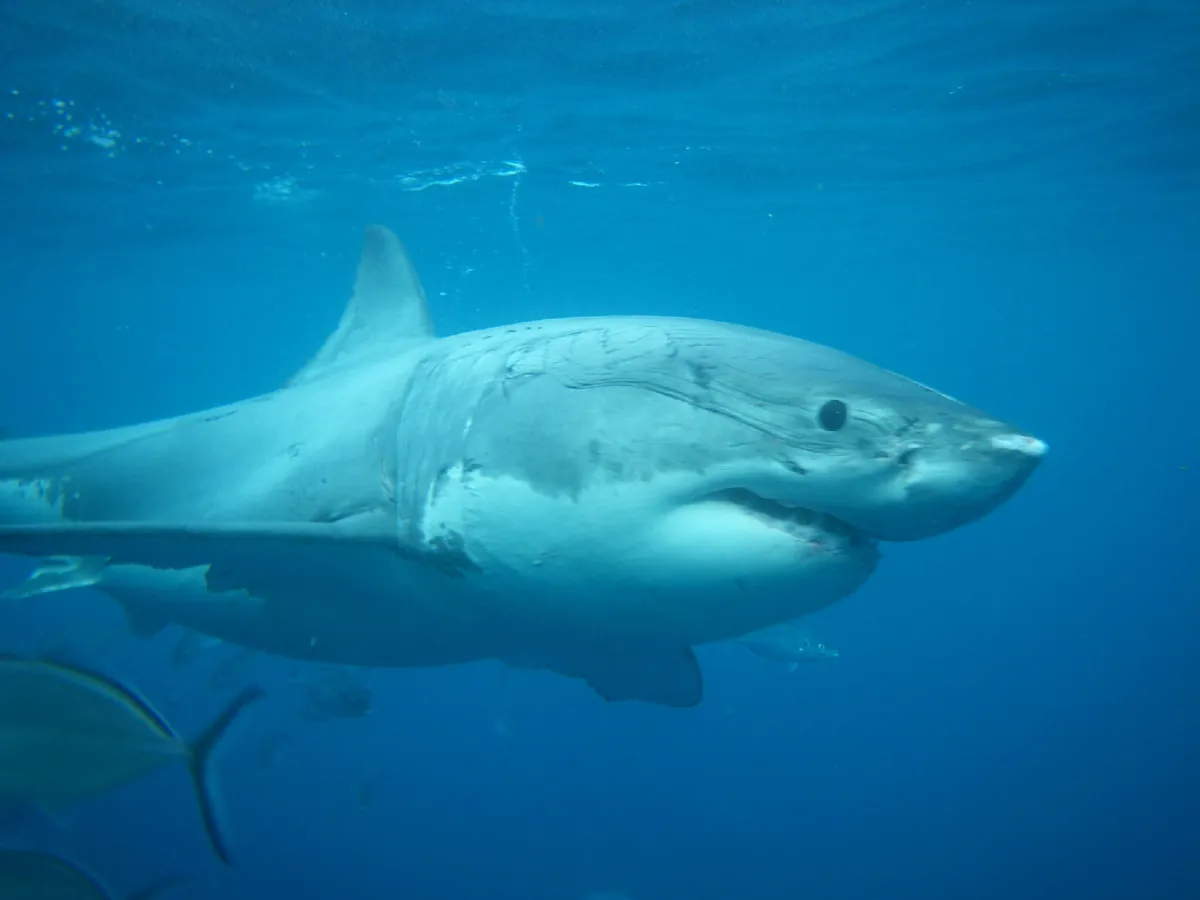
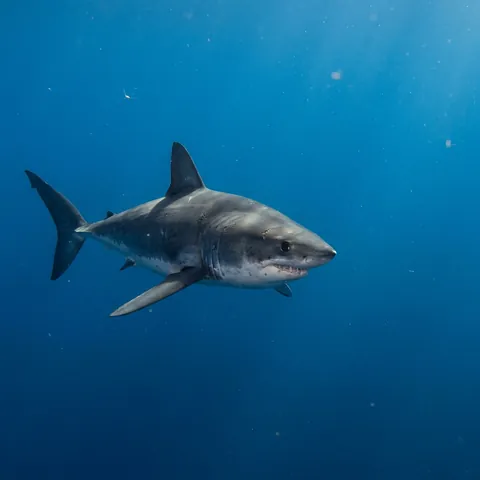
Few animals in the ocean carry the reputation of the great white shark. It is one of the largest predatory fish alive, reaching up to 6.4 m in length.
Also known as: carcharodon carcharias, man eater, man-eater, man-eater shark, maneater, mango-taniwha, mango-ururoa, shark, white death, white pointer, white shark
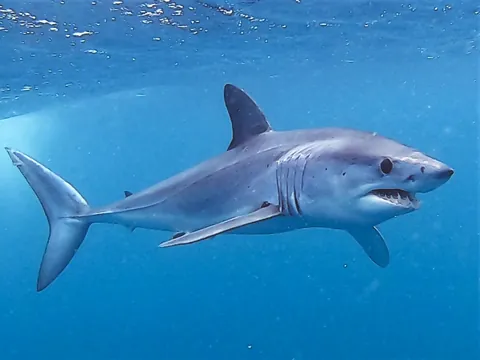
Its size and torpedo shape resemble other large pelagic sharks, but the sharp white underside with black-tipped pectoral fins against a dark grey back is a clear tell for the white shark.
It has a stocky, torpedo-shaped body with a short, cone-shaped snout and long gill slits that do not wrap around the head. A large triangular first dorsal fin sits roughly above the pectoral fins, the paired fins behind the gills, with a much smaller second dorsal fin behind it. The tail fin has two lobes of similar size with a single ridge, or keel, running along its base. Colouring is countershaded for camouflage: dark blue-grey to grey-brown above, white below, with black tips on the underside of the pectoral fins.
White sharks range from tropical to cold temperate seas worldwide, using nearshore reefs, banks, and headlands as well as the open ocean. They usually stay above 250 m but can dive as deep as 1,200 m.
It must keep swimming to breathe, pushing water over its gills constantly. Most of its muscle is built for short, fast bursts, useful for ambushing prey, while a smaller portion of darker muscle sustains steady cruising. A large, oil-rich liver helps keep it from sinking.
An apex predator, it opportunistically eats fish, squid, marine mammals such as seals and dolphins, sea birds, and sea turtles. Larger individuals take seals and other mammals, while smaller ones stick to fish and squid. It usually ambushes seals from below, targeting young animals still small and inexperienced.
Little is known about how white sharks mate. The few observed or inferred encounters describe belly-to-belly rolling in shallow water, though some researchers believe mating may also happen far offshore.
potentially dangerous — a large apex predator; observe only with proper precautions
The species is assessed as vulnerable, with an estimated population decline of 30 to 49 percent since around 1859. The main threats are accidental capture in fishing gear and shark nets set to protect beaches.
Its liver can hold nearly a third of its body weight in fats and oils, and by one estimate packs more energy than the same amount of whale blubber.
Describe what you saw and we name it, then keep every species you find in your Oceandex.