Basking Shark
Cetorhinus maximus
Lamna ditropis
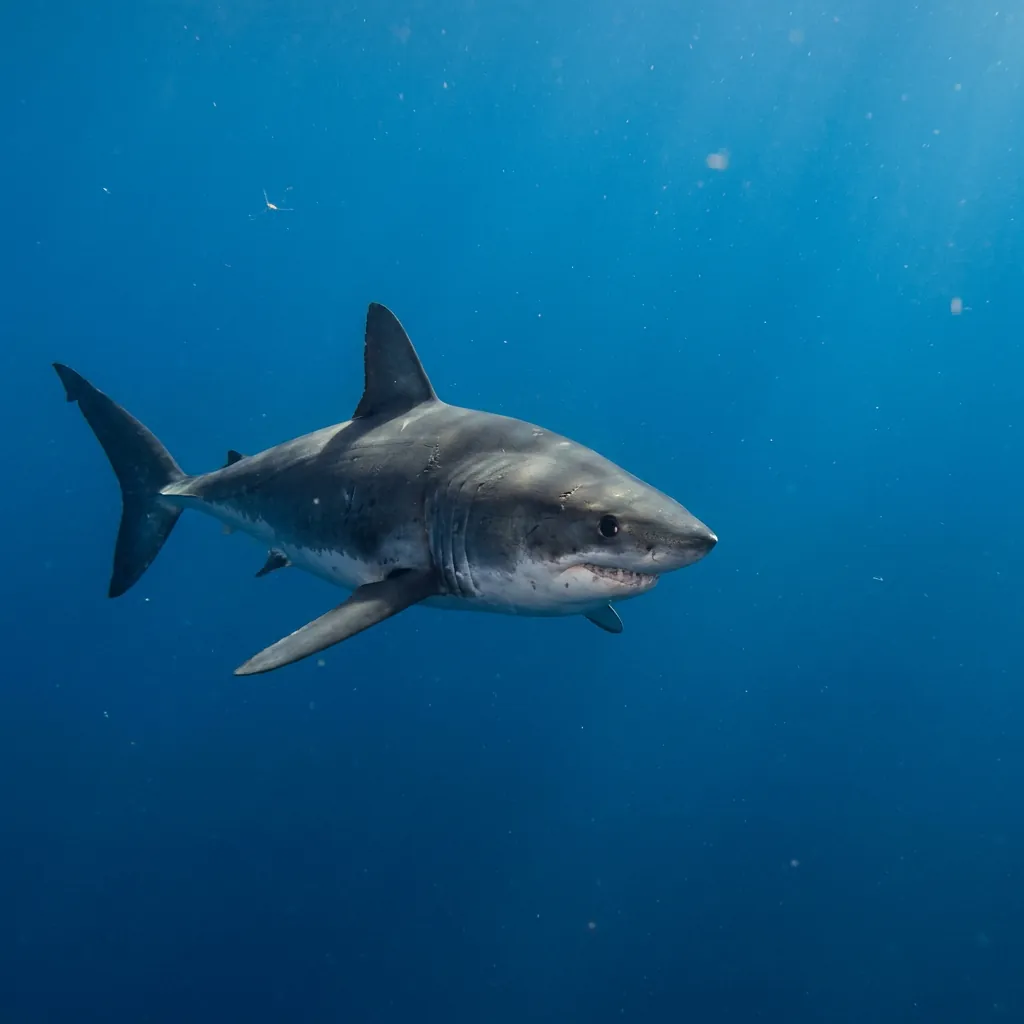
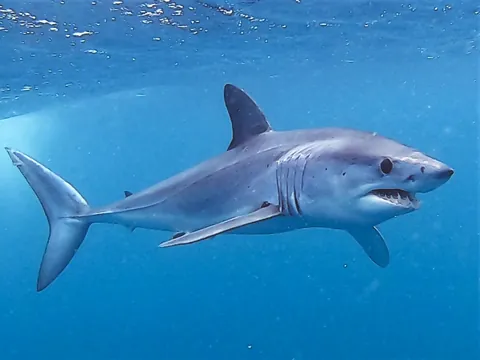
The salmon shark is a fast, cold-water hunter of the North Pacific, built along the same lines as its relative the great white shark, just smaller. It can grow to about 305 cm long and up to 175 kg.
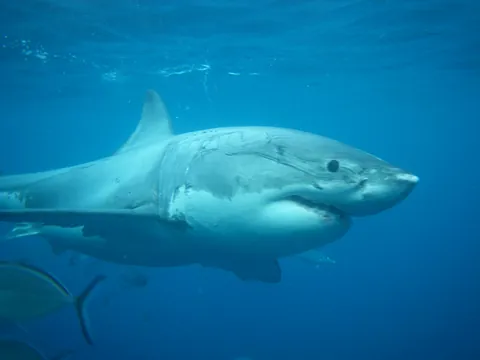
This shark closely resembles a small great white shark. The one other shark with the same double-keeled tail base is its close relative, the porbeagle; a plain, single-keeled tail base points to a great white instead.
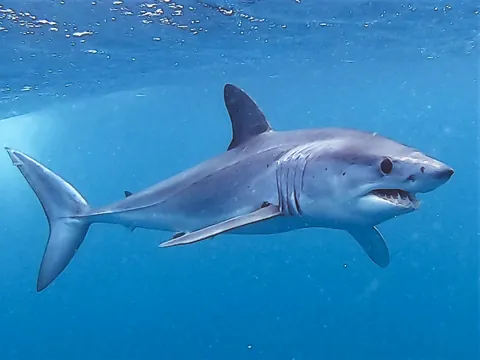
Adults are medium grey to black on top with a white underside marked by darker blotches; young sharks look similar but usually lack the blotches. The snout is short and cone-shaped, and the eyes sit well forward on the head, giving the shark strong binocular vision for spotting prey. Its tail has a wide base with a double keel, a main ridge plus a smaller second ridge running along the lower lobe.
It lives across the North Pacific, from sub-Arctic waters south to the Sea of Japan, and ranges from just offshore to well out to sea. It can dive deep but usually stays in the sunlit upper layer of the ocean. Large numbers gather in Prince William Sound, Alaska, during the annual salmon run.
This shark can keep its body warmer than the surrounding sea, using a network of blood vessels that traps heat before it escapes through the gills. That warmth lets it stay active and hunt fast in cold water that would slow most fish down. It usually hunts alone or in small groups, but it can also gather in large hunting groups to chase migrating salmon.
Pups develop inside the mother and hatch from eggs before birth, feeding on other eggs she produces rather than through a placenta. Once born, they are fully independent and receive no care from either parent. Pups are born off Baja California.
The IUCN lists this shark as Least Concern, but it grows and breeds slowly, like the great white shark, which makes it vulnerable to overfishing. Young sharks are very sensitive to changes in water temperature, so warming oceans could hit the species hard, and fishermen in Alaska have reported falling numbers.
Unlike most sharks, which hunt alone, salmon sharks sometimes team up in large hunting groups to chase down migrating salmon during the annual run.
Describe what you saw and we name it, then keep every species you find in your Oceandex.