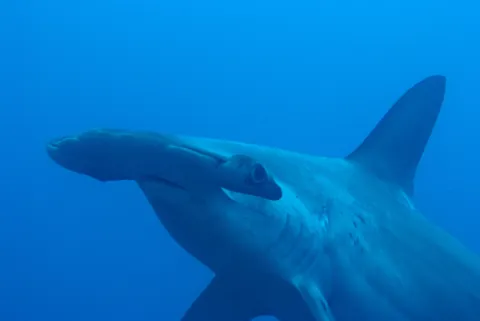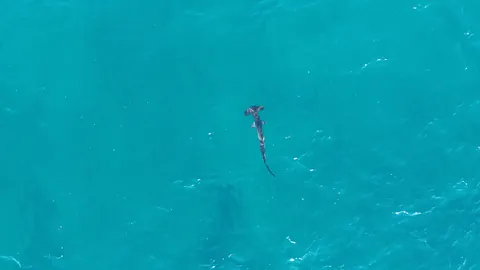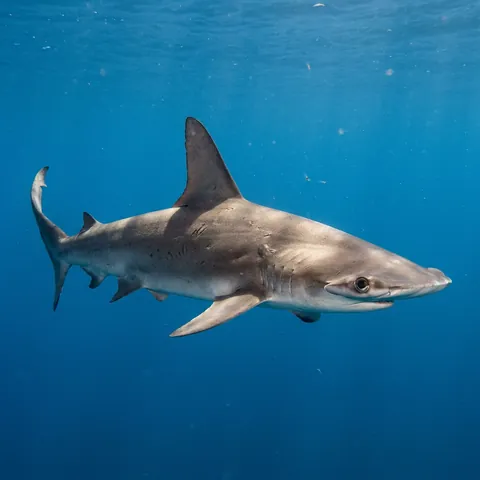
Bonnethead
Sphyrna tiburo
Sphyrna mokarran
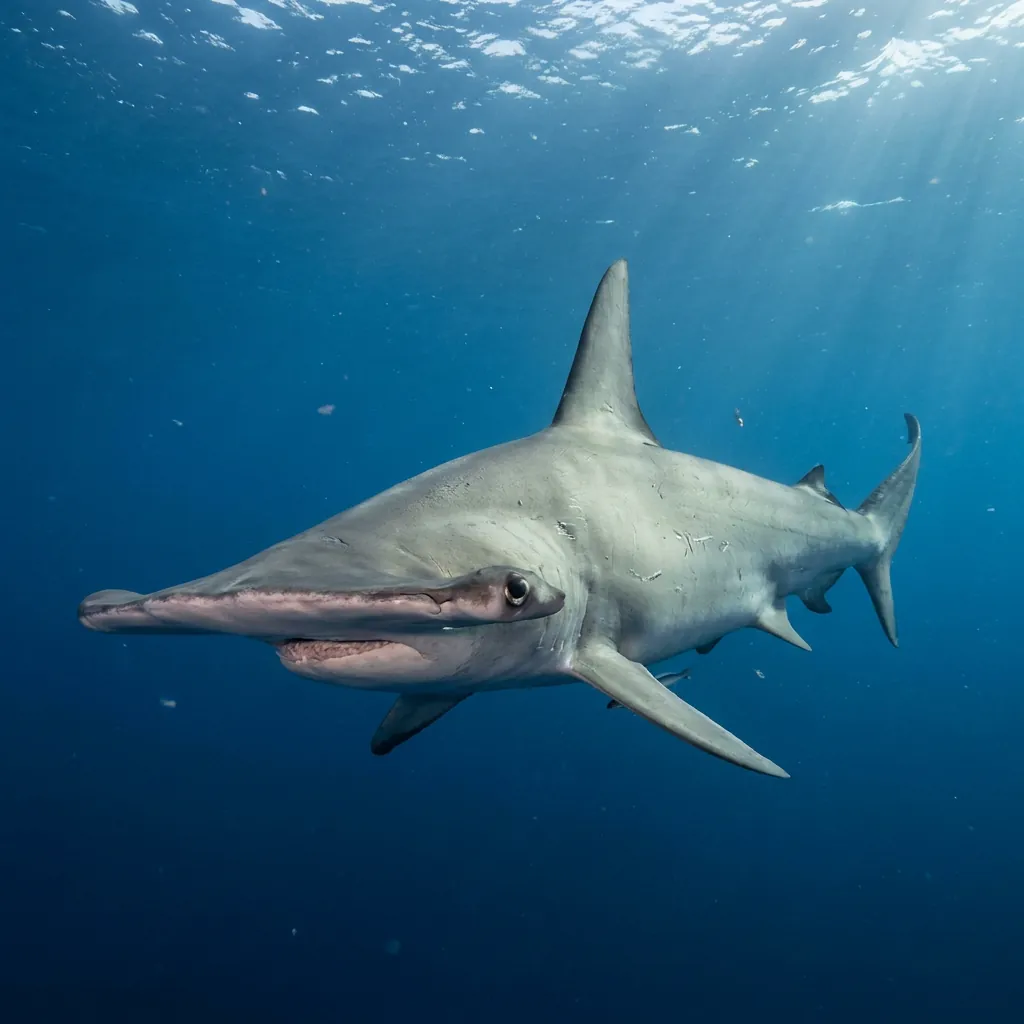
The great hammerhead is the largest of the hammerhead sharks, a solitary open-water hunter that most reef sharks give a wide berth. It can reach 6.1 metres, though most adults are closer to 3.7 metres.
Also known as: sphyrna mokarran, great hammerhead shark, hoe-head shark, scalloped hammerhead, smalleye hammerhead, smooth hammerhead, squat-headed hammerhead shark
It looks similar to the scalloped and smooth hammerheads. Check the front edge of the head: nearly straight in the great hammerhead, arched in the scalloped hammerhead.
Its head is flattened into a wide, hammer-shaped structure called a cephalofoil, with a nearly straight front edge and clear notches at the centre and sides. The first dorsal fin is very tall and sharply curved, set just above the pectoral fins, and the pelvic fins are also sickle-shaped with a curved rear edge.
It roams tropical and warm-temperate seas worldwide, from shallow water under a metre deep to about 100 metres offshore. It favours coral reefs but also crosses continental shelves, island terraces, and lagoons, and moves toward the poles in summer in some regions.
The great hammerhead is a nomadic, mostly solitary shark that other reef sharks tend to avoid. When threatened, it drops its pectoral fins and swims stiffly as a warning display. It is sometimes seen trailed by pilot fish or approached by yellow jacks that rub against its sides.
It hunts crabs, lobsters, squid, and a wide range of bony fish, along with smaller sharks. It specialises in eating rays and stingrays, swinging its wide head over the sea floor to sense their buried bodies, and seems unbothered by swallowing their venomous spines.
generally not aggressive but a large shark — observe with respect
The great hammerhead is listed as Critically Endangered, mainly due to its low numbers and slow reproduction, which make it very vulnerable to overfishing. In the northwest Atlantic and Gulf of Mexico, where it is mostly caught as bycatch, numbers have dropped by half since the 1990s.
Great hammerheads often swim tilted almost on their side, using the tall dorsal fin for lift, a trick that can cut their swimming energy costs by around 10%.
Describe what you saw and we name it, then keep every species you find in your Oceandex.