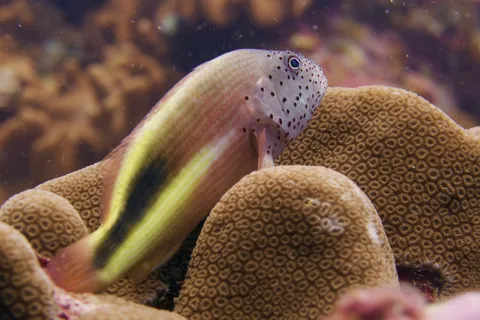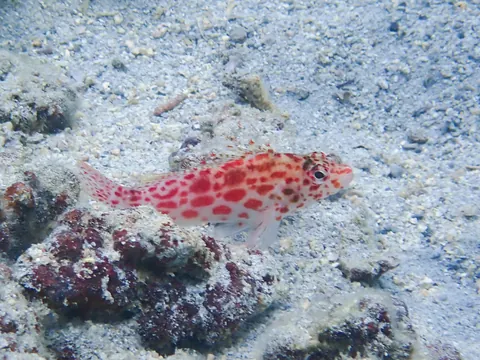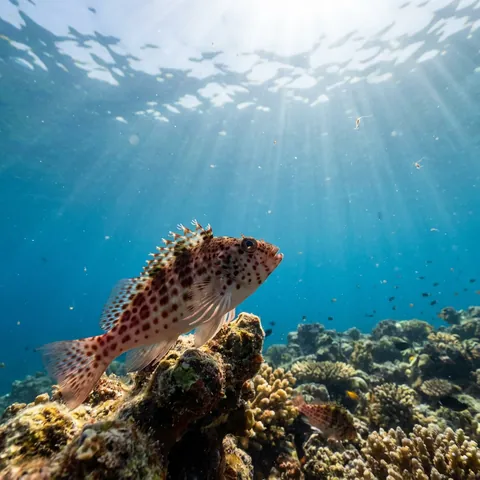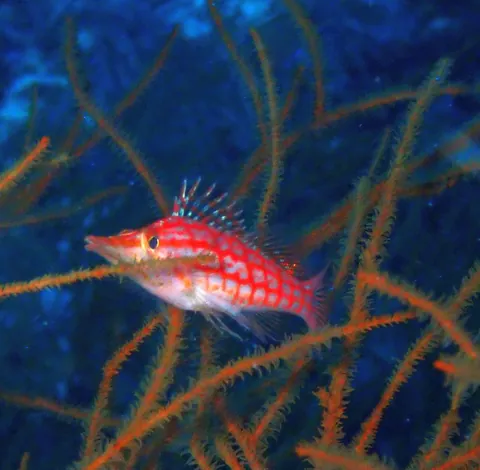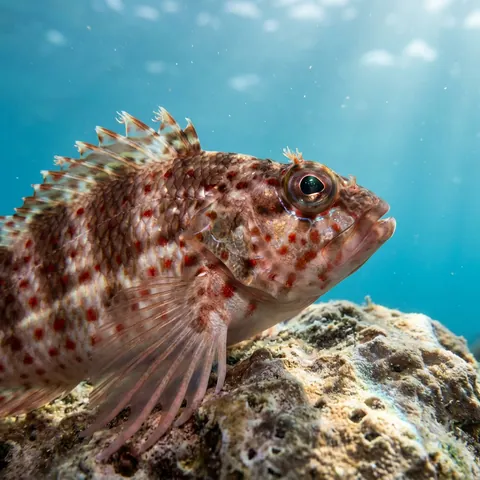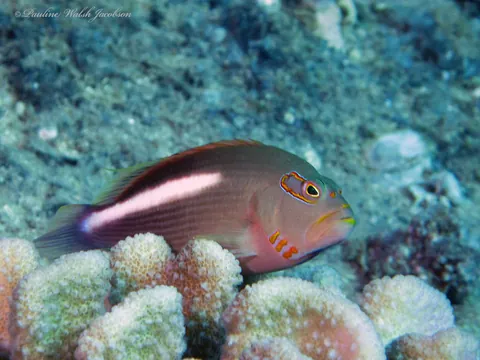
Arc-eye hawkfish
Paracirrhites arcatus
Cirrhitus rivulatus
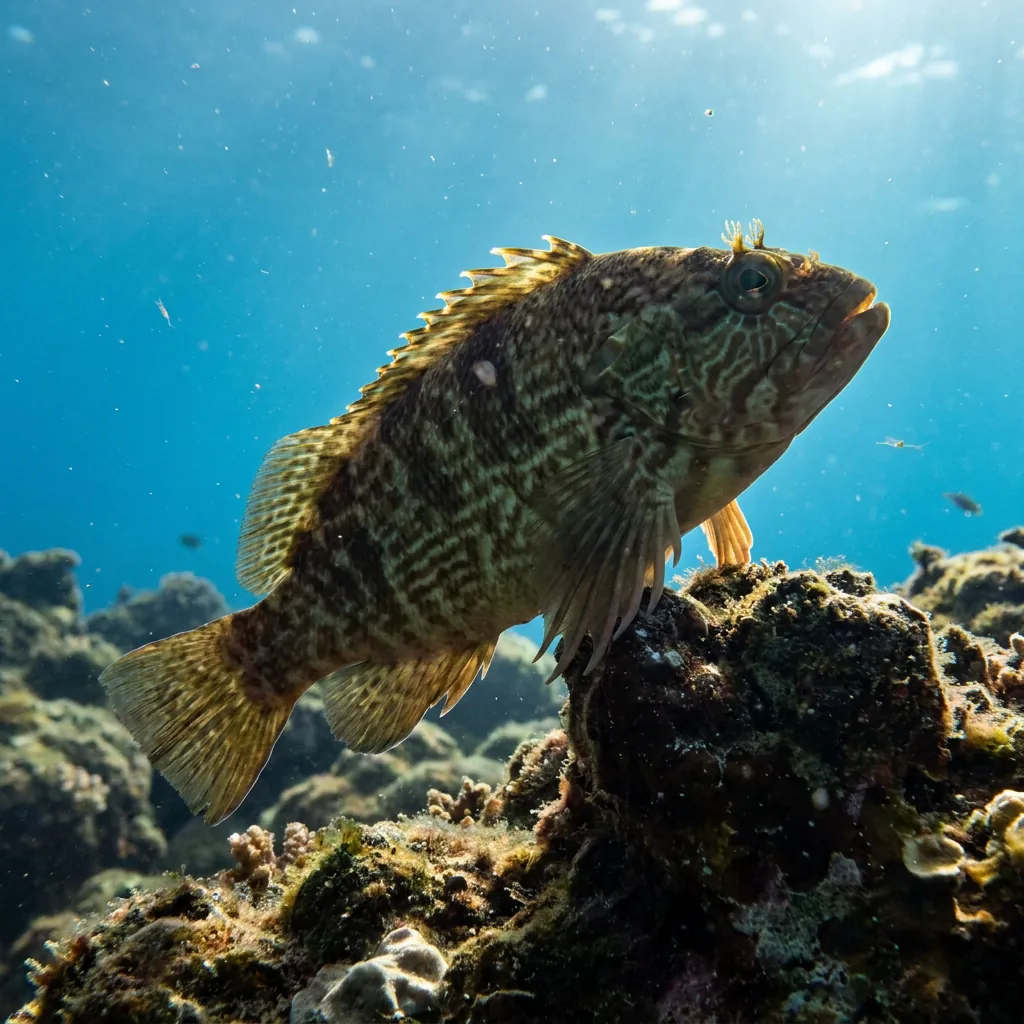
The giant hawkfish is the largest member of the hawkfish family, a heavy-bodied ambush hunter that blends into rocky reefs. It spends most of its time sitting motionless on ledges, waiting for prey to pass.
It can be confused with other hawkfish that share a similar barred pattern. Look for the pair of white spots on the upper back — a fixed mark present on most adults of this species that similar hawkfish do not share.
This fish has a deep, thick body and a large head with a blunt snout. Small tufts of skin, called cirri, fringe the nostrils and the tips of the dorsal fin spines. The body is greyish brown, crossed by vertical bars made up of golden-brown markings with black edges and a thin blue outline. Similar golden-brown bands radiate out from the eyes across the head. Most adults carry a pair of white spots on the upper back, while juveniles are white with dark brown bars.
The giant hawkfish lives on rocky reefs in shallow water in the eastern Pacific, from Baja California and the Sea of Cortez down to Ecuador. Juveniles are found in the surge zone and rock pools closer to shore.
This is a solitary, bottom-dwelling fish that rests still on rock ledges, propped on its pectoral fins, where its bar pattern camouflages it against the rock. It ambushes small fish and crustaceans, and in some areas moves into shallower water when the sea warms in spring.
The giant hawkfish is one of the few fish known to prey on small marine iguanas, ambushing them from rocky ledges in the Galapagos region.
Describe what you saw and we name it, then keep every species you find in your Oceandex.