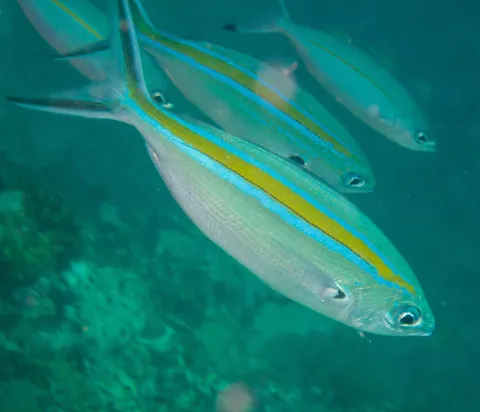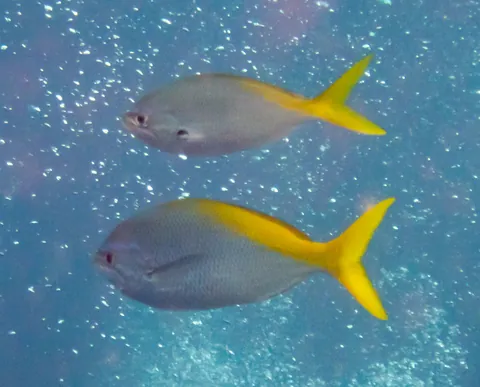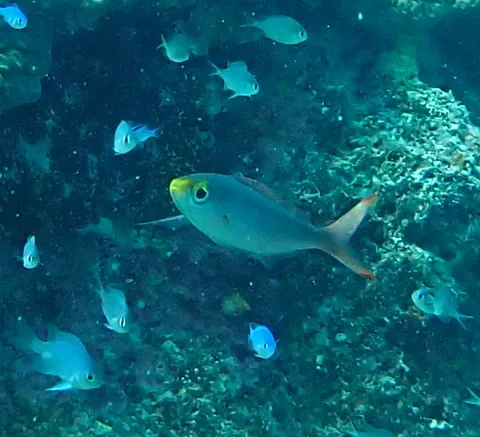
Banana fusilier
Pterocaesio pisang
fusiliers_g318
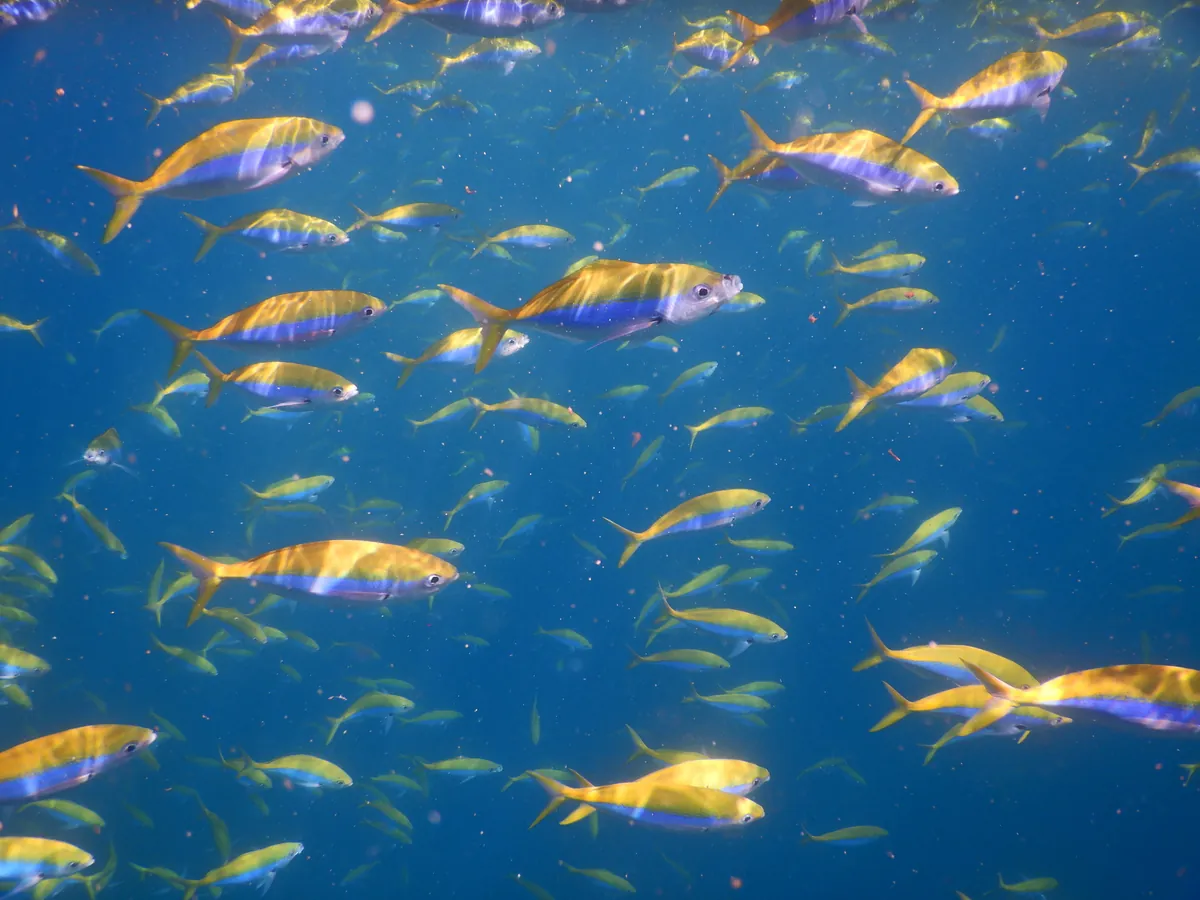
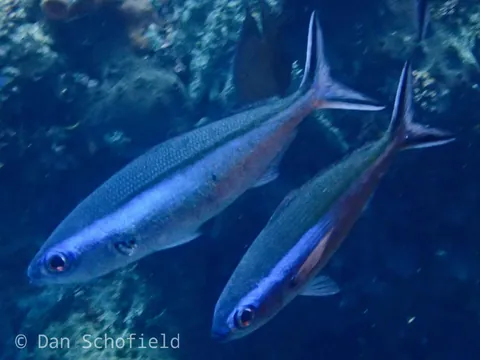
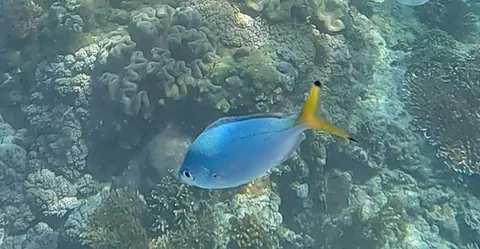
Fusiliers are fast, schooling reef fish that feed on plankton in open water above the reef. In this app the group includes the dark-banded fusilier, the blue and gold fusilier, and the lunar fusilier.
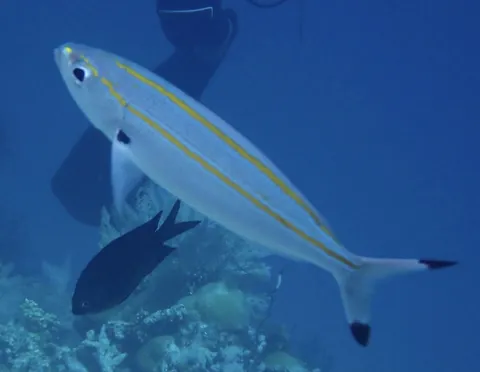
Fusiliers look much like snappers, but one mark always gives them away: the base of the pectoral fin, the fin just behind the gills, is black in every fusilier. Members are mostly told apart by the colour and pattern of their stripes.
Fusiliers have a slim, torpedo-shaped body, similar to snappers, with a small mouth and small teeth. The tail fin is deeply forked with pointed tips. Most species grow to about 30 cm, though some reach up to 60 cm. Many have stripes along the sides, and some have black marks on the tail.
Fusiliers live only in the Indo-Pacific, on coral reefs from near the surface down to about 60 metres.
Fusiliers swim in large schools, often mixing several fusilier species together. They are active during the day, feeding in open water over the reef, along steep outer slopes, and around pinnacles. They pause to feed or visit cleaner fish stations, and shelter inside the reef at night.
Fusiliers feed on zooplankton, tiny drifting animals, which they pick from the water with their extendable upper jaw.
Fusiliers were once classed as their own family, Caesionidae, named after the blue colour of the blue and gold fusilier. Scientists later found they actually belong inside the snapper family.
Describe what you saw and we name it, then keep every species you find in your Oceandex.