Fur seals
fur_seal
Arctocephalus pusillus
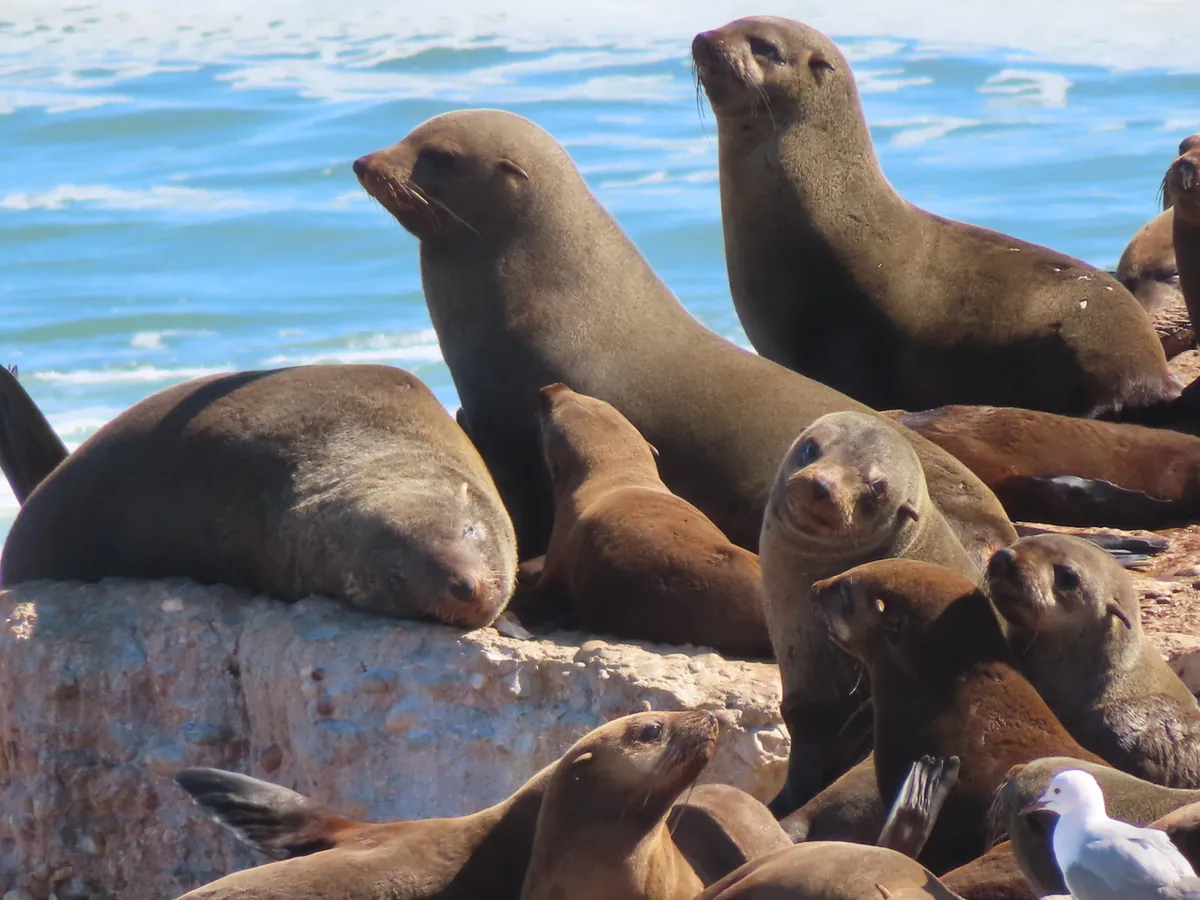
The fur seal is a large, powerful seal that hauls out in noisy, crowded colonies along rocky coasts. Males can reach up to 230 cm long and weigh as much as 360 kg.
Also known as: brown fur seal
Fur seals are often confused with true seals like the harbour seal. Look for the small external ear flaps on its head, a feature true seals lack entirely.
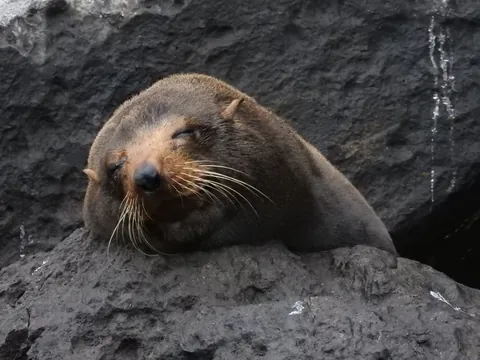
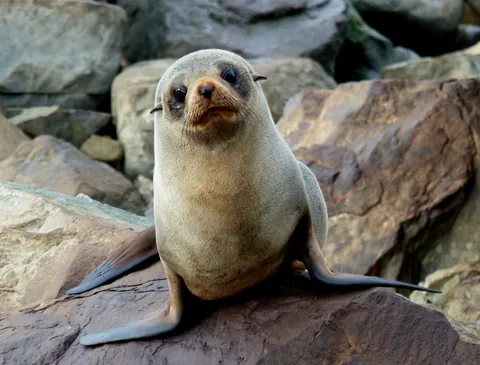
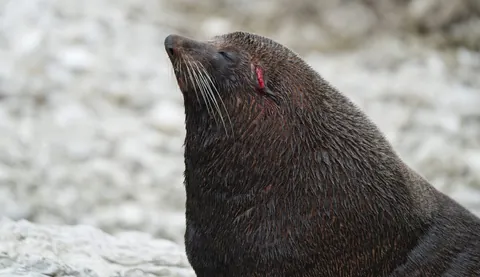
It has a broad, flat head with a pointed, slightly upturned snout and small external ear flaps. Long whiskers extend from its face, especially in adult males. Males are dark grey to brown with a darker mane of coarse hair, while females are lighter brown to grey. Its fore-flippers are dark brown to black and only thinly covered in hair.
It lives along the southern African coast and around islands off southeastern Australia and Tasmania. It hauls out and breeds on rocky outcrops, exposed reefs, and pebble or boulder beaches, sometimes on sandy shores too, and can dive to about 200 metres while feeding at sea.
Fur seals gather in large colonies, sometimes over a thousand strong, and use distinctive calls that let mothers and pups recognise each other after time apart at sea. Males compete fiercely for territory in the breeding season through displays, vocal contests, and sparring.
It eats a wide mix of fish, squid, and crustaceans from open water, mid-depths, and the seafloor. It occasionally takes seabirds, and has even been recorded attacking and eating sharks.
Off Cape Point, South Africa, a fur seal was observed killing five blue sharks in a single hunt, apparently targeting their fish-rich stomach contents and livers.
Describe what you saw and we name it, then keep every species you find in your Oceandex.