Fur Seal
Arctocephalus pusillus
Arctocephalus forsteri
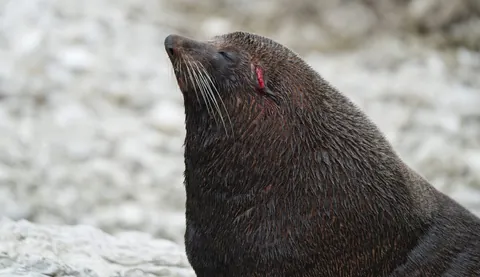
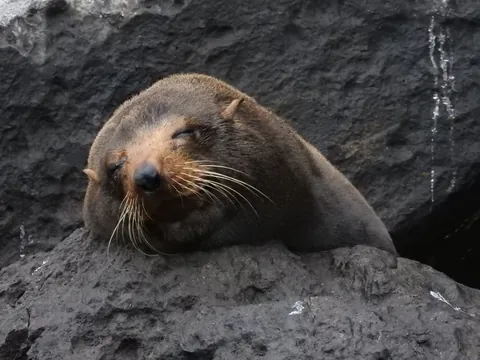
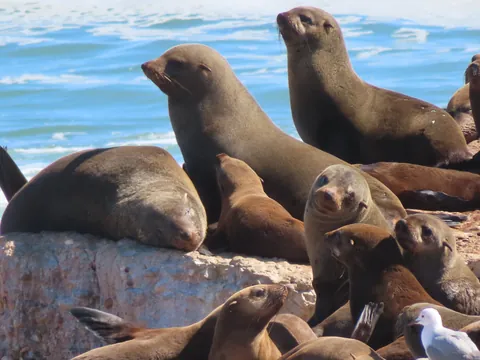
Despite its name, the New Zealand fur seal also thrives around southern Australia, hauling out on wild, wind-battered coastlines. It can grow up to 2 metres long and weigh as much as 200 kg, with males growing noticeably larger than females.
Also known as: new zealand fur seal, antipodean fur seal, black fur seal, south australian fur seal, australian fur seal, australasian fur seal, long-nosed fur seal
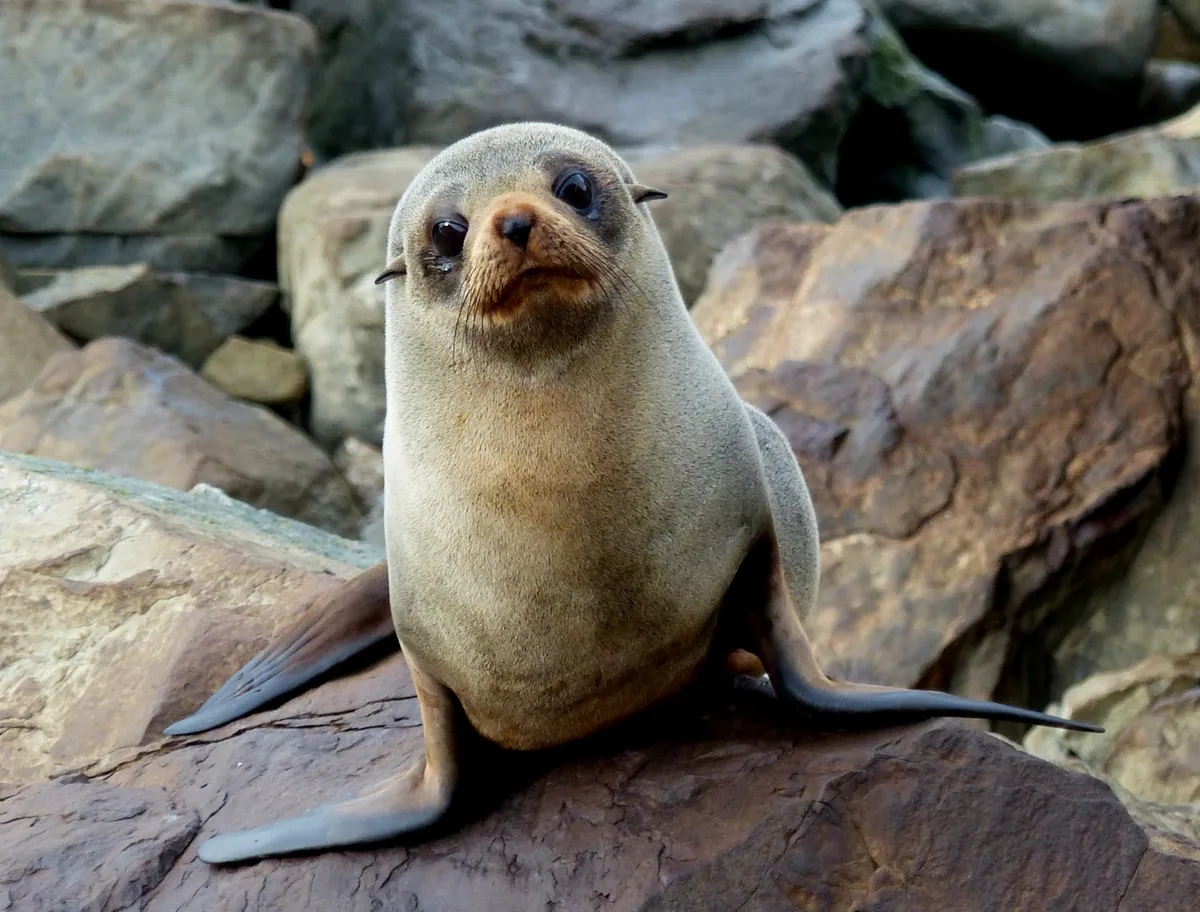
True seals lack external ears and cannot turn their hind flippers forward. This fur seal has visible ear flaps and hind flippers it can rotate to walk on land, the quickest way to tell it apart from a true seal on the same coastline.
This fur seal has a pointed nose and long, pale whiskers. Two layers of fur cover its body: a grey-brown coat on the back, lighter underneath, and on some individuals the longer guard hairs have white tips that give a silvery sheen.
It lives along exposed, weather-beaten coastlines and offshore islands of southern Australia and New Zealand, favouring waters over the continental shelf and its outer slope.
When swimming fast, it can leap clear of the water in a series of arcs known as porpoising. It dives deeper by day and shallower at night, following prey that migrates up and down the water column. Mothers with pups take shorter dives to return often and check on their young, while males tend to forage farther out in deeper water than females, which mostly hunt over the shelf itself.
It eats a wide mix of fish and cephalopods such as octopus and squid, taken both near the surface and on the seabed. Seals living near the southern edge of the range sometimes also prey on penguins.
Males arrive first each breeding season and hold a stretch of shore as a territory before the females come ashore to give birth. Mating with a single male typically follows soon after a female gives birth, but the fertilised egg does not implant right away, delaying the start of the pregnancy. Most females go on breeding every year for the rest of their lives.
This species is classed as Least Concern. Its main predators are killer whales, sharks, and male New Zealand sea lions, which target pups. It is a protected species under law in both Australia and New Zealand.
This species dives deeper and stays under longer than any other fur seal in the world.
Describe what you saw and we name it, then keep every species you find in your Oceandex.