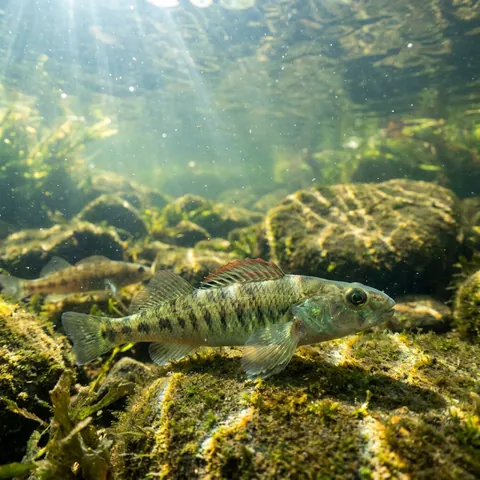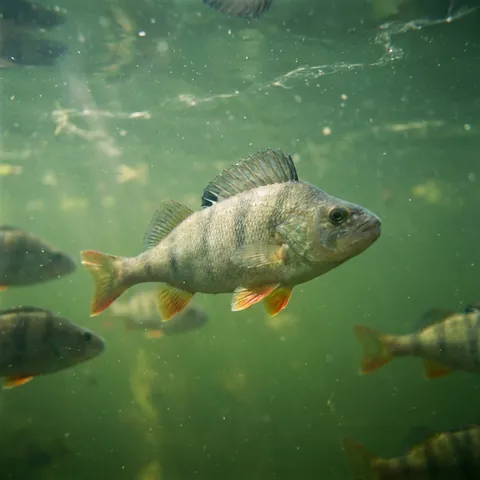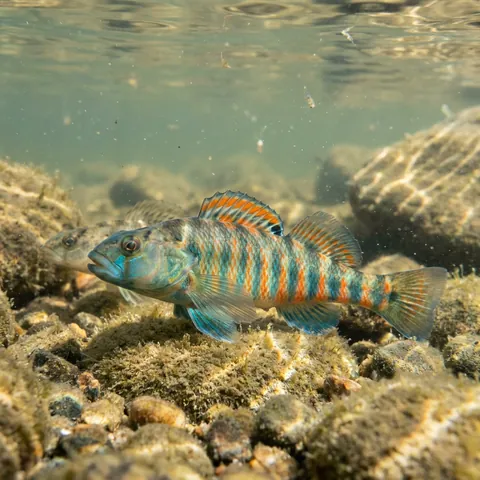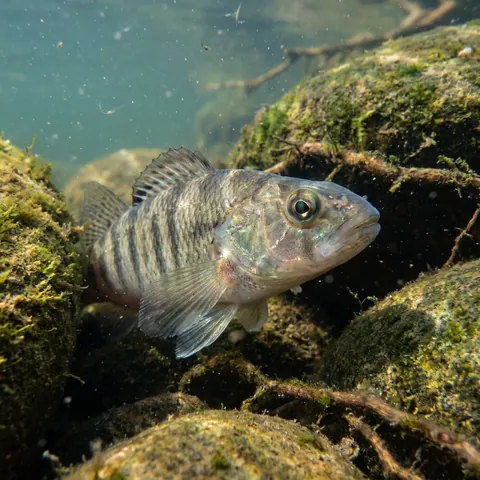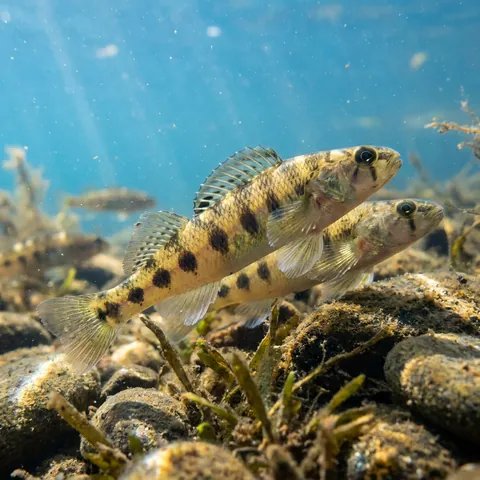
Blackbanded Darter
Percina nigrofasciata
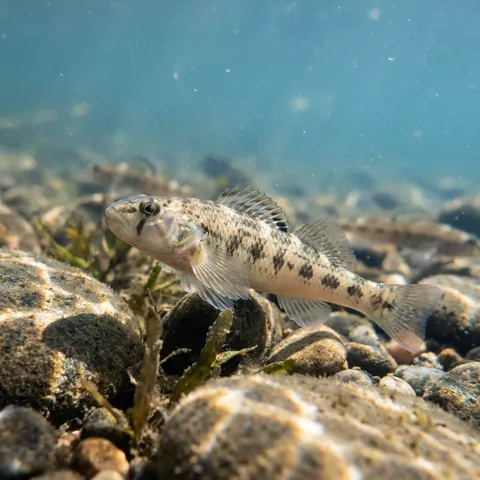
Etheostoma flabellare
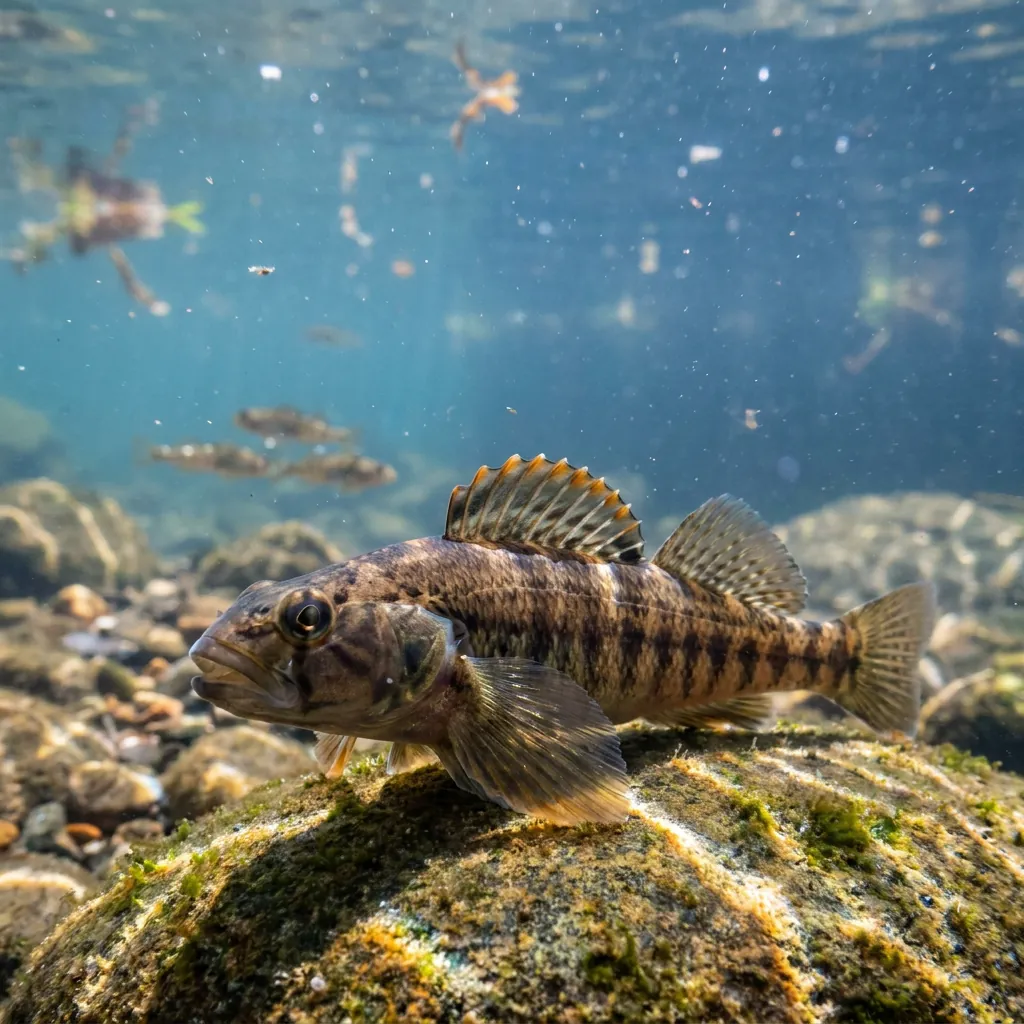
This little stream fish spends its life tucked among cobbles and flat stones, blending so well with the rocks that most divers walk straight past it. Look closer and you find a fish with one of the odder breeding tricks in freshwater: males grow fake eggs on their fins to lure females in.
Many small stream darters look similar. Breeding males of this species carry small, fleshy gold-colored knobs on the tips of their first dorsal fin spines, used to mimic eggs. This knob shape is the clearest way to tell a male fantail darter from other darters sharing the same stream.
A small, slender fish with an olive-brown to tan body, marked by faint dark stripes running along its sides. The head is small, with a mouth set right at the front. Its rounded tail fin is often crossed by several dark bars.
Lives in small streams across eastern North America, from the Great Lakes and Mississippi basins south to the Carolinas and Alabama. It favors riffles: shallow, fast-flowing stretches with cobbles, flat stones, and slabs of limestone or shale.
Fantail darters are stream-bed feeders, eating insects and small invertebrates such as mayfly and midge larvae. They spawn in early summer once the water warms to 17-20°C. Males clear a space under a flat rock and guard the eggs females lay there, though studies show every guarding male also eats some of his own eggs. Young darters skip a true larval stage, feeding within days of hatching.
In studies of this species, every guarding male was found to eat at least some of the eggs in his own nest.
Describe what you saw and we name it, then keep every species you find in your Oceandex.