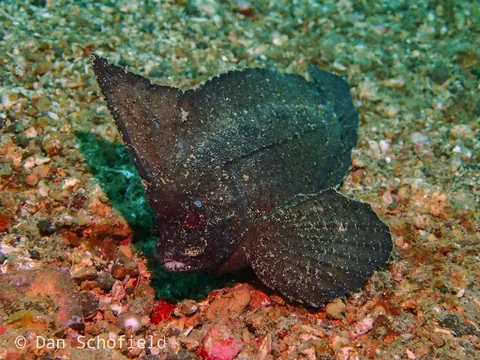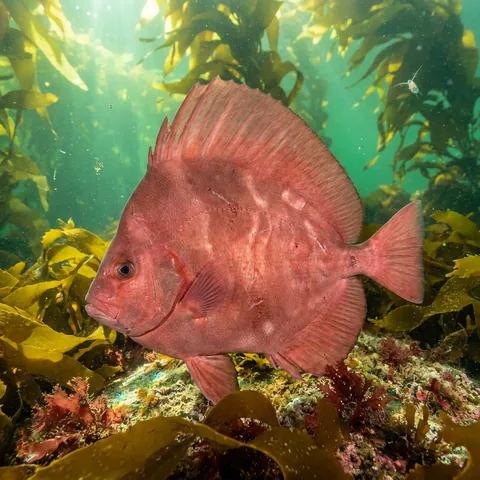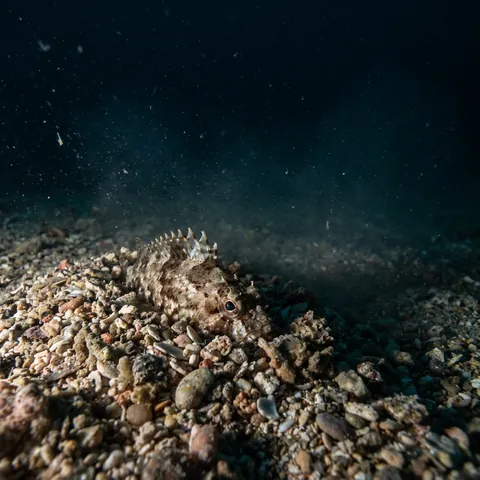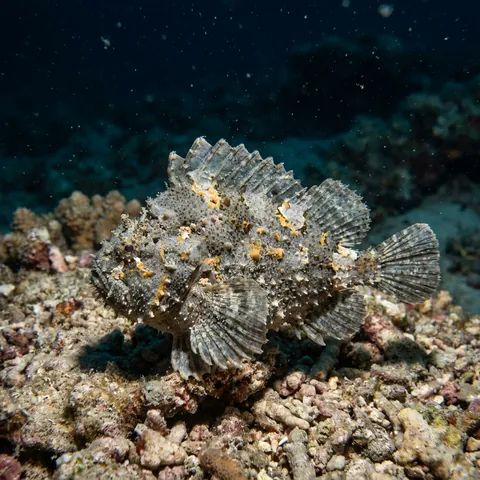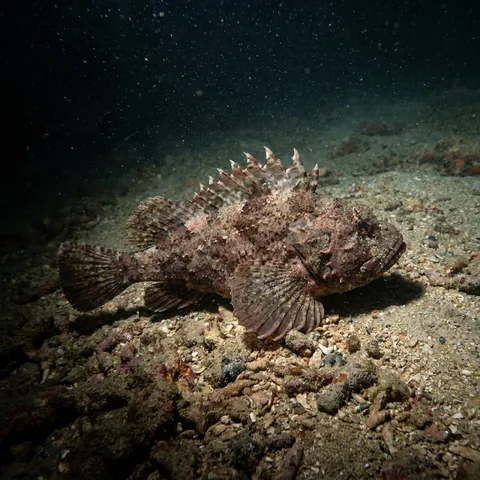
Bullrout
Notesthes robusta
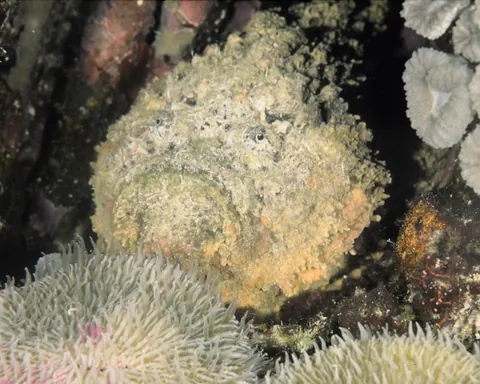
Synanceia horrida
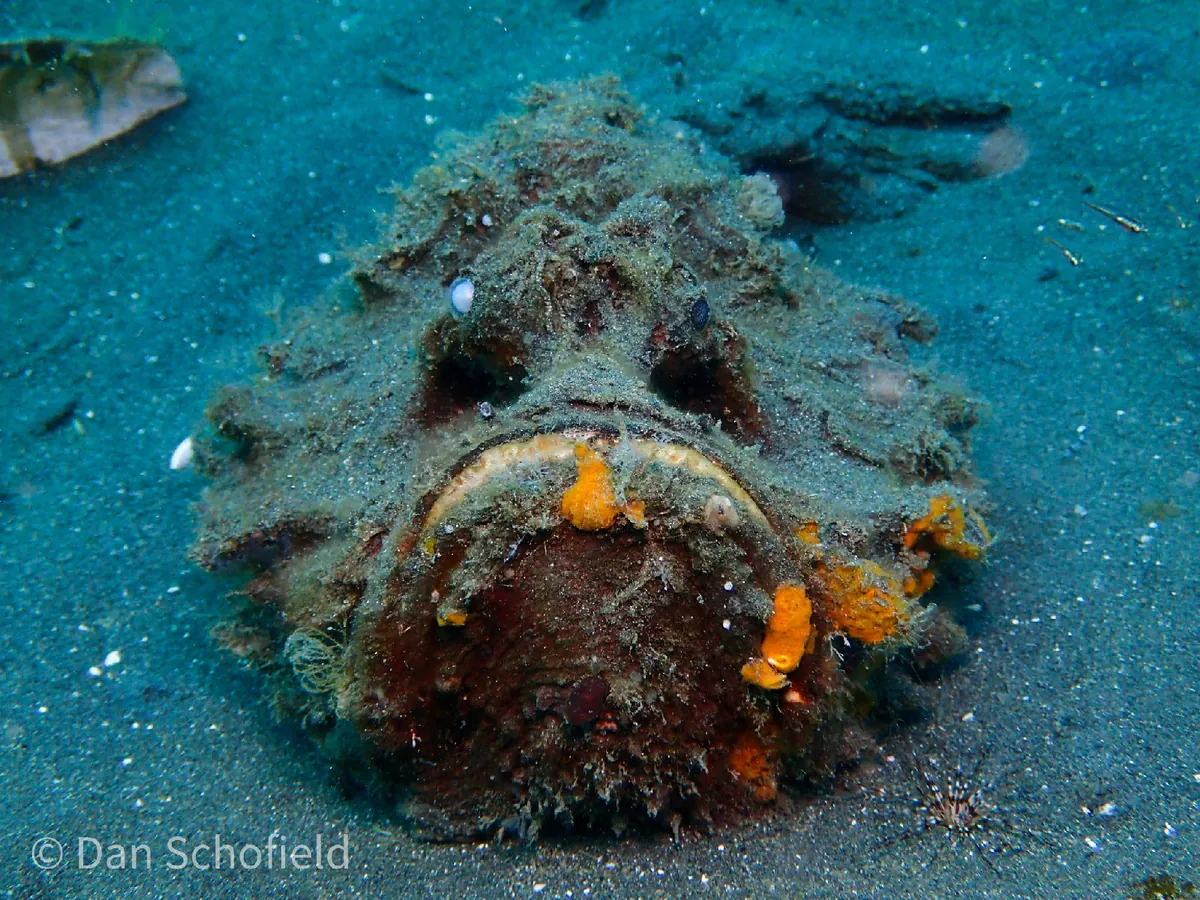
The estuarine stonefish is a master of disguise that looks like nothing more than a lump of rock on the seabed - until it strikes. It grows to about 60 cm and carries one of the most painful stings of any fish in the sea.
Also known as: horrid stonefish, true stonefish, hollow-cheeked stonefish
It looks much like the reef stonefish, but its eyes sit noticeably higher and more raised on the head than the reef stonefish's.
Its body is drab brownish-grey to reddish or greenish-brown, with warty, scaleless skin that often grows a coat of fine algae. The head is broad and flattened, with small eyes set high and wide apart, and a deep pit behind each eye. The mouth is large, almost vertical, and fringed with small fleshy tabs on the lips. The pectoral fins are large and fleshy, and stiff spines run along its back.
It lives across the Indo-Pacific, from India through to Japan and northern Australia. It favours sheltered inshore reefs and estuaries, often lying in the shallowest water among coral rubble, rocks on reef flats, or seagrass beds, down to about 40 m.
This fish lies motionless on the bottom by day, scooping a shallow depression in the sand or mud with its pectoral fins and curling its tail around its body to blend in further. It hunts at night as an ambush predator, sucking in small fish, crustaceans and cephalopods that swim too close. When disturbed or stepped on, its spines erect and inject venom that causes severe pain and can be dangerous to people.
It holds a listed record as the most venomous fish known.
Describe what you saw and we name it, then keep every species you find in your Oceandex.