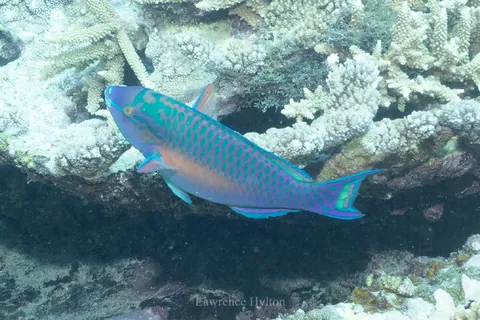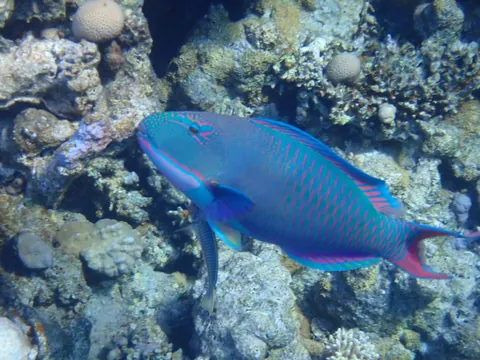
Bicolour parrotfish
Cetoscarus bicolor
Scarus rubroviolaceus
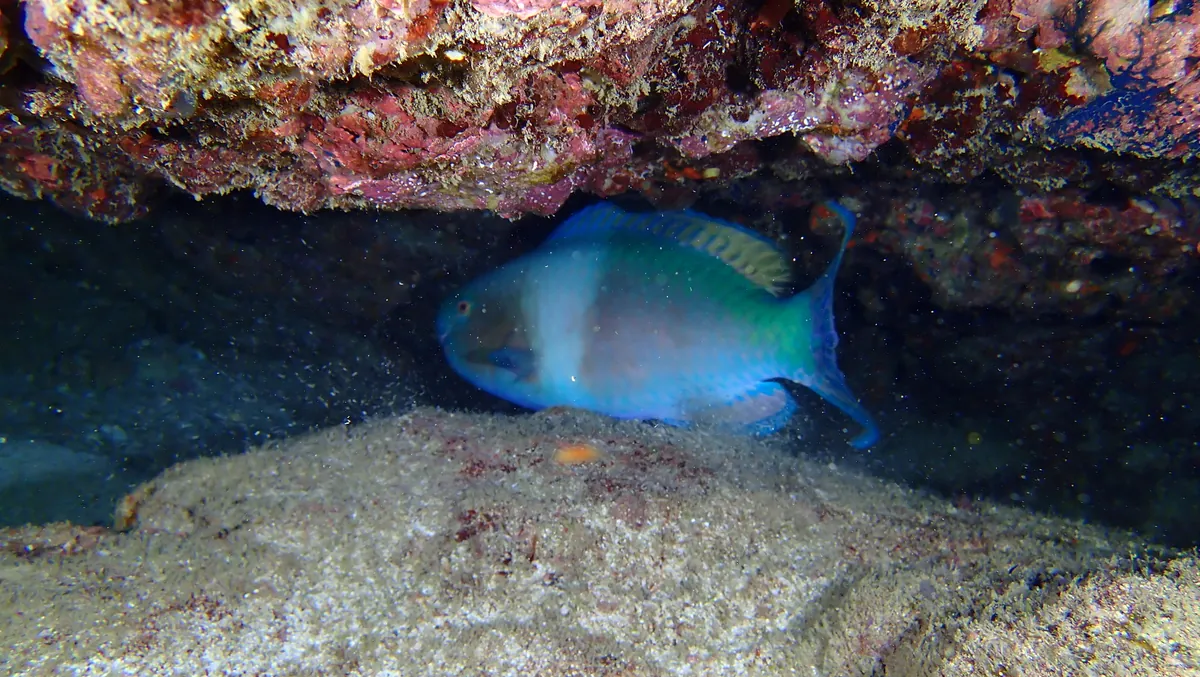
The ember parrotfish is a large parrotfish, reaching about 70 cm. Like other parrotfish it scrapes plants and fine algae off rock and coral with a hard beak. Males and females look different enough to be mistaken for two species, which is why it is also called the bicolor parrotfish. It starts adult life as a female and can later change into a male, though some individuals stay female for life.
Also known as: ember parrotfish, half & half parrotfish, redlip parrotfish, bicolor parrotfish, ember parrotfish, half & half parrotfish, blackvein parrotfish, bicolor parrotfish, redlip parrotfish, parrotfish, redlipped parrot, half and half parrotfish, ember parrotfish, bicolor parrotfish, half & half parrotfish, black-veined parrotfish, blackvein parrotfish
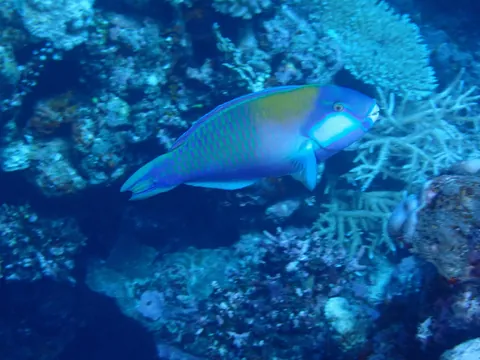
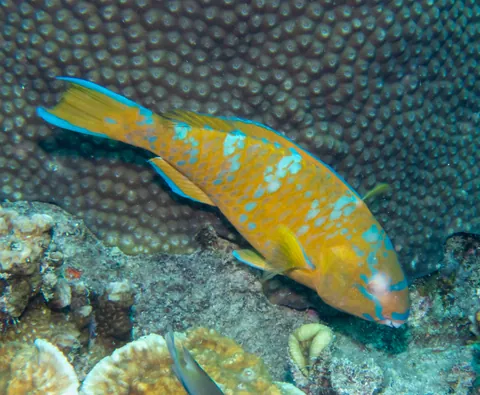
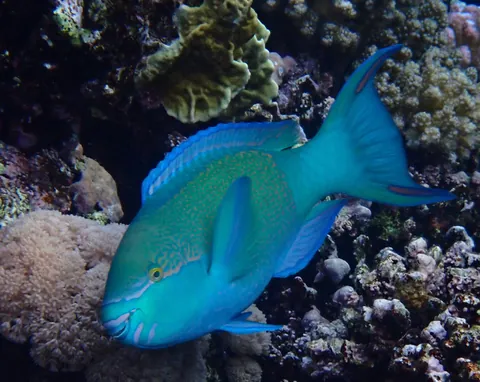
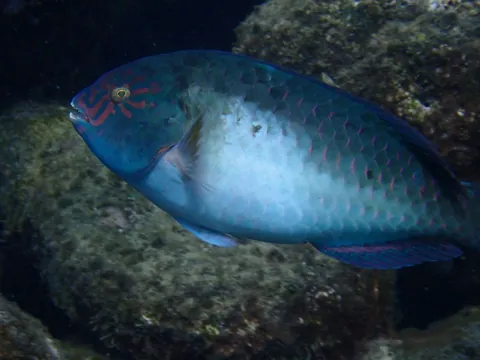
Large terminal males look like many other big Scarus parrotfish at a glance. The one thing to check is the two-tone split down the body, already noted, dark to the front and pale to the back — that clean a break is uncommon among similar-sized reef parrotfish. Females are quieter and easily overlooked among other drab parrotfish; their black-speckled skin is the detail to look for instead of colour.
Large males have a clear two-tone body: the head and the front half are brownish to dark green, and the rear half is a lighter green. Their snout profile is angular rather than rounded, and their tail is crescent-shaped with long, drawn-out tips. Females are duller, reddish brown to grey, marked with small black spots, irregular black lines and pale flecks, and their tail is only slightly notched.
It lives in the Indian and Pacific Oceans and is widespread and common. Look for it over rocky and coral bottoms, especially on boulder-strewn slopes at the foot of steep island cliffs, where it can gather in large schools. Large adults tend to hang on the upper part of deep slopes. It is recorded from about 1 m down to 36 m. On seaward reefs it is usually alone or in pairs.
Describe what you saw and we name it, then keep every species you find in your Oceandex.