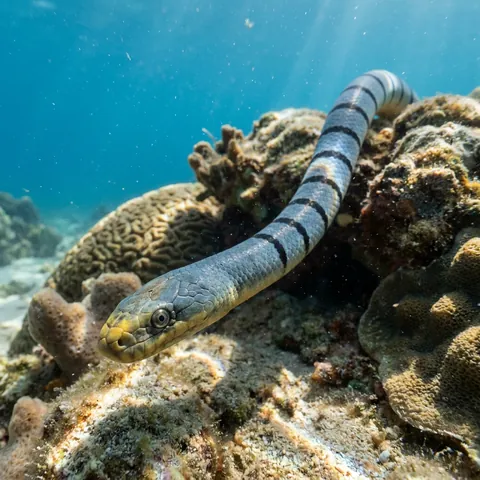
Banded Sea Krait
Laticauda colubrina
Emydocephalus annulatus
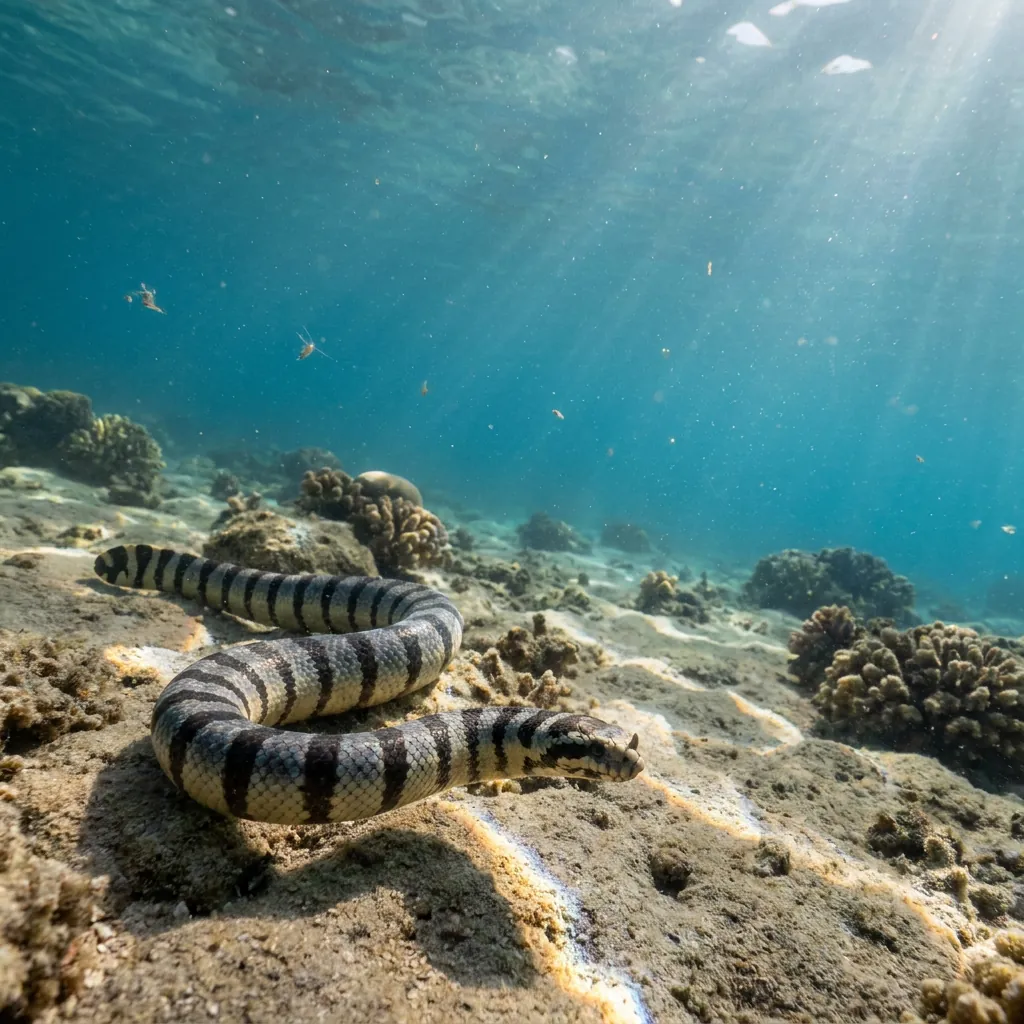
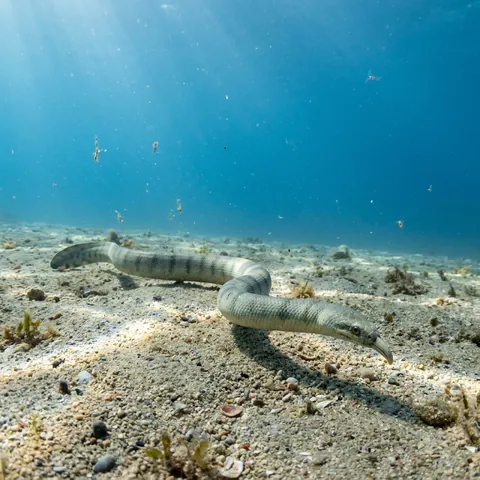
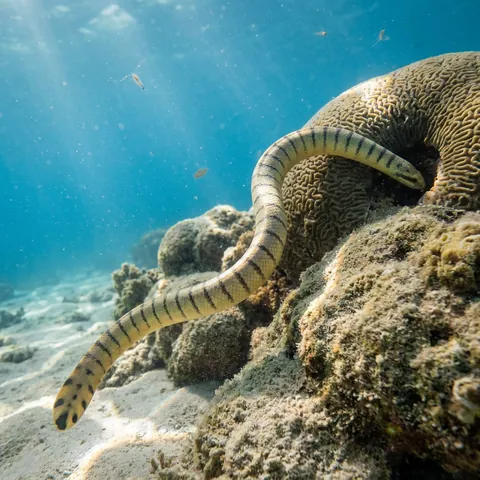
The turtle-headed sea snake glides slowly over the reef, hunting not fish but the eggs they leave behind. Divers often find it moving unhurried across coral in shallow water, unbothered by onlookers.
Also known as: turtle-headed sea snake, turtleheaded sea snake, egg-eating sea snake, turtle-headed seasnake
Other sea snakes hunt fish and dart when threatened. The turtle-headed sea snake moves slowly and deliberately over the reef surface, close to coral, as it searches for egg patches rather than prey.
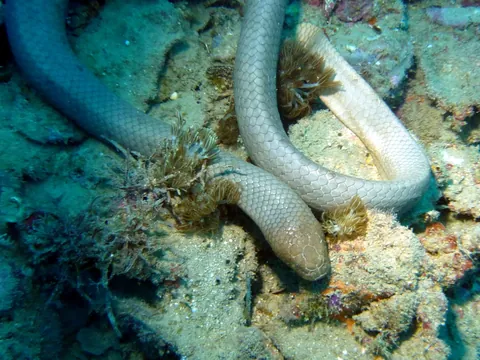
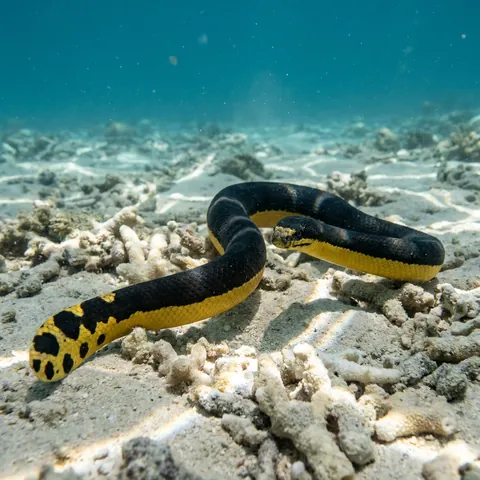
This slender sea snake has a short, blunt head. Its colour varies between snakes, from a single plain shade to bands of white or yellow separated by dark rings. Its scales lie smooth and overlapping along the body.
It feeds only on the eggs of fish like damselfish, blennies, and gobies, which stick to the reef surface. It finds these egg patches by smell and grazes them the way a cow grazes grass, rather than hunting live prey.
Unlike land snakes, which track a mate's scent trail, this sea snake finds partners by sight, watching for size, movement, and colour pattern. Females grow larger than males, and males have rougher scales.
This species is listed as Least Concern, but some local populations have shrunk. Snorkelers in one New Caledonian lagoon counted over six snakes a day in 2003, dropping to under two a day by 2011.
This is the only sea snake known to feed solely on fish eggs, and it has lost the palatal teeth other snakes use to grip live prey.
Describe what you saw and we name it, then keep every species you find in your Oceandex.