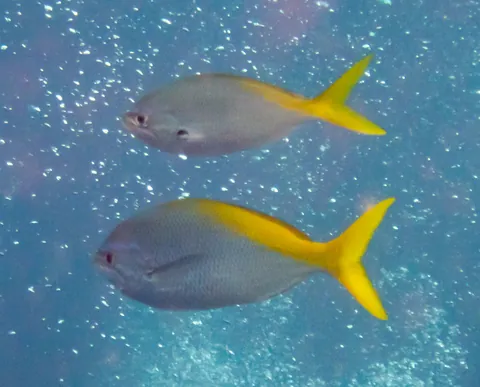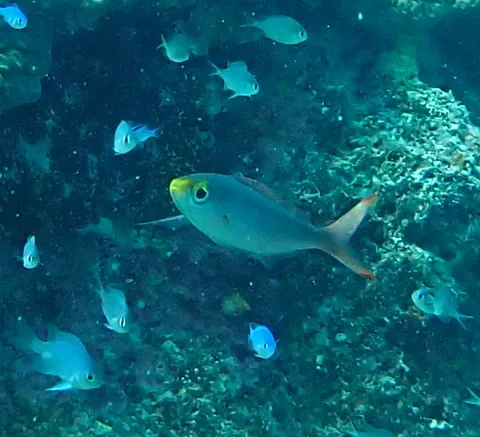
Banana fusilier
Pterocaesio pisang
Pterocaesio digramma
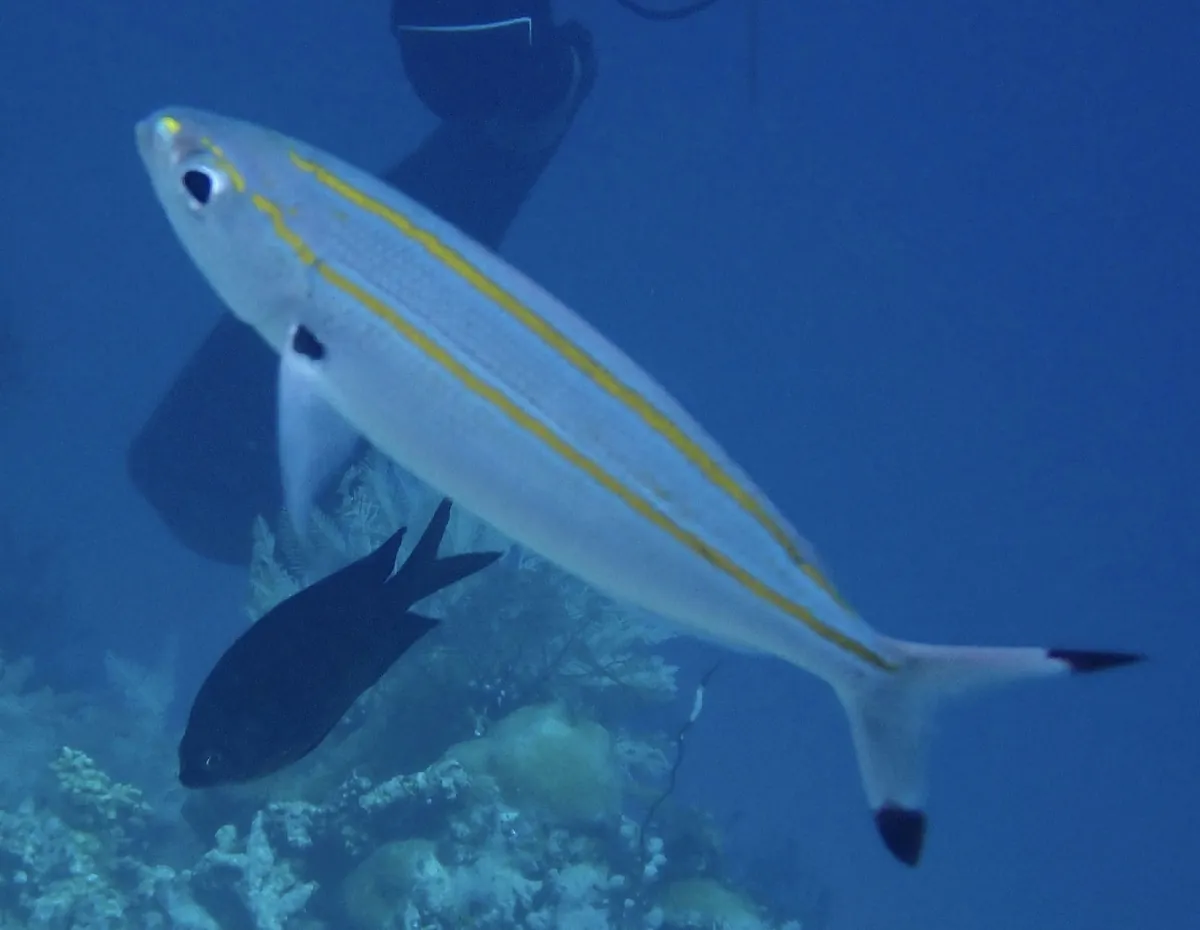
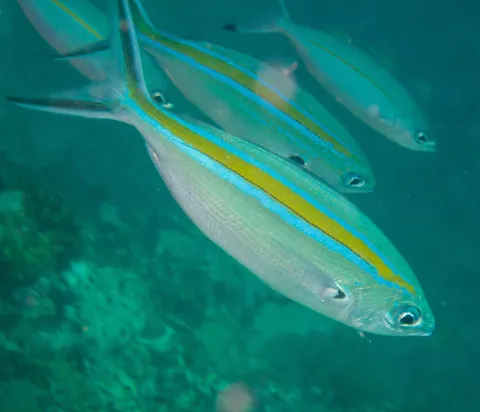
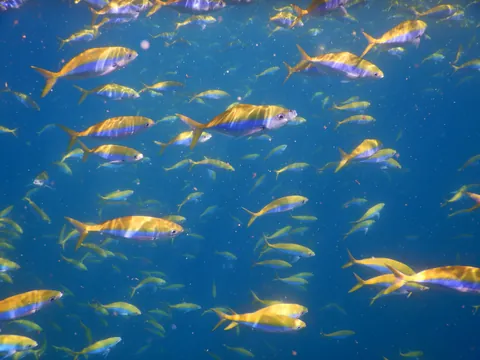
The double-lined fusilier is a streamlined, fast-swimming reef fish that gathers in large schools over open water. It grows up to 30 cm long.
Also known as: double-lined fusilier, doubleline fusilier, two-stripe fusilier, yellow-striped fusilier, darkbanded fusilier, double lined fusilier, doubleline fusilier, yellow-striped fusilier, two-stripe fusilier, darkbanded fusilier, black-tip fusilier, fusilier, double stripe fusilier, double-lined fusilier, double stripe fusilier, doublelined fusilier, twin yellow-striped fusilier
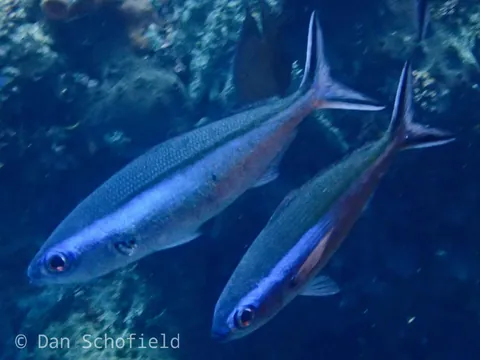
Several fusiliers share a similar slim, striped shape and school together over reefs. Look at the tail: this species has clearly dark-tipped tail lobes, a mark many similar fusiliers lack.
The body is long and slim, blue-green above and paler below. Two thin yellow stripes run along the back and flank, with the lower stripe sitting mostly just beneath the lateral line, the faint sensory line running along its side. The tail fin has dark tips on both lobes.
Lives in coastal waters around coral reefs across the western Pacific, from Indonesia and Western Australia to southern Japan, down to about 50 m.
It feeds on tiny drifting animals in open water, gathering in large schools to do so. Close to sunset, pairs break away from the school to spawn, often trailed by extra males that also release sperm as the pair spawns near the surface.
Its species name, digramma, means "two lined", a nod to its stripes. The name was given in 1865 by the Dutch scientist Pieter Bleeker, who first described the fish from Ambon Island in Indonesia.
Describe what you saw and we name it, then keep every species you find in your Oceandex.