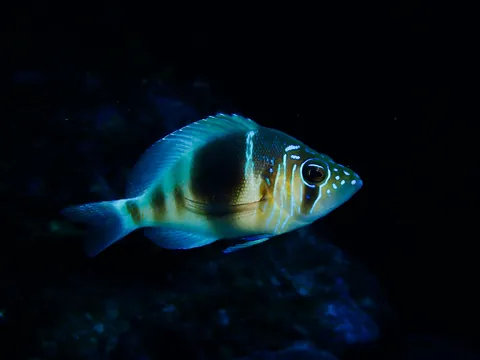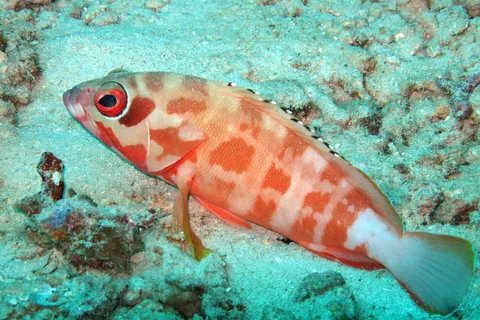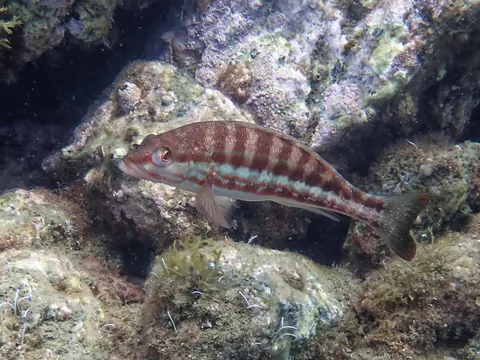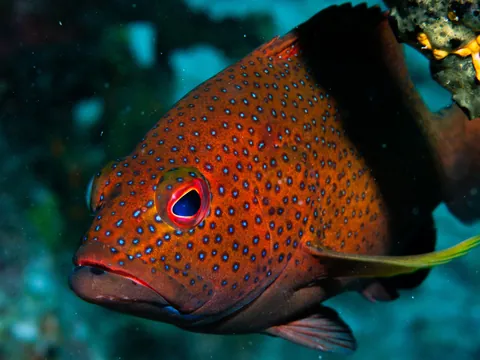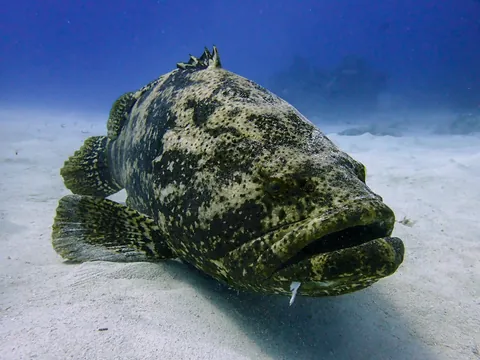
Atlantic goliath grouper
Epinephelus itajara
Cephalopholis urodeta
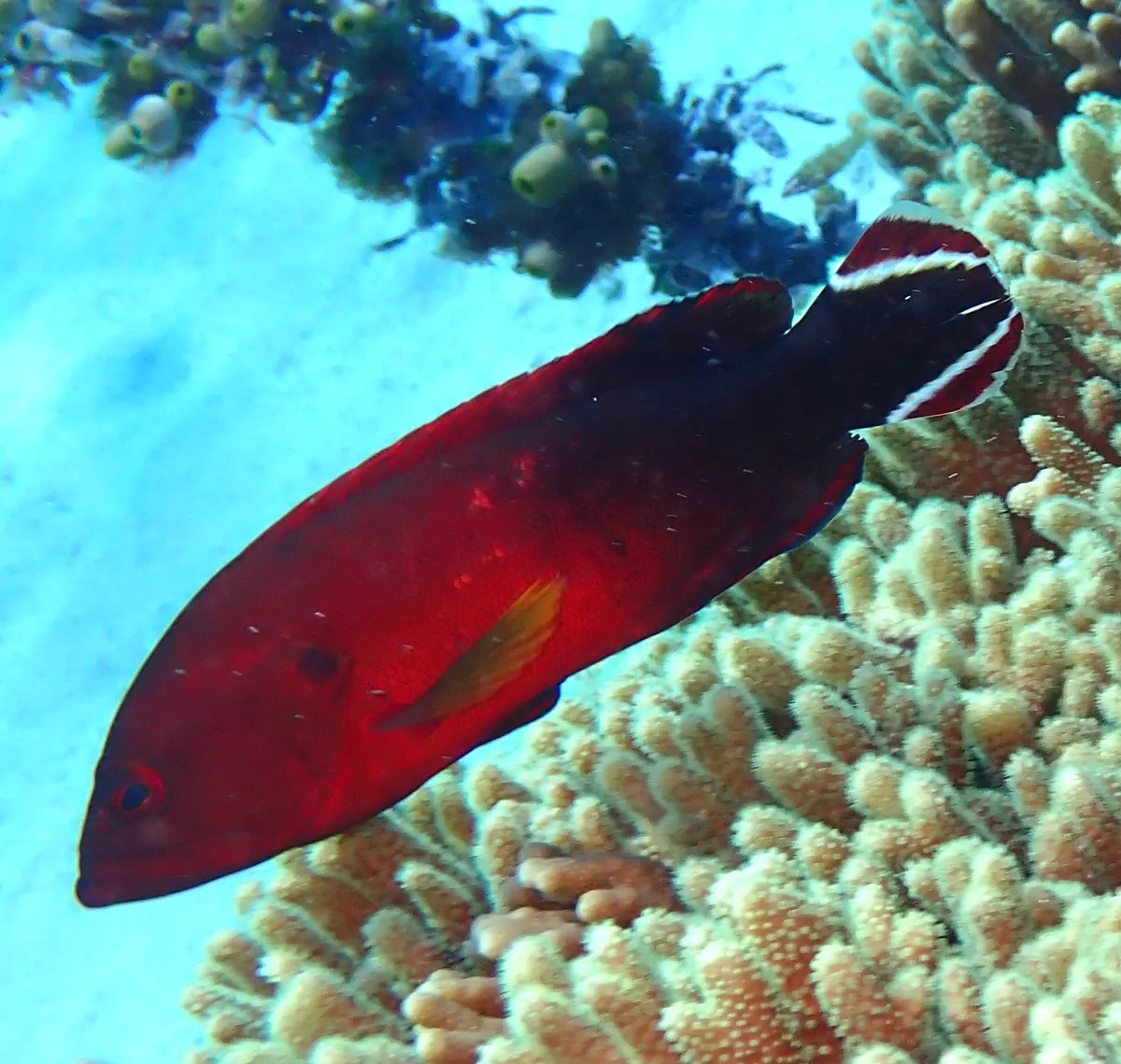
A small, solitary grouper that holds its ground on the reef top, the darkfin hind rarely grows past 28 cm but keeps a territory all the same.
Also known as: black-finange rock cod, blackfin cod, brown-finned rock-cod, duskyfin rockcod, flag-tail rock cod, flag-tailed grouper, flag-tailed rock-cod, flag-tailed rockcod, flagtail cod, flagtail grouper, flagtail grouper, darkfin hind, flagtail rockcod, sea bass, flagtail cod, duskyfin hind, brown-finned rock-cod, black-finange rock cod, flag-tail rock cod, flag-tailed grouper, duskyfin rockcod, darkfin hind, flagtail grouper, flag-tailed rockcod, blackfin cod, grouper, flagtail rockcod, chevron rock-cod, flag-tailed rock-cod, tailstriped hind, darkfin hind, flagtail rock-cod, duskyfin hind, chevron rock-cod, flag-tailed cod
This is one of several small brownish groupers on the reef, but the tail settles it: two pale blue-white bands cross both lobes of the caudal fin and converge toward the middle, forming a clear V - the mark behind its alternative name, the V-tail grouper.
The body is less deep than the head is long, reddish-brown at the front and darkening toward the tail. Six faint bars cross the flanks, forking as they reach the belly, with small orange-red spots scattered over the head and nape and a pair of dark spots near the tip of the lower lip. The pectoral fins are yellowish, and there is often a large reddish-brown spot on the edge of the gill cover.
Lives in clear, shallow water on healthy coral reefs - over the reef top, in lagoons, and along the back and outer edges of reefs - down to about 60 m.
A single male holds a territory that overlaps the ranges of several females, and he visits to court them in the afternoon rather than at the more usual dawn or dusk.
Describe what you saw and we name it, then keep every species you find in your Oceandex.