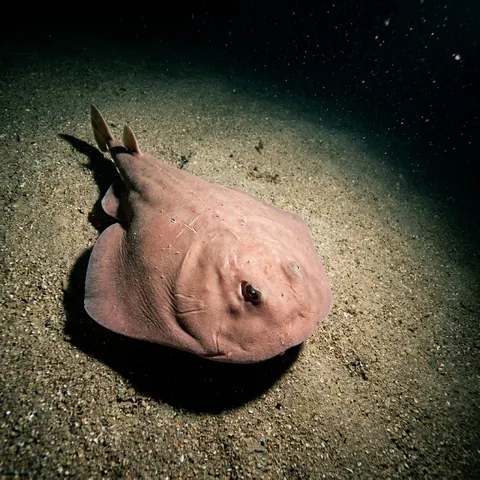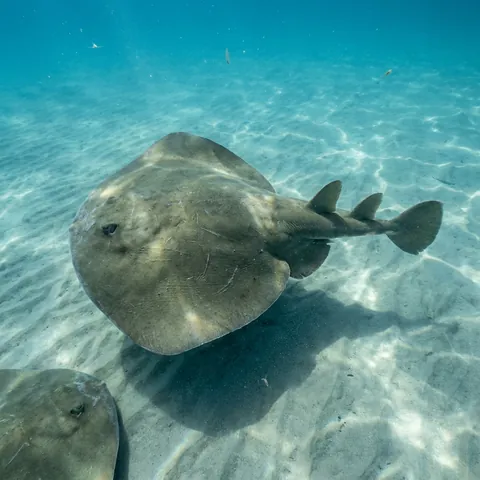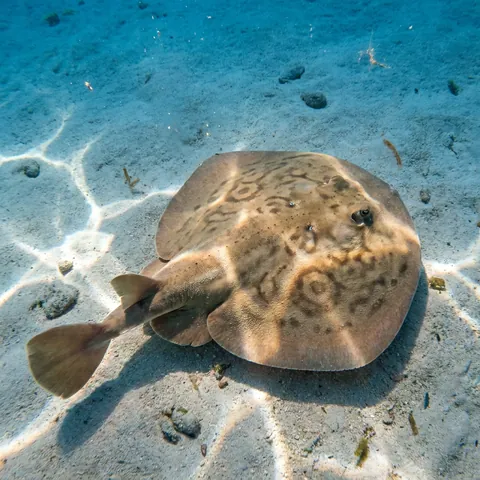
Caribbean Electric Ray
Narcine bancroftii
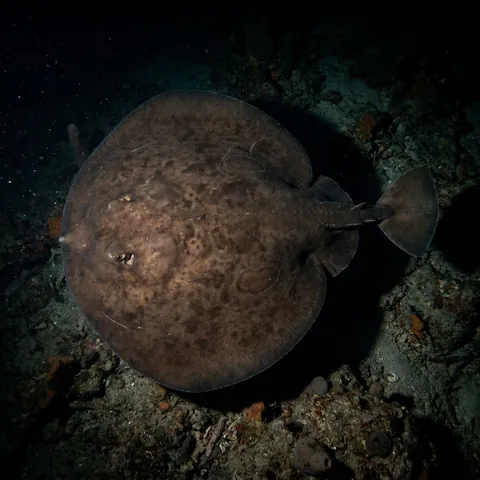
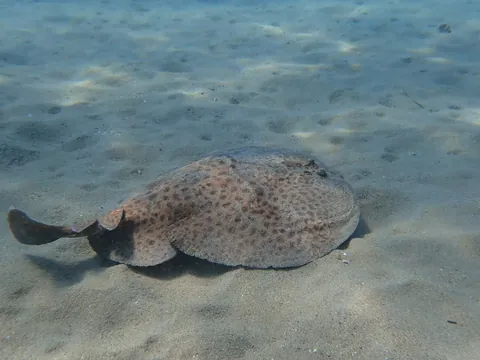
Torpedo torpedo
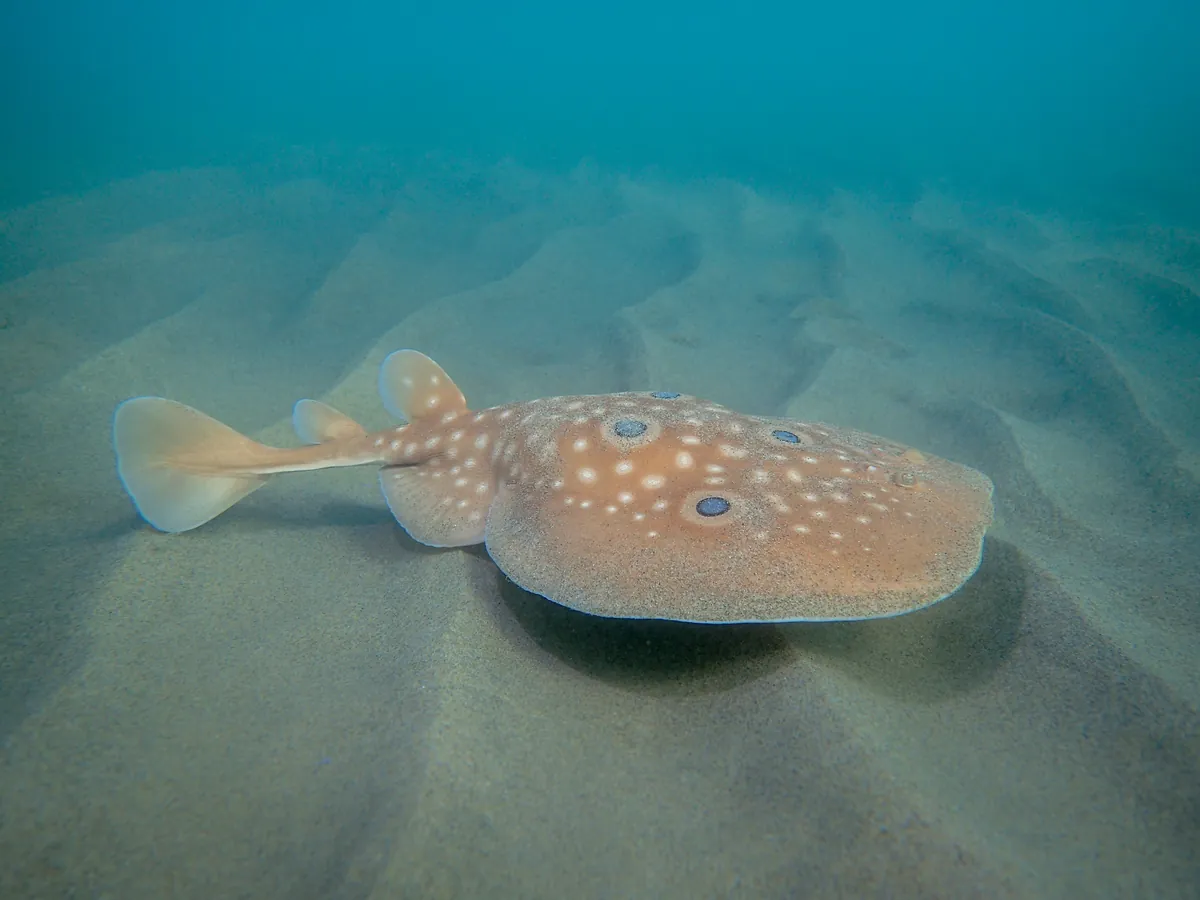
The common torpedo looks like a harmless round pancake resting on the sand, but it carries a pair of built-in batteries strong enough to stun a fish in an instant. It grows to about 60 cm, with most seen closer to 30 cm.
Also known as: common torpedo, cramp ray, crampfish, eyed electric ray, ocellate torpedo, ocellated torpedo, common torpedo, eyed electric ray
Many rays and skates have a similar round, flat disc shape. The clearest sign this is a torpedo ray is its skin: bare and completely smooth, with none of the rough or spiny texture other rays have. The pale, kidney-shaped patches under the skin behind its eyes, its electric organs, back this up.
Its body forms a near-circular disc, slightly wider than it is long, with a short thick tail and two dorsal fins on top. The skin is completely smooth, with no scales or thorns. Two kidney-shaped electric organs can be seen as paler patches under the skin on either side of the head, and a wide flap of skin sits between the nostrils.
It lives on soft sand and seagrass beds close to shore, usually in water no deeper than 70 m, though it can be found as deep as 400 m. It ranges through the eastern Atlantic and the Mediterranean, favouring warmer waters and more common off North Africa than southern Europe.
This ray rests alone on the seabed by day, often buried in sediment, and hunts at night. It ambushes small bottom-living fish, stunning them with an electric shock before drawing them to its mouth with the edge of its disc. The shock can come as a single pulse or as short bursts.
This fish gave the torpedo weapon its name. The Romans already called electric rays 'torpedo', from a Latin word meaning 'numb'. This exact species was the first to carry that name in science, when Linnaeus named it Raja torpedo in 1758.
Describe what you saw and we name it, then keep every species you find in your Oceandex.