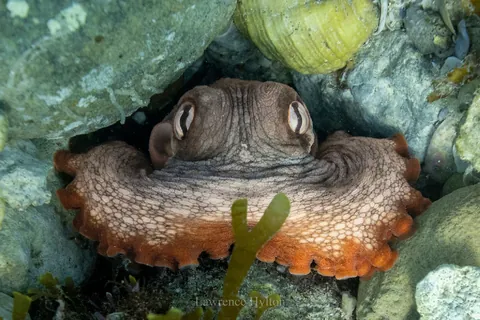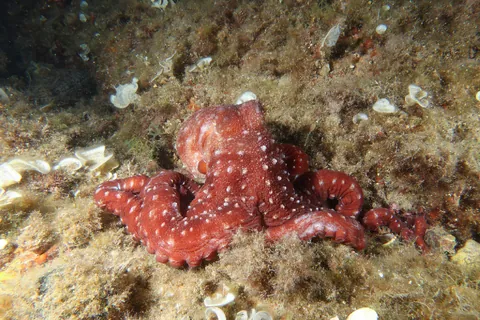
Atlantic White-spotted Octopus
Pinnoctopus macropus
Octopus vulgaris
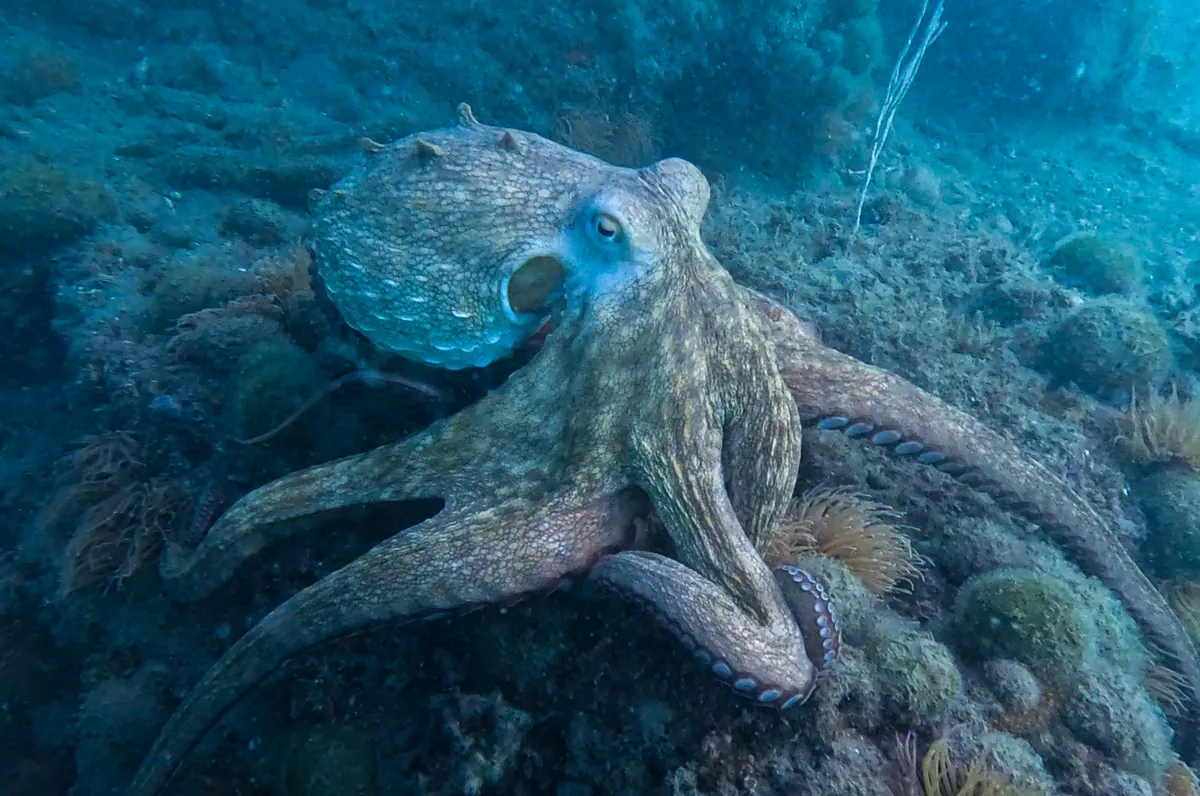
The common octopus is one of the smartest animals in the sea. It can solve simple puzzles, tell different people apart, and hide in an instant by changing how it looks. It can grow up to 130 cm long and weigh up to 10 kg.
Also known as: european common octopus, kolkrabbi, mediterranean octopus, octopus vulgaris, octopus vulgaris cuvier, 1797
Genetic studies show that what looks like one common species is really a group of at least six very similar octopuses, each living in a different area. These include Octopus tetricus, Octopus americanus, and Octopus sinensis. Divers cannot reliably tell them apart by eye. So any typical eight-armed, colour-changing octopus on a rocky coast is best called a common-octopus type, rather than this exact species for certain.
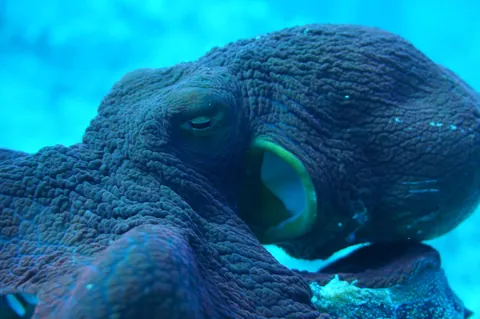
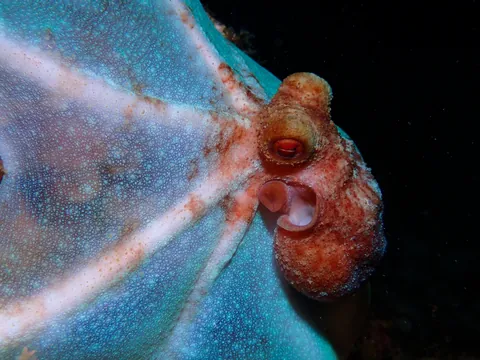
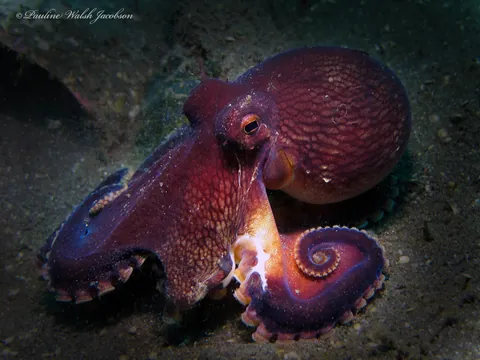
This octopus has a soft, round body and eight long arms covered in suckers. Its skin can change colour and texture almost at once, so it can match rock, sand, or reef within moments. Its clearest feature is not one fixed pattern, but this constant, changing camouflage.
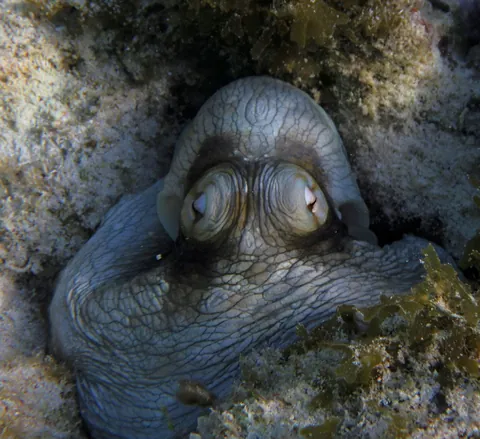
It lives on the floor of shallow, rocky waters near the coast, usually no deeper than 100 m, though it can go down to 347 m. It likes small dens and cracks where it can hide its body, so most of it stays out of sight even at rest.
This octopus hunts mainly at dusk. It prefers crabs, lobsters, and shelled animals such as cockles, but it will eat almost anything it can catch. It uses its hard beak to crack open shells. It also uses venom to weaken prey. It can jump onto prey that comes too close. It is known for solving problems that most invertebrates cannot. It can find its way through mazes, open jars, tell people apart, and even raid lobster traps.
This octopus has been seen keeping a kind of garden outside its den. It gathers shells, rocks, and bits of algae. Then it arranges them around the entrance. This habit may have helped inspire the Beatles song 'Octopus's Garden.'
Describe what you saw and we name it, then keep every species you find in your Oceandex.