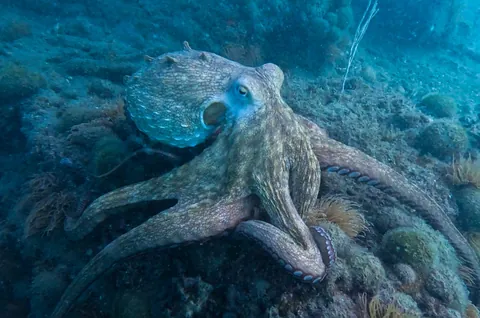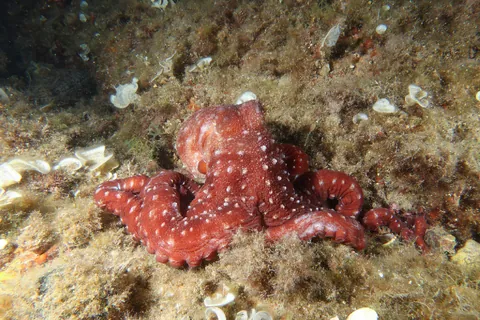
Atlantic White-spotted Octopus
Pinnoctopus macropus
Octopus tetricus
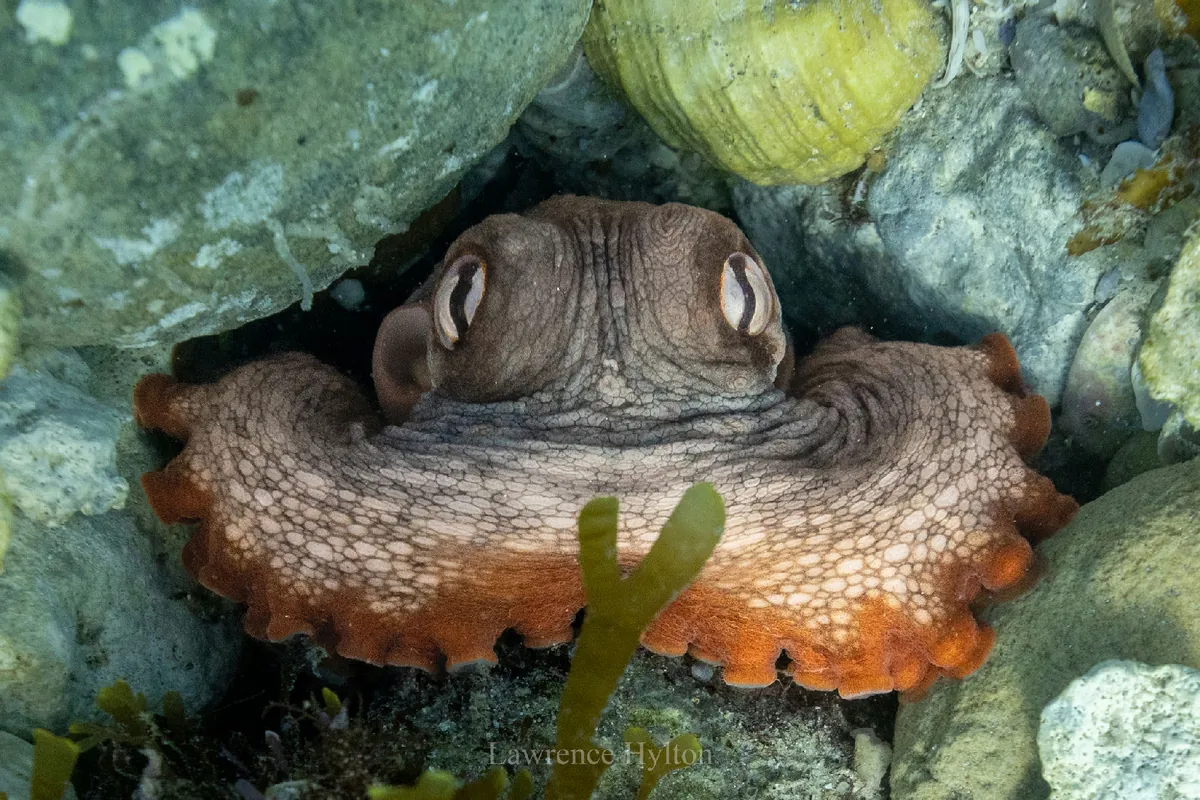
The common Sydney octopus is a solitary hunter of rocky reefs, grey to mottled brown and covered in warty bumps. It can reach an arm span of up to 80 cm but weighs no more than about 1 kg.
Also known as: gloomy octopus, sand octopus, sydney octopus
Many octopuses in this region share a similar mottled grey-brown body, but the combination of white eyes and pronounced warty, spiky skin is a good way to confirm this species.
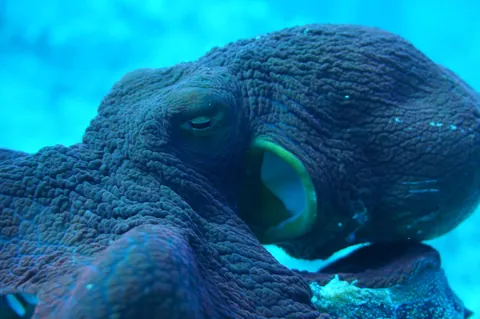
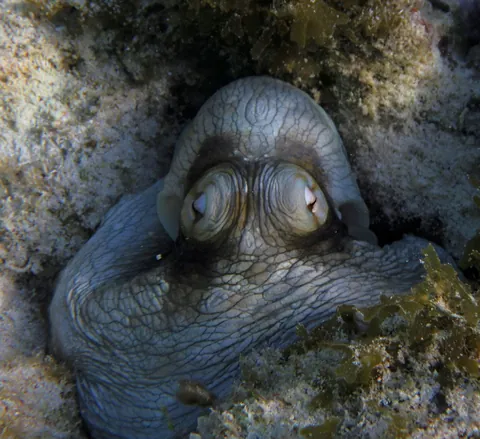
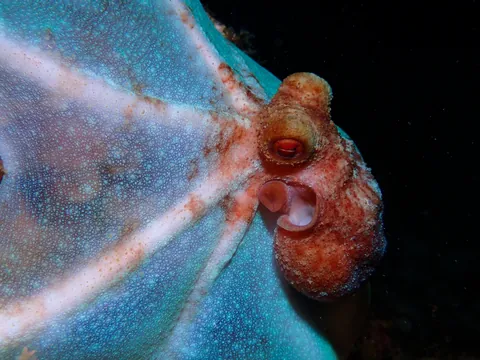
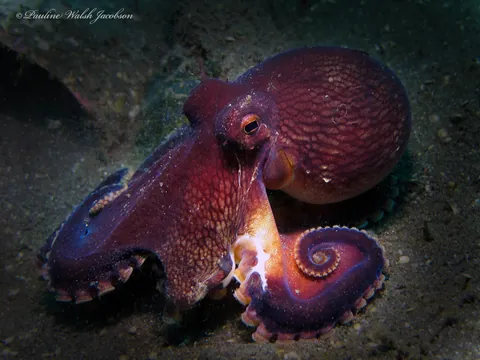
The body is grey to mottled brown, with reddish-brown arm faces that taper to a point and orange colouring around the arms, funnel, and mantle opening. The eyes are white, and the skin is granular with small irregular patches and large warty lumps that give it a spiky, seaweed-like look when camouflaging.
This octopus lives along rocky reefs on the coast of eastern Australia and in the northern waters of New Zealand. It shelters in dens among rocks and rubble, emerging mainly to hunt.
This is a fast-growing, short-lived species. Females stop eating and sleeping while guarding their nest, giving everything to their eggs, and die soon after they hatch, since each female breeds only once in her life. When two octopuses clash over a den, the one with paler skin usually backs down rather than fight.
It hunts mainly at night, using a sharp beak to crack open crustaceans and molluscs such as sea snails, bivalves, scallops, and lobster. It sometimes eats smaller octopuses of its own species, and carries prey back to its den to eat in safety.
Unlike most octopuses, which live alone, this species has been found gathering by the dozen at two Australian sites nicknamed Octopolis and Octlantis, where they den and mate side by side atop piles of old shells.
Describe what you saw and we name it, then keep every species you find in your Oceandex.