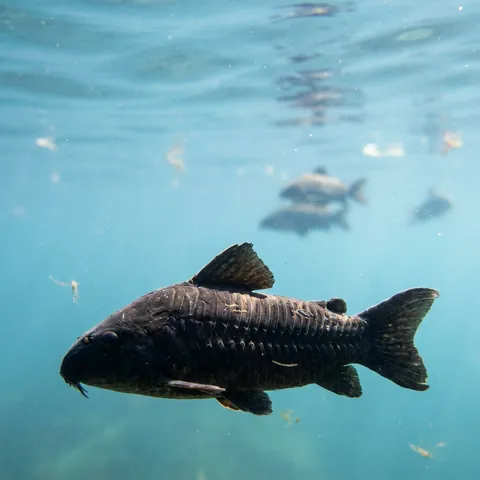
Atipa
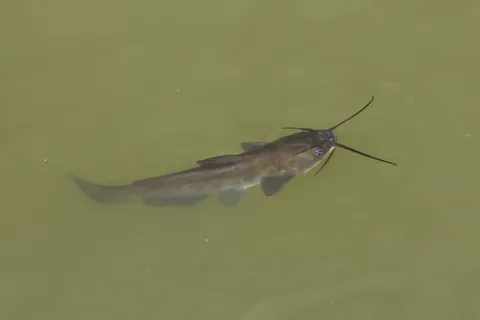
Hoplosternum littorale
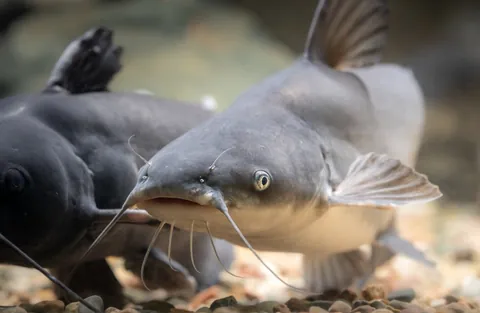
Ictalurus punctatus
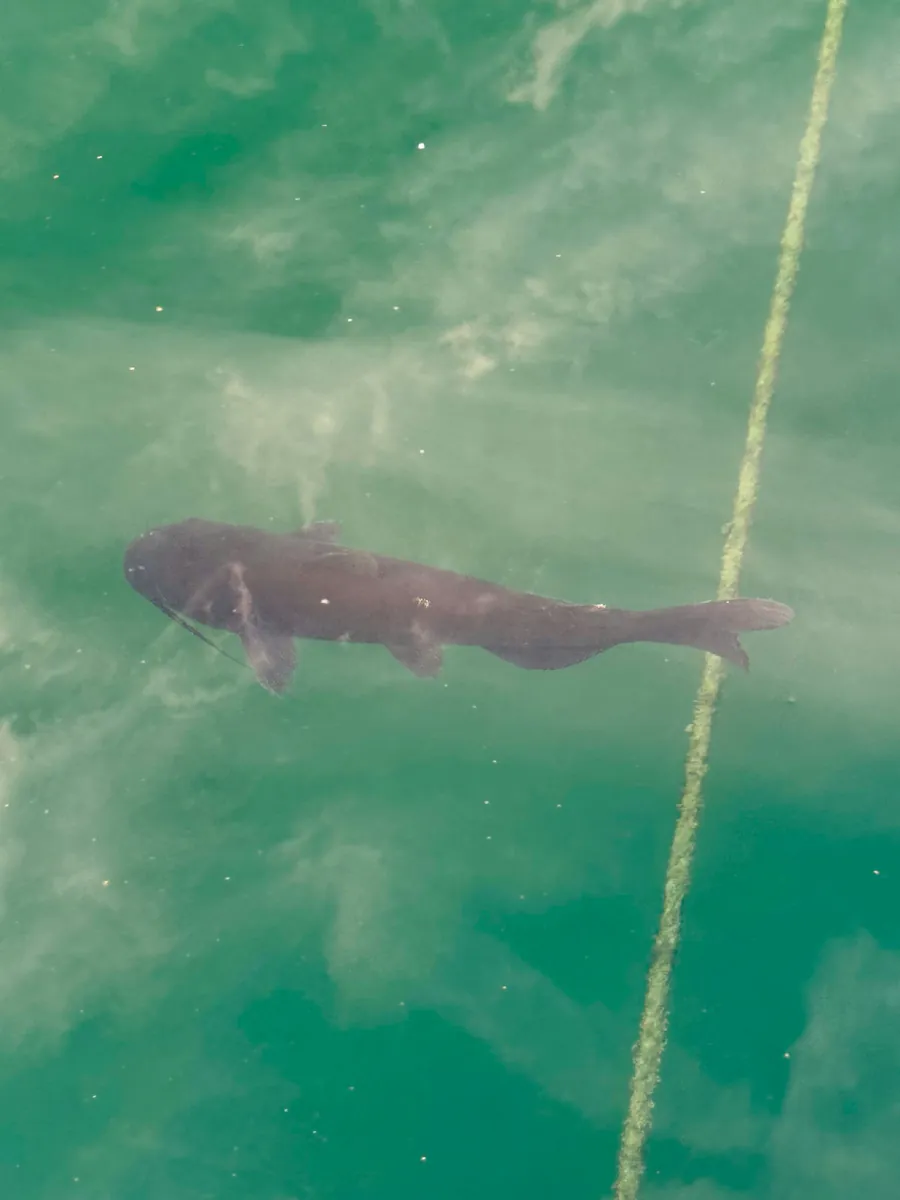
The channel catfish is a freshwater hunter that finds its way around by taste and smell rather than sight. It can grow to a serious size, up to 132 cm long and 26 kg, though most divers will meet smaller fish.
Also known as: Ictalurus punctatus; spotted cat; fiddler
It has four pairs of whisker-like barbels around its mouth, packed with taste buds, and more taste buds spread over the rest of its skin. Sharp spines sit at the front of its pectoral and dorsal fins. Adults typically reach about 45 cm.
It lives in rivers, reservoirs, lakes, and ponds across a huge range of North America, at depths of roughly 1 to 8 metres and in water from 5 to 30 degrees Celsius. It nests in crevices, hollows, and debris, where eggs are sheltered from strong current.
This fish is built for murky water with poor visibility, relying on smell and taste rather than sight to find food and other catfish. It also reads chemical signals in the water, including changes linked to territory and social rank among individuals. It can pick up sounds that many other fish cannot detect.
It feeds by opening its mouth fast to suck in prey and water together, then swallows its food whole rather than biting and chewing. Adults eat fish, snails, clams, crayfish, frogs, insects, and plant matter, while younger fish take an even wider mix of plants and small animals.
Not aggressive, but the spines in the dorsal and pectoral fins are sharp and lock upright. Handle only with care.
Its skin is covered in taste buds, with the densest patches on its barbels, so it can taste its surroundings before it can see them.
Describe what you saw and we name it, then keep every species you find in your Oceandex.