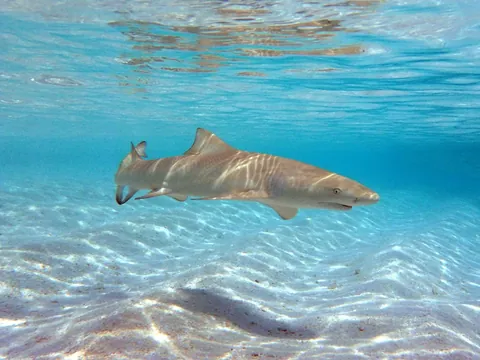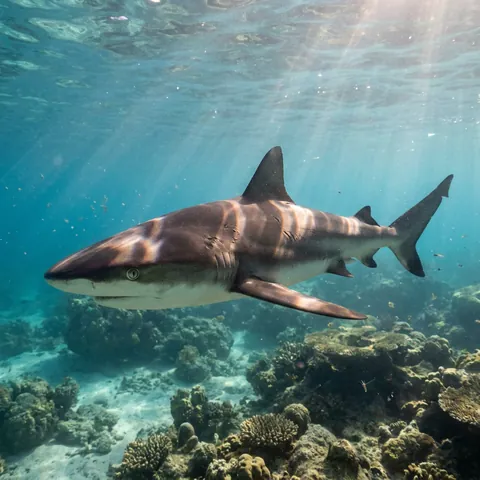
Blacktip reef shark
Carcharhinus melanopterus
Carcharhinus leucas
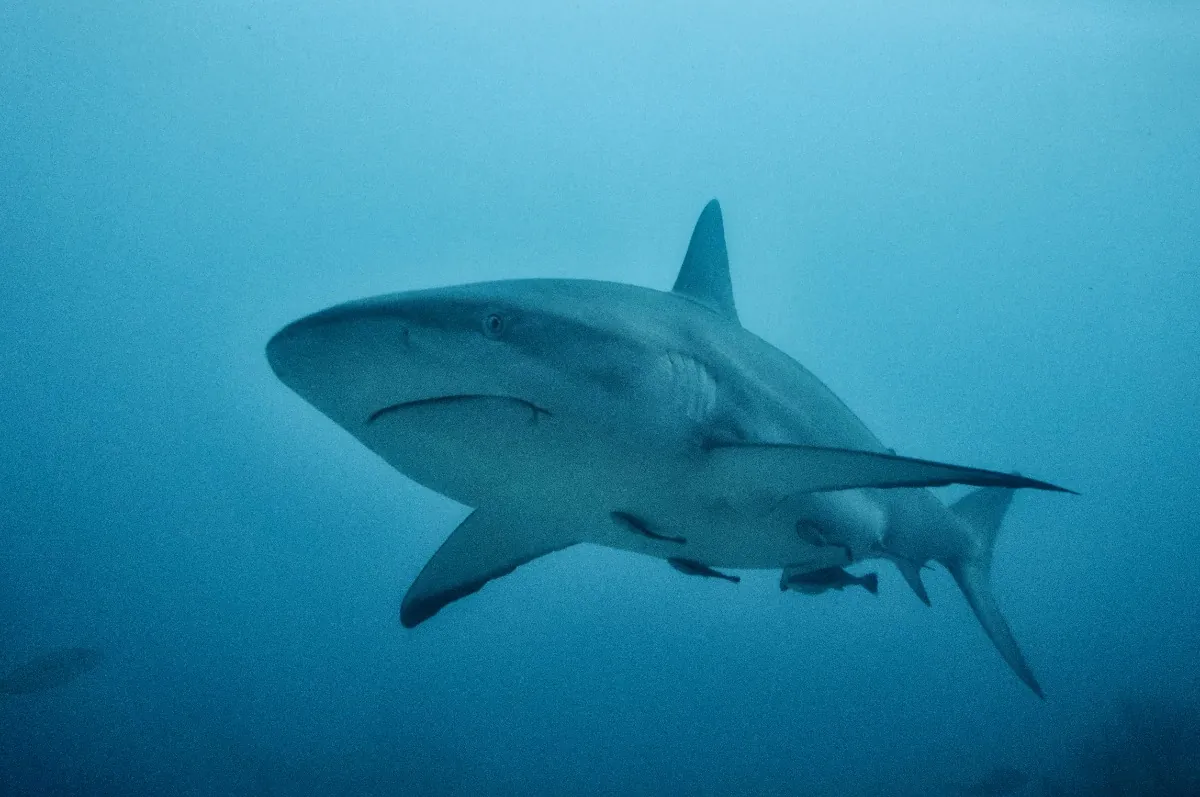
The bull shark is a stocky, powerful predator known for something almost no other shark can do: swim just as easily in a river as in the open sea.
Also known as: carcharhinus leucas, bullshark, cub shark, estuary shark, estuary whaler shark, freshwater whaler, ground shark, hervey bay whaler shark, pigeye shark, requin bouledogue, river whaler, river whaler shark, shark, swan river whaler, swan river whaler shark, zambezi shark
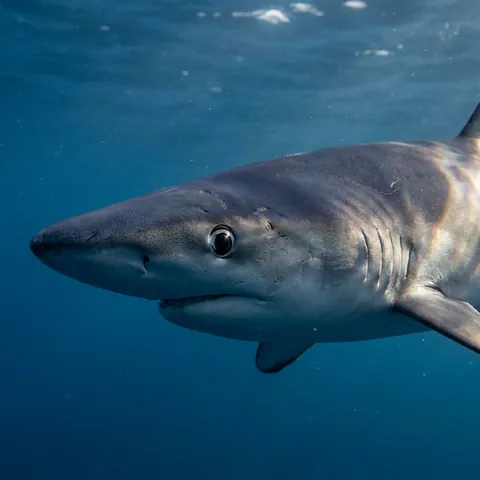
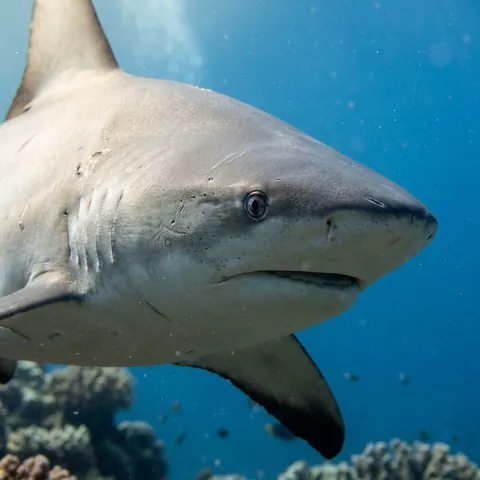
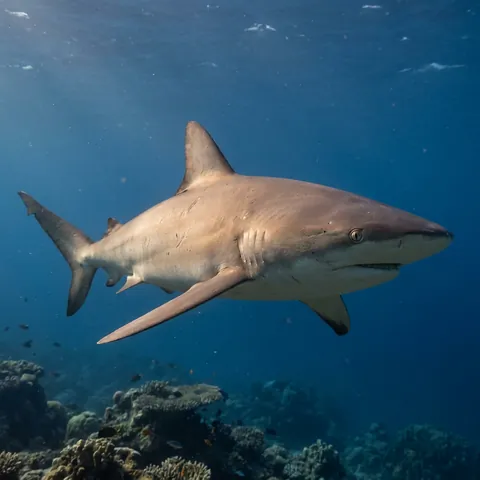
Bull sharks can be confused with other grey, blunt-nosed requiem sharks, such as the sandbar shark. The clearest difference is the back: a bull shark has no ridge running along it between the two dorsal fins, while several similar-looking sharks do.
This is a large, stout-bodied shark, wider and heavier than other requiem sharks (a family of active, fast-swimming sharks) of the same length. It is grey above and white below, with a small, blunt snout. The first dorsal fin is noticeably larger than the second, and the tail fin is longer and sits lower than on many other large sharks. Unlike some similar sharks, it has no ridge running along the back between the two dorsal fins. It commonly reaches about 2.6 m, with a maximum length of 3.6 m.
Bull sharks live in coastal waters of warm oceans worldwide, but they are unusual among sharks in also entering river mouths, estuaries, lakes, and even freshwater streams. Some individuals travel far upriver, hundreds of kilometres from the sea. In the ocean they usually stay in the upper 30 m, though they can be found as deep as 152 m.
The bull shark is one of the few sharks able to move freely between salt water and fresh water, thanks to a body chemistry that adjusts quickly to changing salinity. This ability lets it use rivers and lakes that most other sharks cannot survive in.
Bull sharks are apex predators (animals with no natural predators of their own) that feed mainly on bony fish, other sharks, and rays, and will also take turtles, birds, and other prey when the opportunity arises. They often hunt alone in murky water, where poor visibility helps them get close before prey notices.
Bull sharks are viviparous, meaning the young develop inside the mother and are born live and free-swimming rather than hatching from eggs. Mating happens in bays and estuaries, and females give birth in sheltered, low-salinity nursery areas such as river mouths and coastal lagoons, where the young stay without further care from the mother.
potentially dangerous — bold and in shallow waters; treat with caution
The IUCN lists the bull shark as Vulnerable.
Pound for pound, the bull shark has been measured with the strongest bite of any shark species scientists have tested.
Describe what you saw and we name it, then keep every species you find in your Oceandex.