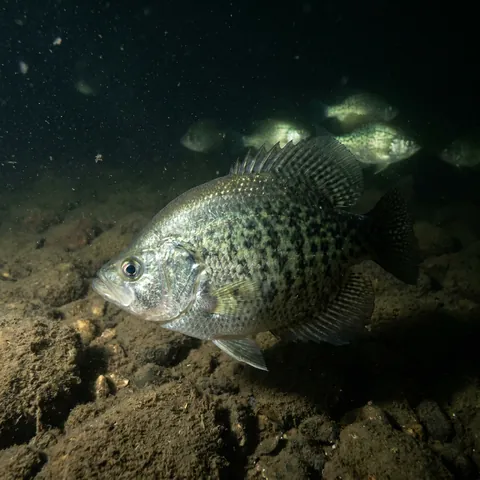
Black Crappie
Pomoxis nigromaculatus
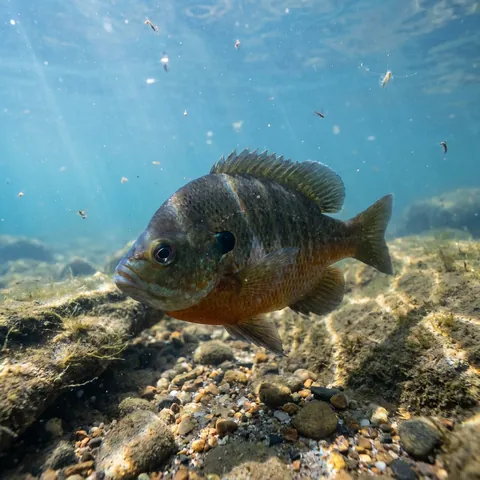
Lepomis macrochirus
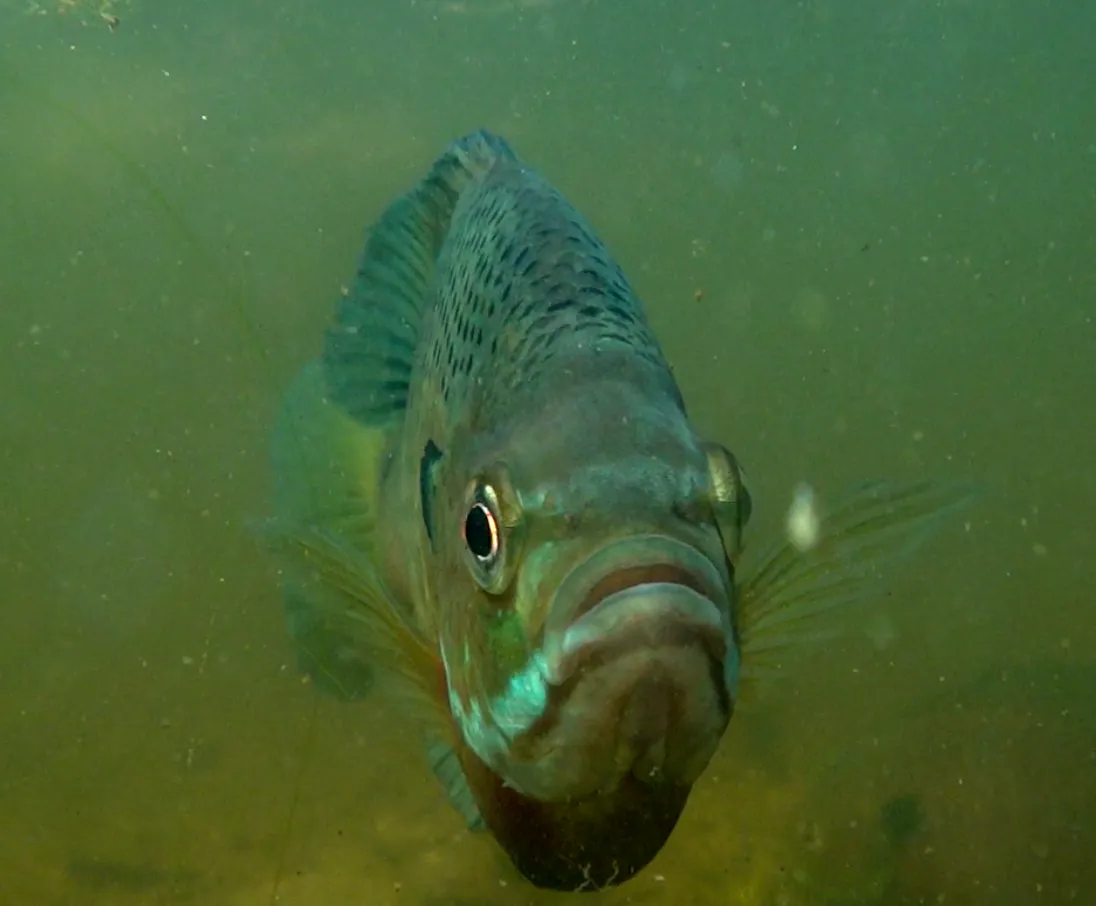
The bluegill is a small, round-bodied sunfish common in lakes and ponds, easy to spot by the dark blue patch on its cheek. Despite its size, breeding males will boldly chase off anything that comes near their nest.
Also known as: bluegill sunfish, bream, gill, bull, copperbelly
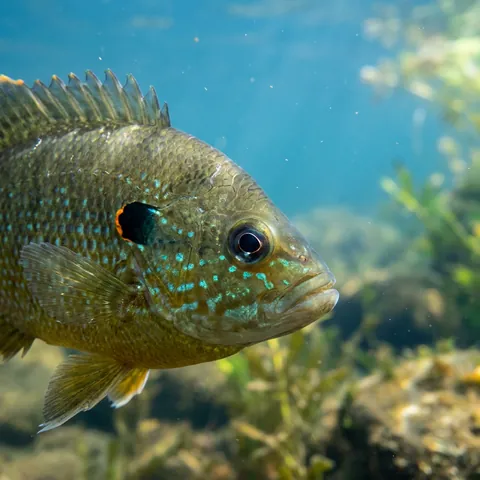
Bluegill closely resemble other sunfish such as the redear. Look for the solid black ear flap with no red or orange edge, the clearest giveaway.
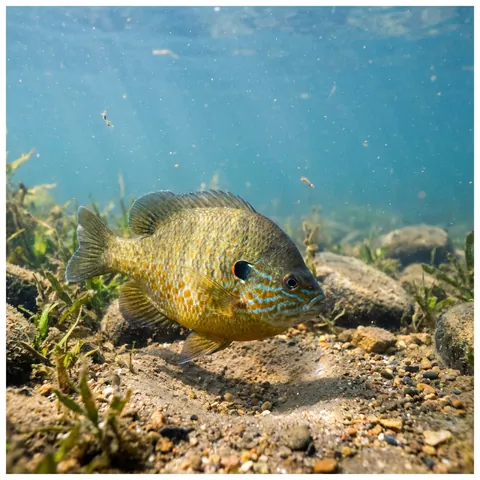
This sunfish has a deep, flattened body with a small mouth and a solid black flap, sometimes called an ear, on the edge of each gill cover. Its cheeks and chin often show a dark blue shade, and most adults carry a dark blotch at the rear of the soft dorsal fin. Colour can shift with mood, and a stressed or threatened fish may flash 5 to 9 vertical bars along its sides. Breeding males develop a bright orange breast.
Bluegill live in the shallow, weedy parts of lakes, ponds, streams, and rivers, often sheltering near fallen logs or water plants. In summer, adults move out into deeper open water and hang just below the surface to feed.
Bluegill are agile swimmers, using quick fin movements to dart after prey and escape predators such as bass, pike, and herons. Their flattened, oddly-shaped body also makes them awkward for many predators to swallow whole.
Young bluegill eat tiny water fleas, copepods, and insect larvae, while adults take a broader mix of aquatic insects, small crustaceans, worms, snails, and even small fish. They feed mainly by day, with the biggest feeding push in the evening.
Males scoop out shallow nests in sand or gravel, often clustering dozens together, and use grunting sounds and circling displays to attract females. After spawning, the male chases the female off and guards the eggs alone, aggressively defending the nest from anything that gets close, including snorkelers.
Male bluegill guard their nests so fiercely that they will charge and nip at snorkelers who swim too close, despite being far smaller than the intruder.
Describe what you saw and we name it, then keep every species you find in your Oceandex.