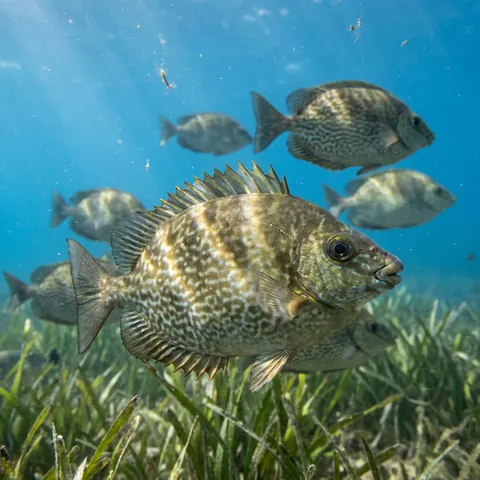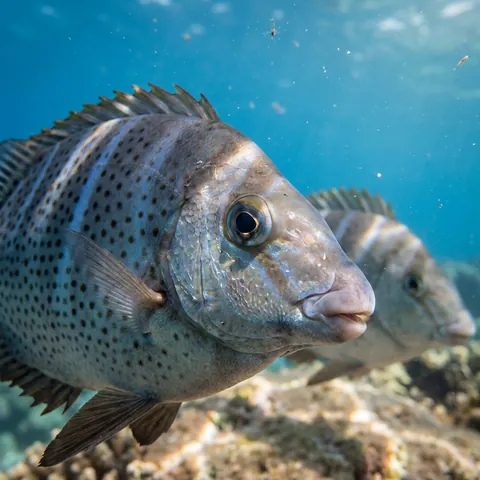
Doublebar Rabbitfish
Siganus virgatus
Siganus corallinus
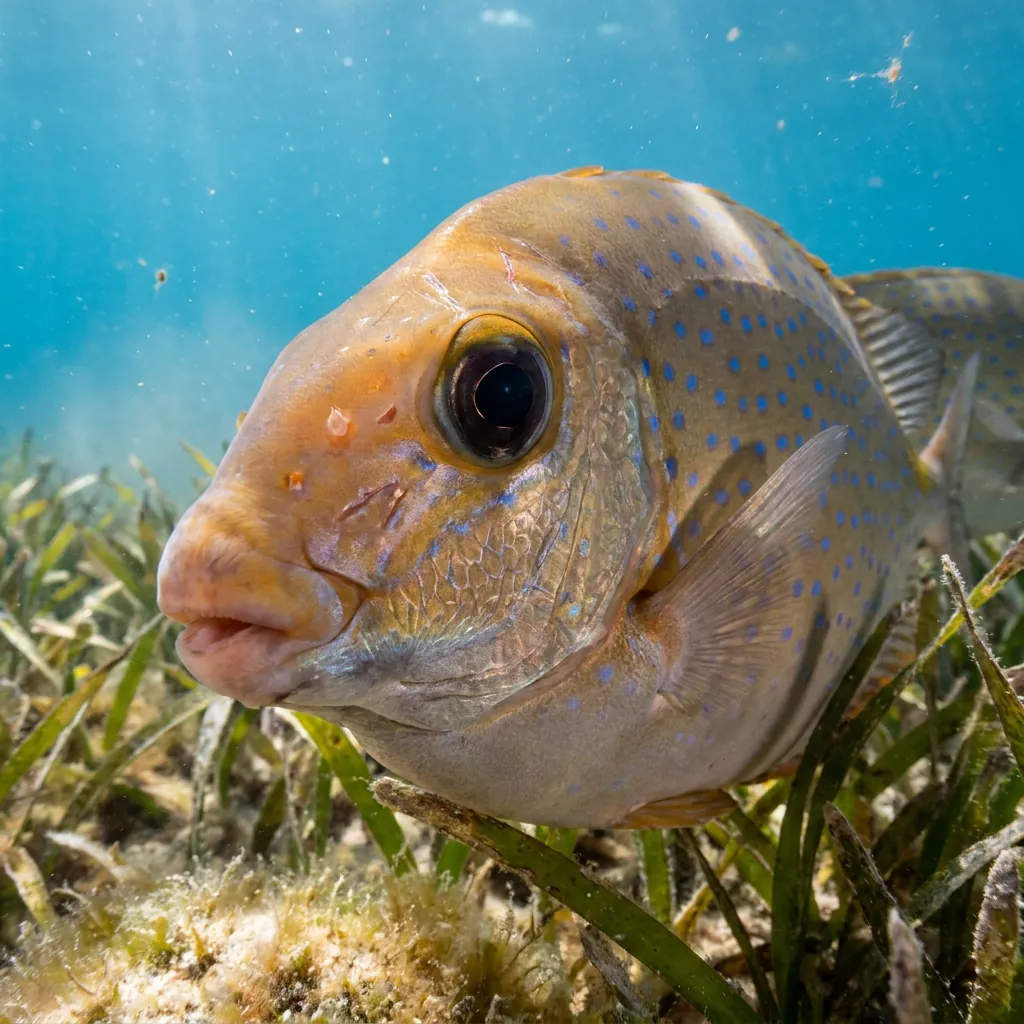
The blue-spotted spinefoot is a small, brightly coloured reef fish that grows to about 35 cm, though most divers see it closer to 20 cm.
Also known as: coral rabbitfish, coral spinefoot, ocellated orange spinefoot, spotted spinefoot, rabbitfish, coral rabbitfish, indian coral rabbitfish, spotted rabbitfish, orange spinefoot, spinefoot, coral spinefoot, orange spinefoot, pacific coral rabbitfish, ocellated spinefoot, coral spinefoot, coral rabbit-fish, bluespotted spinefoot
Several orange, blue-spotted rabbitfish look alike at a glance. Check for the dark smudge around the eye: this species carries it, while similarly spotted relatives do not.
This rabbitfish has a deep, flattened body and an orange-yellow colour all over. Small pale blue spots with darker blue edges cover its head, chest, and flanks, sometimes crowding more thickly on the head. A dark, blurred smudge surrounds the eye. Young fish start out with thin blue vertical lines on their sides, which break up into spots as they grow. The tail fin becomes more deeply forked with age, ending in sharp points.
Blue-spotted spinefoots live in coral-rich lagoons and on coral reefs, from about 3 to 30 m deep in warm water. Juveniles shelter in shallow seagrass beds before moving into branching corals as they grow, while adults settle in pairs among the same branching coral.
Young fish school in seagrass beds, sometimes mixing with parrotfish and other rabbitfish. They graze on the fine algae growing on seagrass leaves. As they grow, they pair up and settle into one patch of branching coral, feeding mainly on larger algae and moving into flooded shallows to feed as the tide rises. Like other rabbitfish, it has venomous spines in its dorsal, anal, and pectoral fins that can give a painful sting, so it should never be handled.
Its species name, corallinus, comes from a Seychellois Creole name for rabbitfish, cordonnier de coral, meaning "coral cordwainer" (coral shoemaker) - a nod to its home among coral-rich lagoons.
Describe what you saw and we name it, then keep every species you find in your Oceandex.