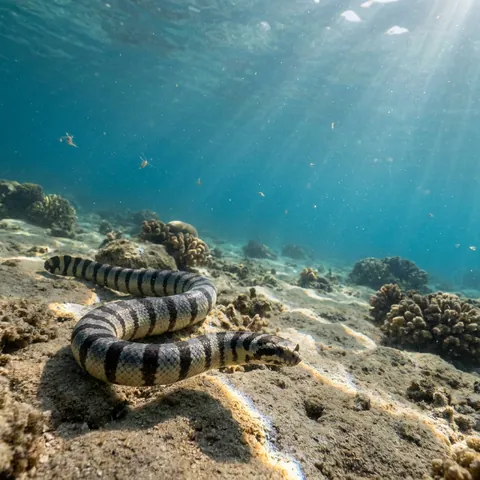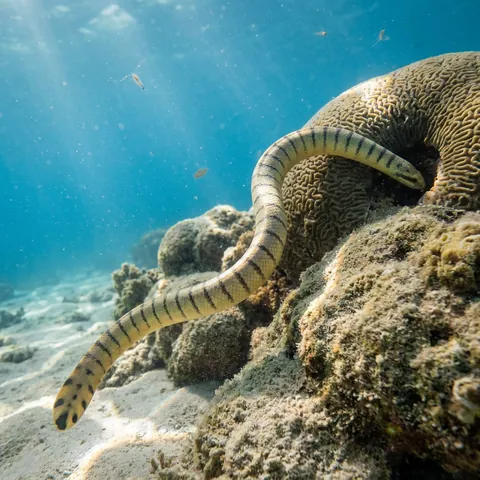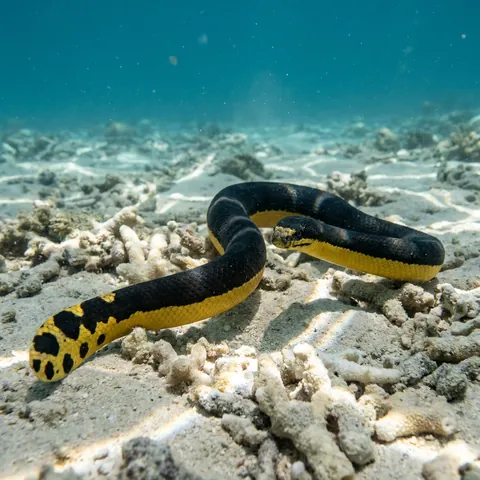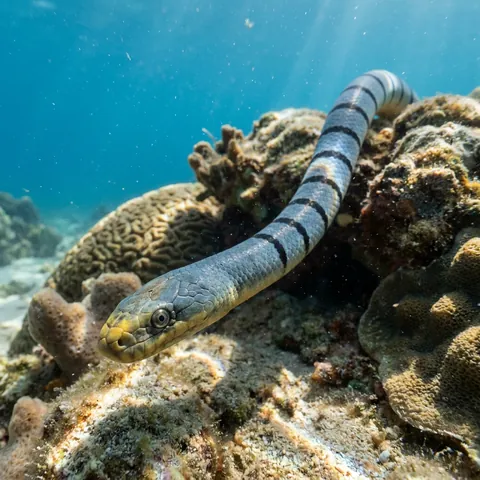
Banded Sea Krait
Laticauda colubrina
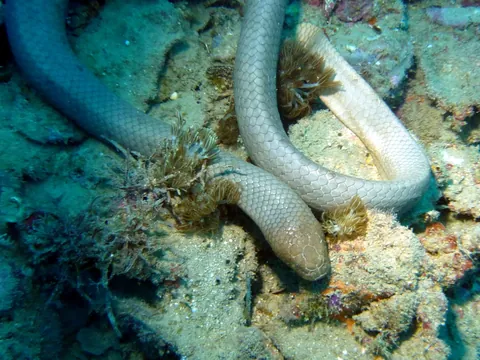
Hydrophis schistosus
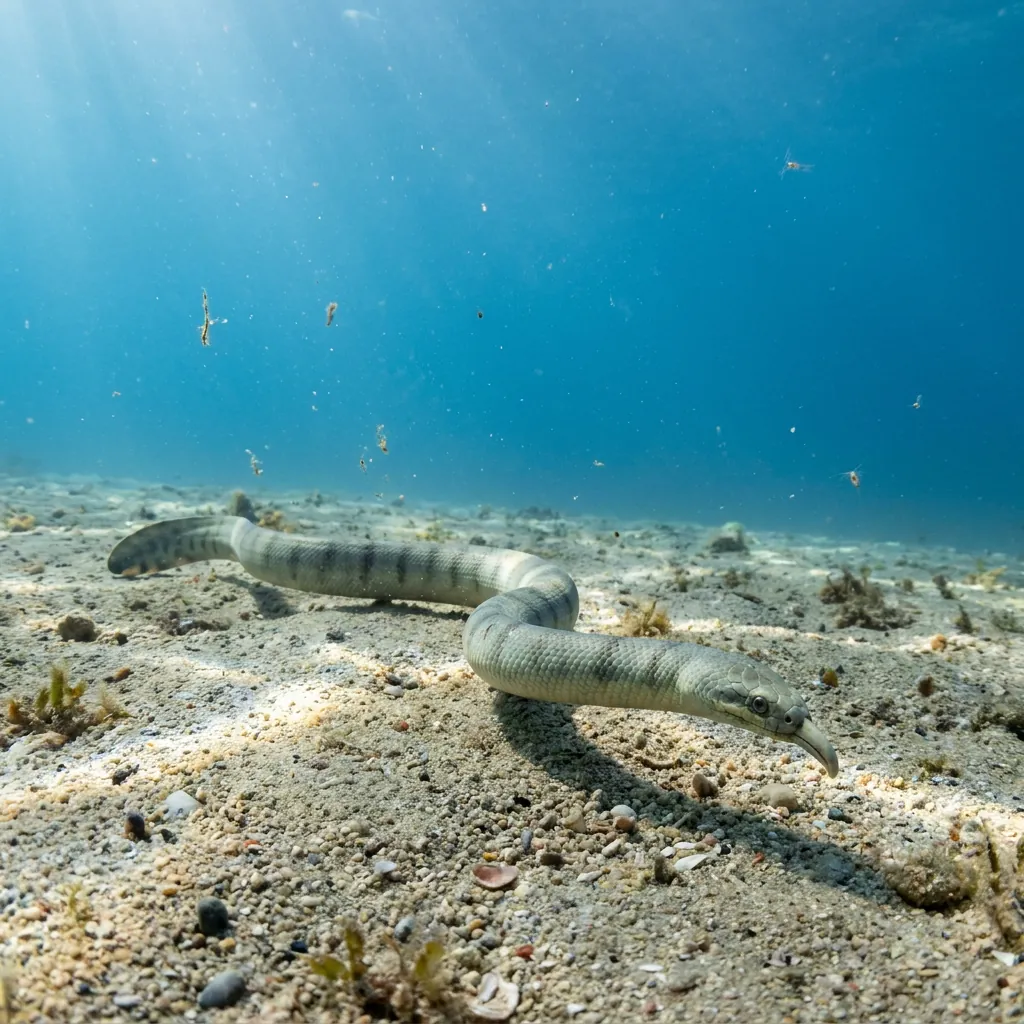
The beaked sea snake is a common but dangerous resident of Indo-Pacific coastal waters, growing to around 140 cm, and best admired from a distance.
Also known as: common seasnake, hook-nosed sea snake, banded sea snake, valakadyn sea snake
This sea snake is usually a plain, dark grey above, with whitish sides and underside. Young snakes look different: olive or grey with black bands crossing the body, each band widest across the middle of the back.
The beaked sea snake is widespread across the tropical Indo-Pacific, from the Arabian Sea and Persian Gulf through South Asia and into Southeast Asia. It favours clear, shallow reef water near the coast and coastal islands, and will sometimes swim well up tidal rivers. It has been recorded between about 3 and 22 metres deep.
Beaked sea snakes are active both by day and at night, hunting mainly fish. Unlike many sea snakes, they have a reputation for being unusually bold and quick to defend themselves if disturbed. Like other sea snakes, they have glands that let them get rid of excess salt, an adaptation for spending their whole lives at sea. They can stay submerged for long stretches before surfacing to breathe.
The beaked sea snake is thought to carry the most toxic venom of any sea snake, and is blamed for more sea-snake bite deaths than all other species put together.
Describe what you saw and we name it, then keep every species you find in your Oceandex.