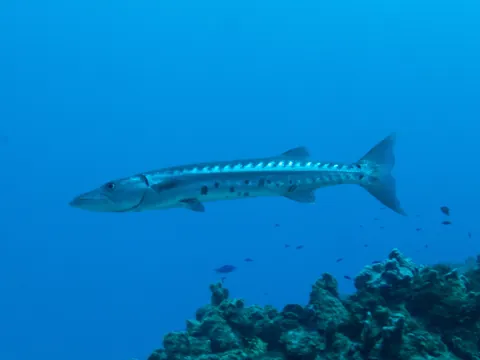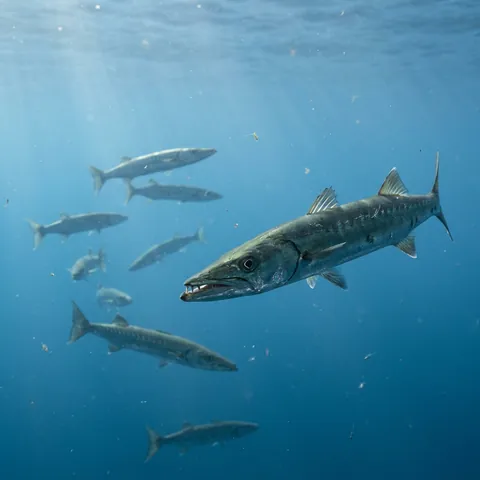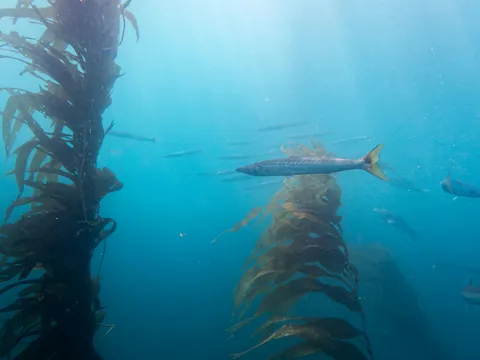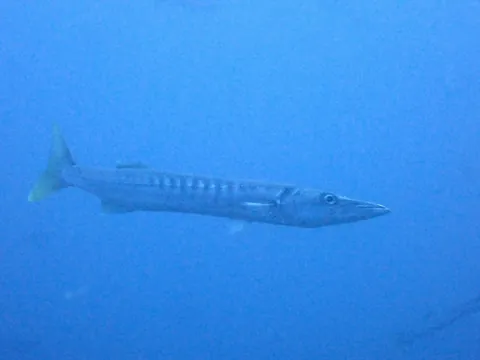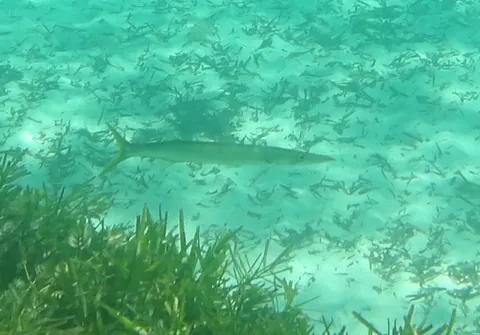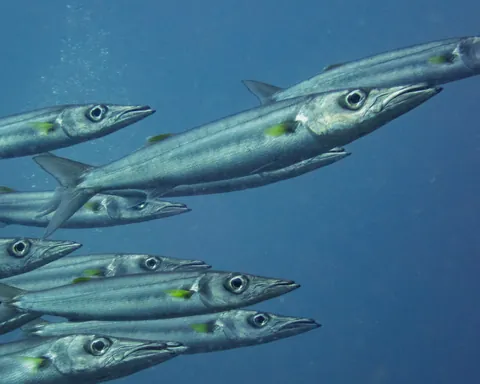
Bigeye barracuda
Sphyraena forsteri
barracuda
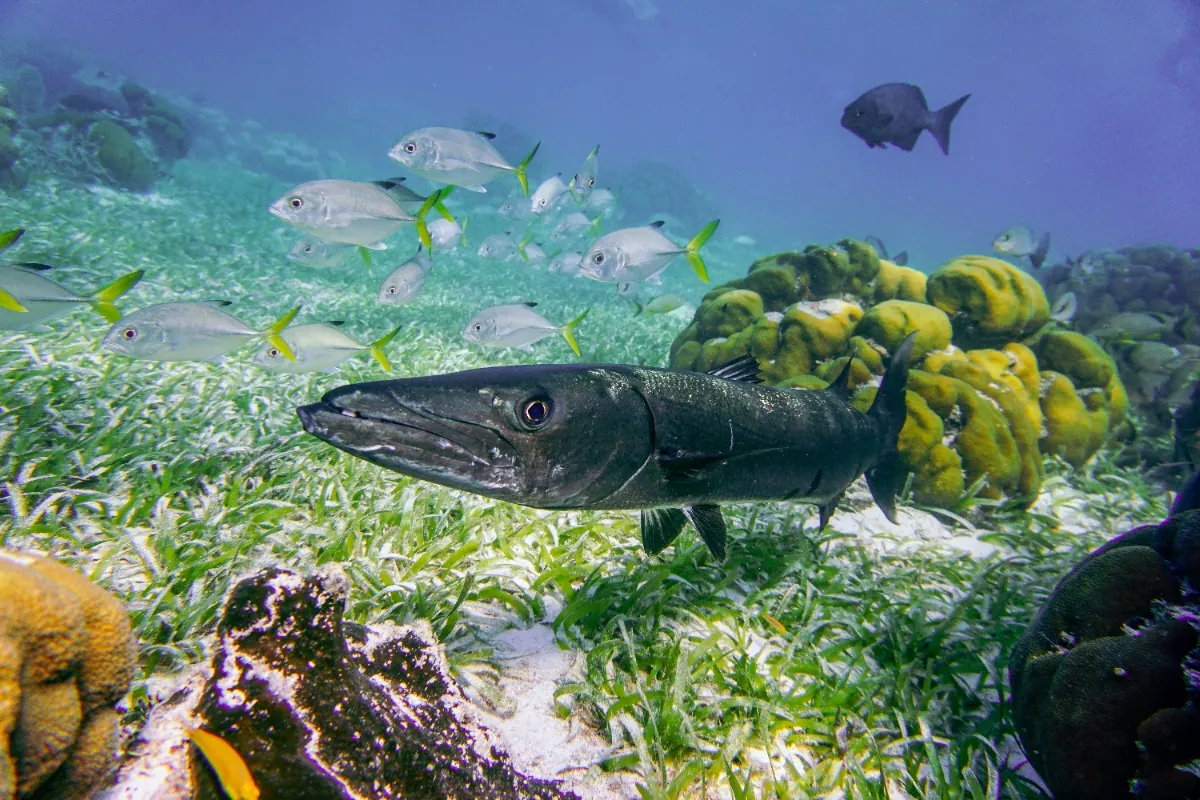
Barracudas are long, fast, silver predators that patrol open water and reef edges. In this app the group includes the Great barracuda, Pickhandle barracuda, and Bigeye barracuda.
Barracudas can look like freshwater pike, but barracudas have two separate back fins and a forked tail, while pike have one back fin and a rounded tail. To tell barracuda species apart, look at body markings such as spots or cross-bars, and at overall size.
Barracudas have a long, snake-like body with a large, pointed head and a noticeable underbite. Their jaws hold sharp, fang-like teeth of different sizes. They have two separate fins on the back and a forked tail. Most are dark grey, green, white, or blue on top with silvery sides and a pale belly; some have dark spots or bars on the sides. Larger species can reach around 165 centimetres.
Barracudas live mainly in the open ocean, though some species, such as the great barracuda, also enter brackish water where rivers meet the sea.
Barracudas hunt by surprise, using short, fast bursts of speed to catch prey. Adults are usually solitary, while young fish often gather in groups. Some barracudas also swim in groups to push schools of fish together or into shallow water, making them easier to catch.
Barracudas eat mostly other fish, including some almost as large as themselves. They often bite prey in half or tear chunks from larger animals, and they hunt mainly by sight, watching for movement or flashes of colour.
generally harmless to divers (avoid wearing shiny objects that resemble prey)
The word "barracuda" comes from Spanish, likely borrowed from a Caribbean language long before the fish had a scientific name.
Describe what you saw and we name it, then keep every species you find in your Oceandex.