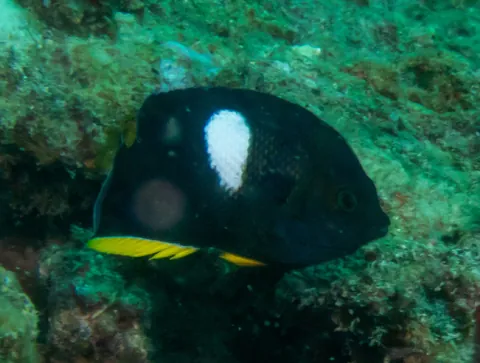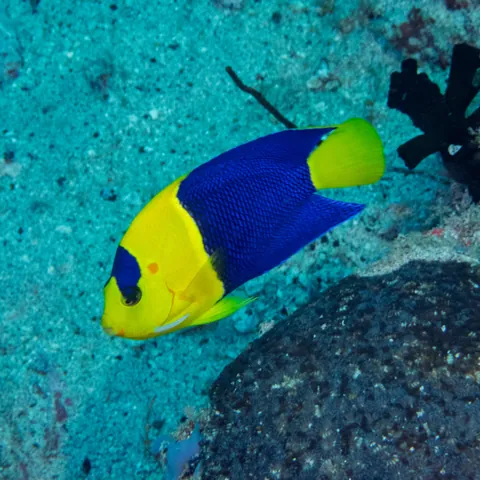
Bicolor angelfish
Centropyge bicolor
angelfish
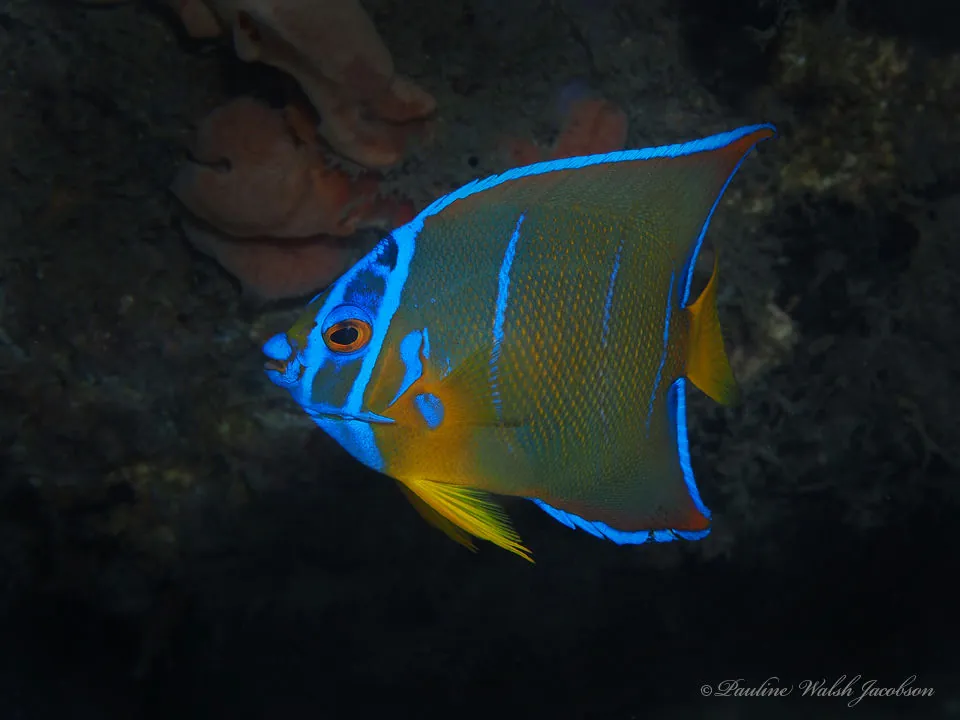
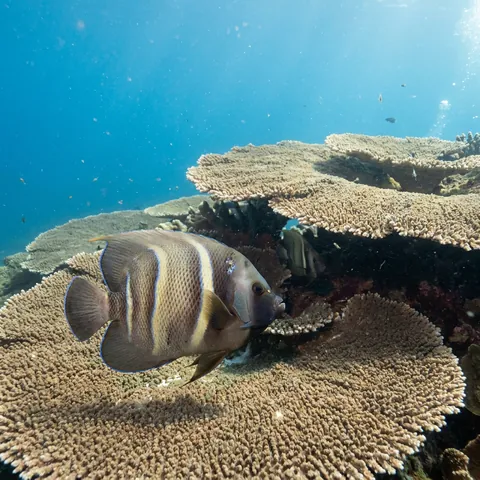
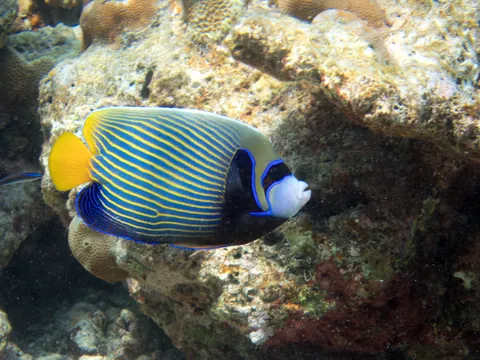
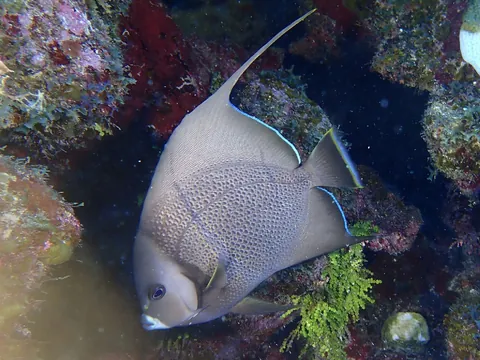
Angelfish are bright, flat-bodied fish that are easy to spot on a reef. In this app the group includes the Emperor angelfish, Regal angelfish, and French angelfish.
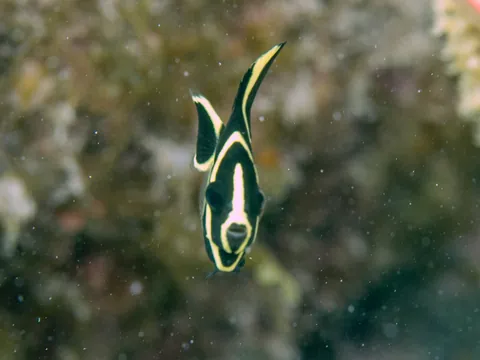
Angelfish look like butterflyfish, but angelfish have a sharp spine on the gill cover that butterflyfish lack. Look for this spine near the back edge of the head. To tell angelfish apart, look at their colour pattern and size, since young and adult fish of the same species can look very different.
Angelfish have a deep, flat body and a small mouth. Their fins are large, with some species growing long, streamer-like tips on the back and belly fins. Colours and patterns vary a lot between species. Most are 20 to 30 centimetres long, but the biggest species can reach 60 centimetres, and the smallest stay under 15 centimetres.
Angelfish live on shallow tropical reefs in the Atlantic, Indian, and western Pacific Oceans. Most stay above 50 metres, hiding in cracks and holes in the reef at night.
Angelfish are active by day and rest in the reef at night. Larger species are bold and will often approach divers. Some live alone or in territorial pairs, while others live in a harem with one male and several females.
Most angelfish eat sponges and other soft, fixed animals like tunicates and hydroids. Some species instead eat plankton drifting in the water, and others graze on algae.
Angelfish release many tiny eggs into open water, where they drift with the plankton until they hatch. All angelfish start life able to become either sex: if the lead male of a harem disappears, a female can change into a male.
harmless to humans
The family name Pomacanthidae comes from Greek words meaning "thorn cover", named for the sharp spine on the gill cover that all angelfish share.
Describe what you saw and we name it, then keep every species you find in your Oceandex.