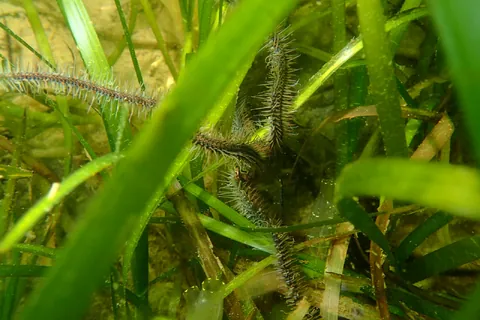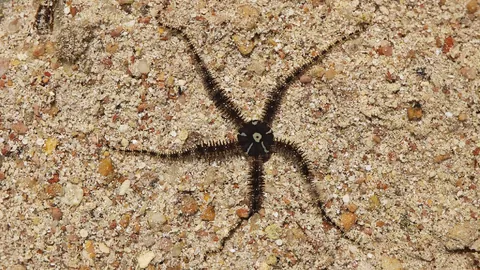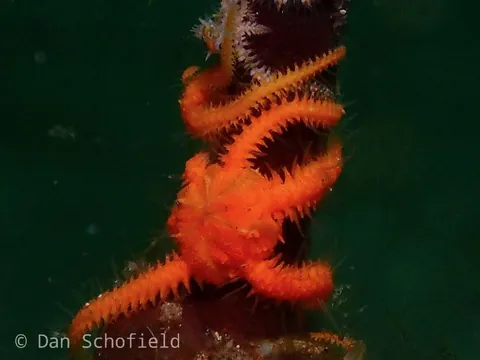
Commensal Brittle Star
Ophiothela mirabilis
Ophiocomella alexandri
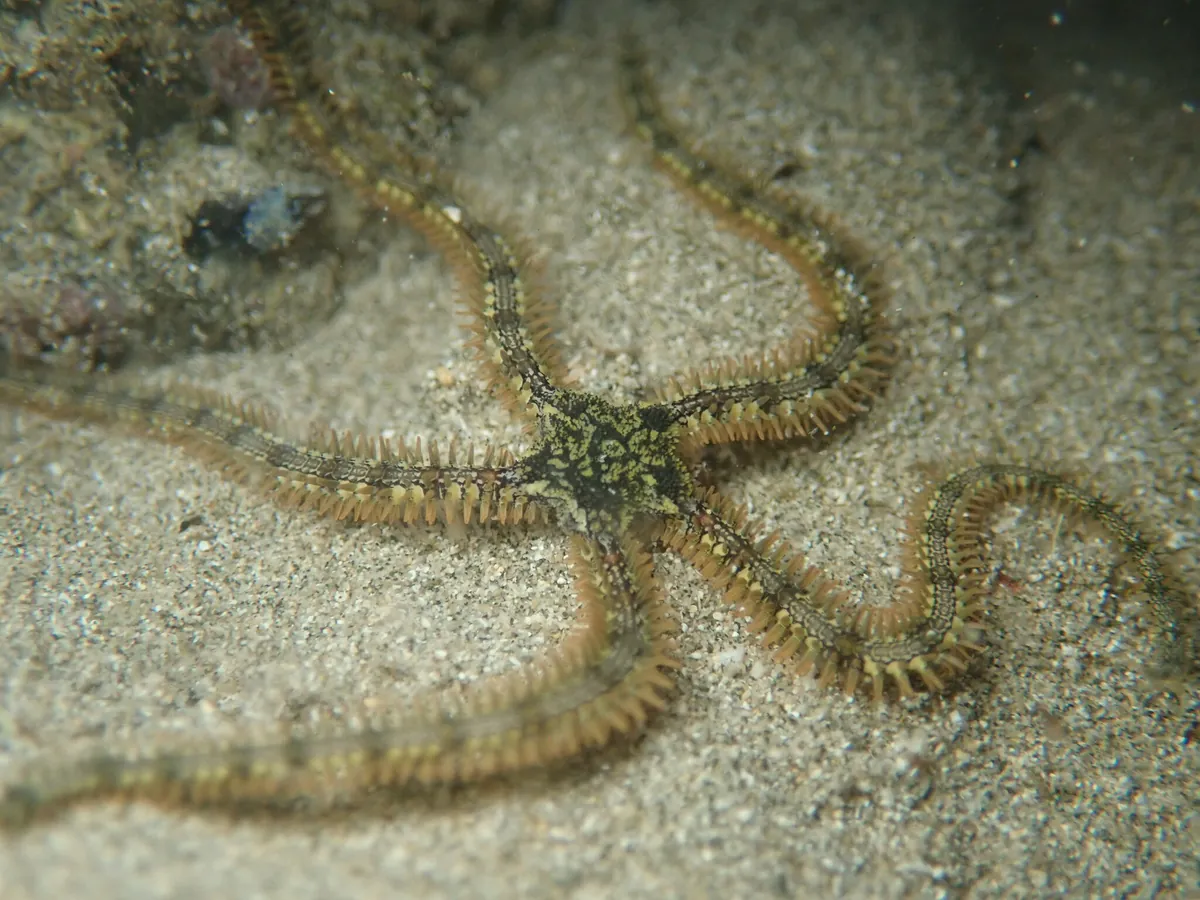
Alexander's spiny brittle star is a five-armed relative of starfish that hides in plain sight on the reef. Look closely at a rocky crevice or coral head and you may find one curled around the structure, using its flexible arms to grip on.
Also known as: alexander's banded brittle star
Several brittle star species share a similar five-armed shape. The banded pattern of light and dark along the arms, combined with the dense rows of spines on each arm, helps set this species apart from smooth-armed relatives.
This brittle star has five thin, flexible arms attached to a small, rounded central disk. The disk has tiny bumps on top and holds the mouth and organs. Its color is dark brown with lighter bands running along the top of the arms, in shades of gray, yellow, or cream. The arms carry rows of long spines along each side, giving the animal a bristly look. It changes color slightly through the day, likely to help it blend in against the reef.
It lives on the sea floor from the shallows down to deeper rocky and reef habitat, tucked among rocks and coral where it can wedge its arms into gaps. It is found along the eastern Pacific coast, from southern California down through Central America to Colombia, including the Gulf of California and the Galapagos Islands.
This brittle star feeds mainly on detritus, the bits of organic debris that settle on the reef. Males and females release eggs and sperm into the water at the same time, a strategy called broadcast spawning. The fertilized eggs grow into free-swimming larvae before settling on the reef.
Describe what you saw and we name it, then keep every species you find in your Oceandex.