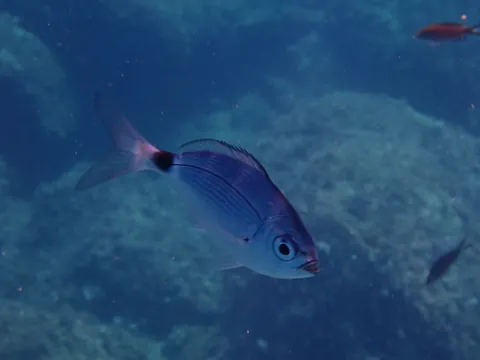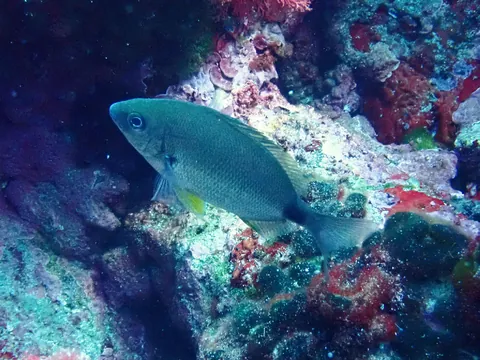
Annular Seabream
Diplodus annularis
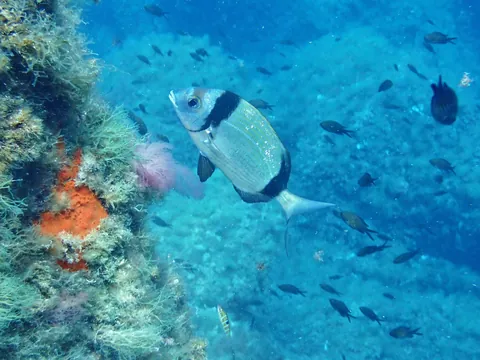
Diplodus cervinus
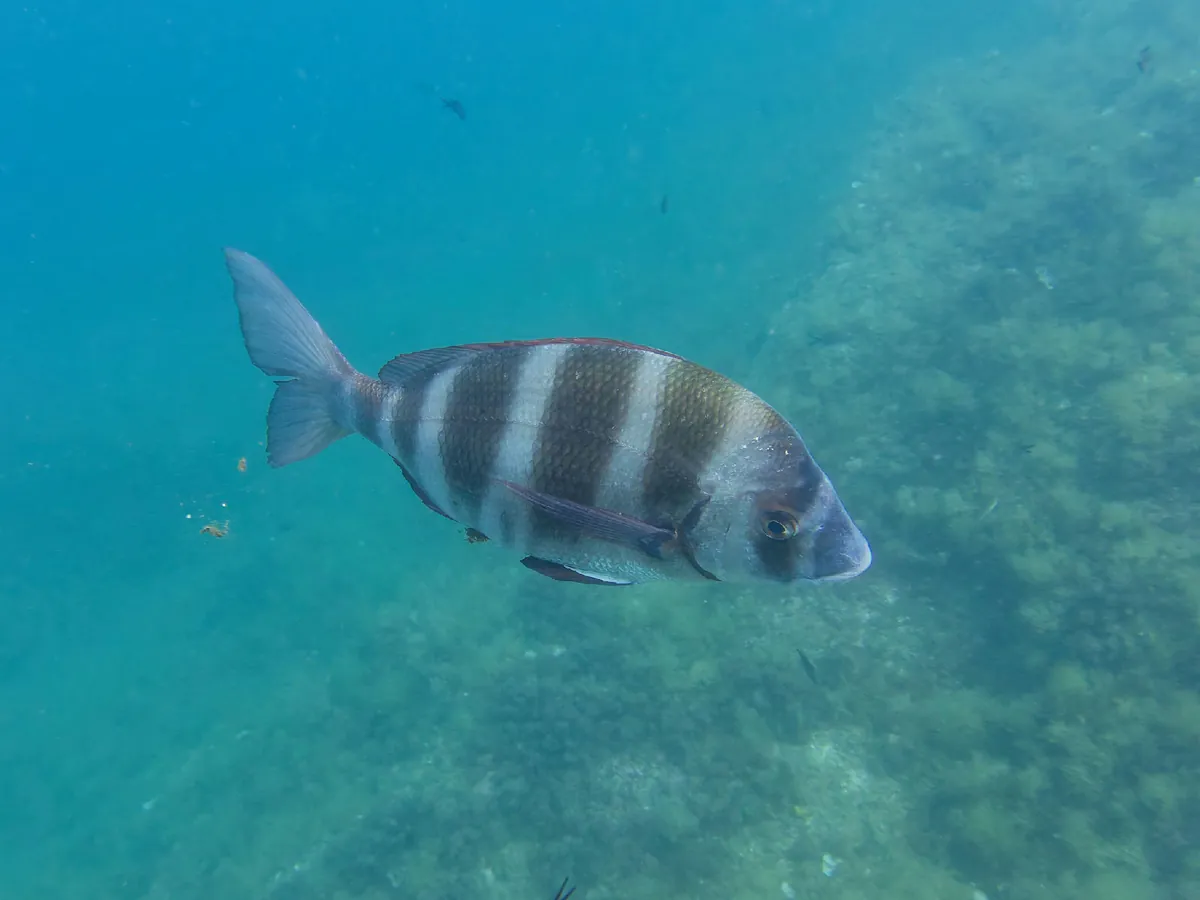
Named for its bold stripes, the zebra seabream patrols rocky reefs of the eastern Atlantic and Mediterranean, growing up to 55 cm and often moving in small, mixed-size schools.
Also known as: zebra bream, zebra, zebra seabream, Diplodus cervinus
The combination of a dark-tipped snout and a small dark spot at the top of the pectoral fin base sets this species apart from other striped seabreams sharing the same reefs.
An oval, deep-bodied fish with a moderately sharp snout and a thick-lipped mouth. The body is silvery or golden-grey, crossed by five thick dark bars on the back and flanks. The area around the eyes and cheeks is dark, the snout tip is dark, and a small dark spot sits at the top of the pectoral fin base. The pelvic fins are dark, while the other fins are greyish with darker edges, and the tail is forked.
Found from the Bay of Biscay south to Mauretania, including the Canary Islands, Madeira, and Cape Verde, and through the Mediterranean, though not the Black Sea. It lives over rocky bottoms at 10 to 80 m, and occasionally down to 300 m over sand or mud, in water around 13 to 18°C.
An omnivore, feeding on small invertebrates and seaweed. Adults form small schools of three to eight fish, usually one dominant male with several females, especially during the spring-to-summer spawning season, which peaks in May and June. Juveniles instead gather in schools over well-vegetated rocky ground in shallower water.
harmless
Its scientific name cervinus means 'deer', taken from the Portuguese name for this fish on Madeira, sargo veado, or 'deer seabream'.
Describe what you saw and we name it, then keep every species you find in your Oceandex.