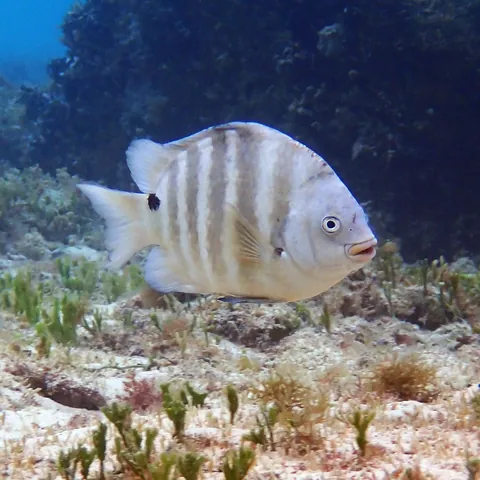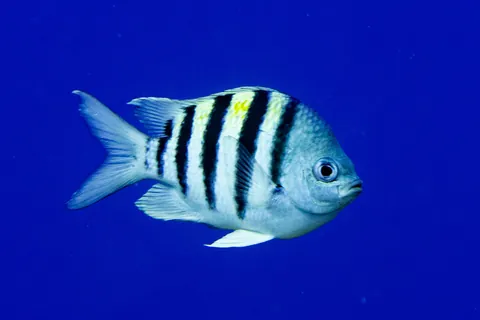
Atlantic Sergeant Major
Abudefduf saxatilis
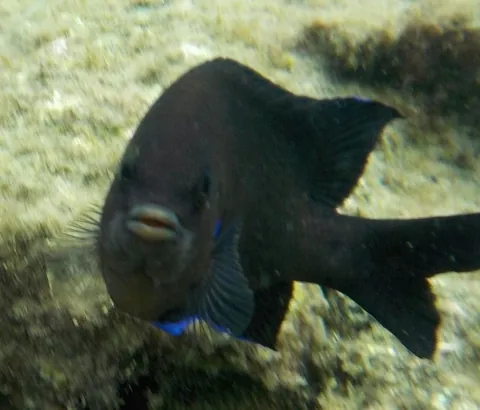
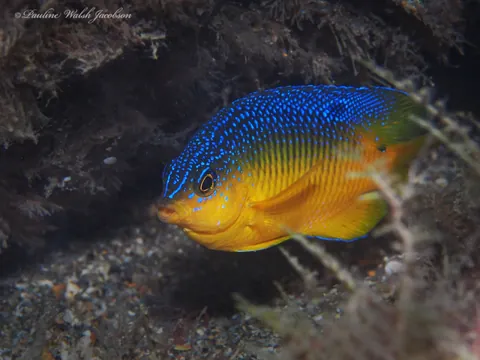
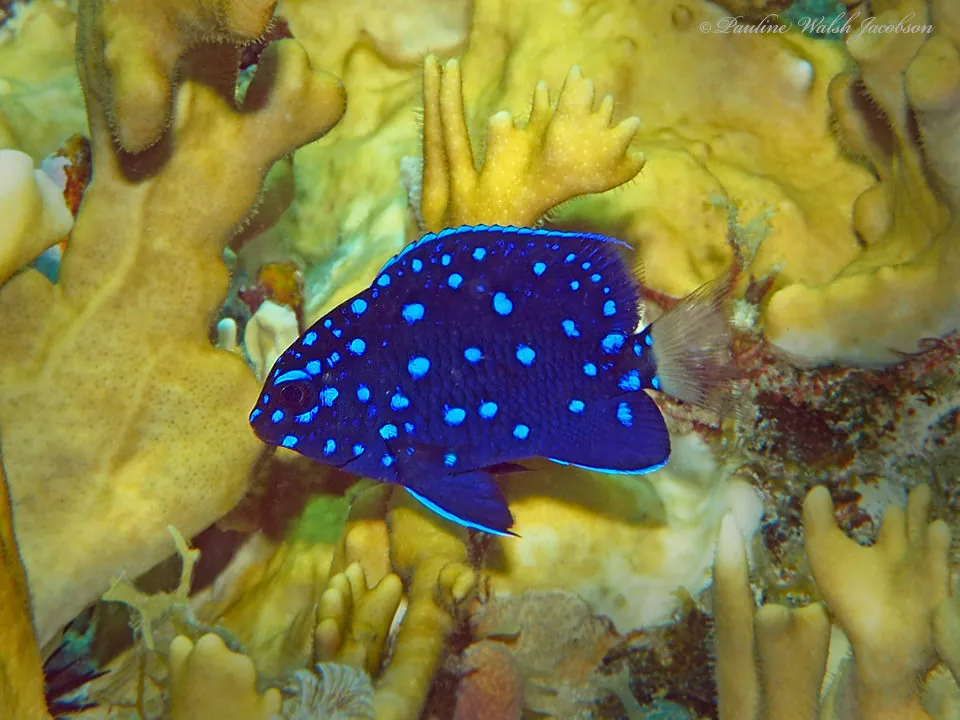
Microspathodon chrysurus
Small but pugnacious, this damselfish holds its ground against reef neighbours many times its size, using little more than sheer stubbornness and its own bulk. It grows to about 21 cm, yet the way it defends its patch makes it feel much bigger.
Also known as: jewelfish, yellowtail damsel
This damselfish changes so much between life stages that young and adults were once thought to be different species. The fixed giveaway is the tail: solid yellow on adults, clear and see-through on juveniles.
Juveniles are dark blue with electric blue spots along the sides and a clear, see-through tail. As they grow, the colour changes completely: adults turn dark yellowish brown, with darker edges on each scale, and the tail becomes solid yellow.
This is a common, territorial fish of coral reefs across the Caribbean. Juveniles shelter among the branches of yellow fire coral, while adults usually stay in shallow water less than about 10 metres deep, near the top of the outer reef where there are caves, holes, and fire coral.
Juveniles are mostly carnivorous, eating fire coral polyps and other small invertebrate matter. As they mature, adults switch to mainly grazing on algae, especially blue-green algae. Yellowtail damselfish share feeding grounds with other damselfish and use their larger size to push rivals off the best patches.
Spawning begins at sunrise and lasts about an hour, most often around the full or new moon when tides run strongest. Males prepare nests on dead coral, and females lay sticky eggs that stick to the surface. The male then guards and fans the eggs until they hatch, six days later.
Despite being fiercely territorial as adults, juveniles sometimes act as cleaners, picking parasites off other fish that visit their patch of reef.
Describe what you saw and we name it, then keep every species you find in your Oceandex.