Barracudas
barracuda
Sphyraena viridensis
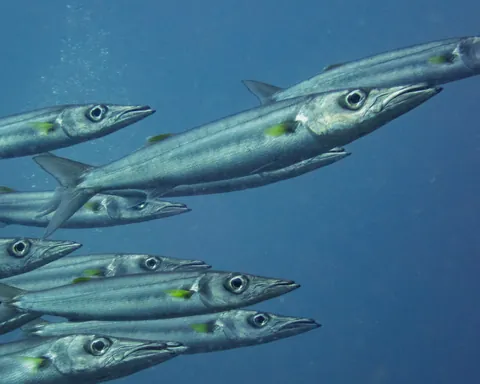
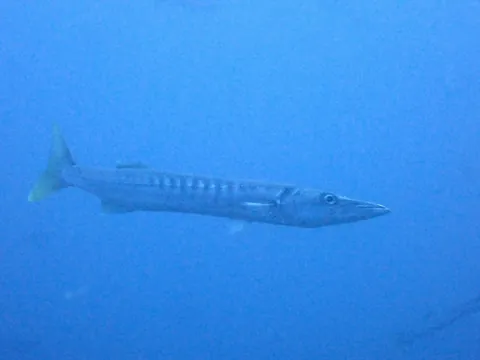
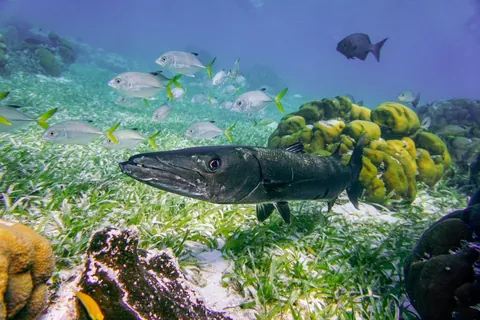
The yellowmouth barracuda is a sleek, fast-hunting predator often mixed up with its close relative, the European barracuda. Adults are dark above and silvery below. This shading hides them from view both from above and below. Young fish show a dark yellow or greenish tint.
Also known as: mediterranean striped barracuda
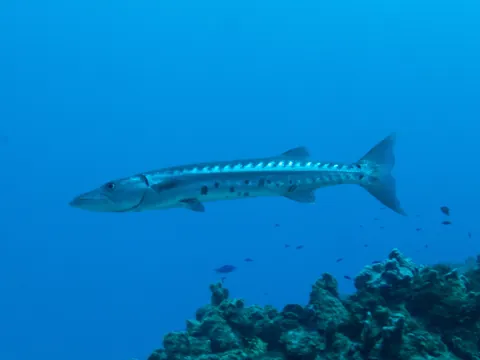
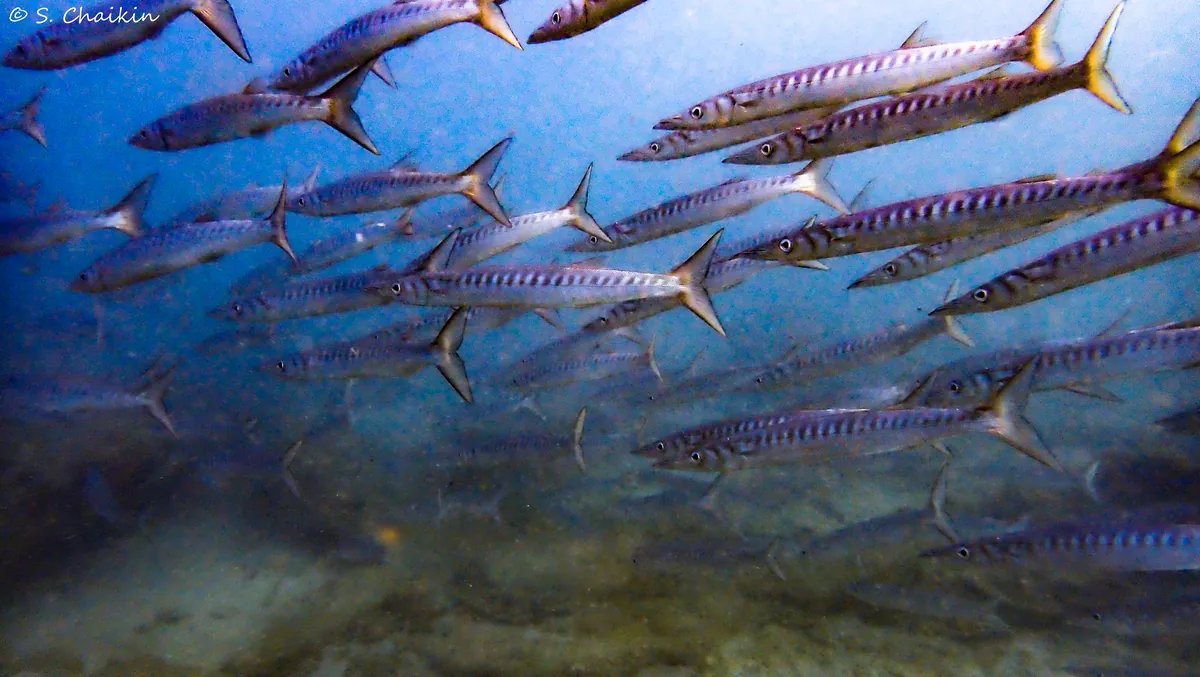
It is often mixed up with the European barracuda. The clearest difference: on this species the dark bars on the back reach down below the lateral line, a faint sense-organ stripe along its side. On the European barracuda, the bars stop above that line.
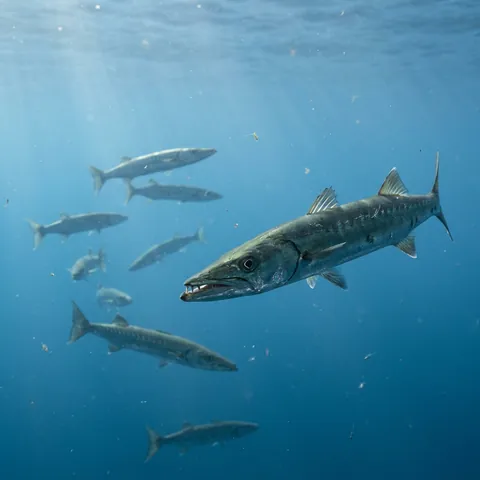
It has a torpedo-shaped body with a long, pointed snout and a long mouth full of two rows of sharp, fang-like teeth. Its lower jaw juts out past the upper one. Many dark bars cross its back, and its gill cover has no scales on it.
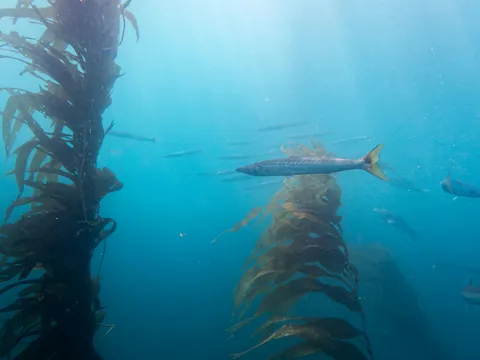
It lives in warm waters around the eastern Atlantic islands and the Mediterranean Sea, sometimes ranging as far north as the English Channel. In summer it prefers areas with strong currents. In winter, young fish shelter in small, calm bays with sandy bottoms.
In summer it forms schools in water swept by strong currents, with smaller fish nearer the surface and bigger fish, often female, lower down. In winter only small groups of young fish remain, in shallow bays. It does not guard territory, and it does not seem to school with other barracuda species.
It is an active hunter of other fish. Sometimes it chases prey alone, and sometimes it hunts together with other barracudas. It picks out lone fish or drives into groups of them. Its main food is small schooling fish, though it also eats squid and crustaceans.
This barracuda has been seen swimming alongside whale sharks. It was once recorded swimming straight toward a manta ray.
Describe what you saw and we name it, then keep every species you find in your Oceandex.