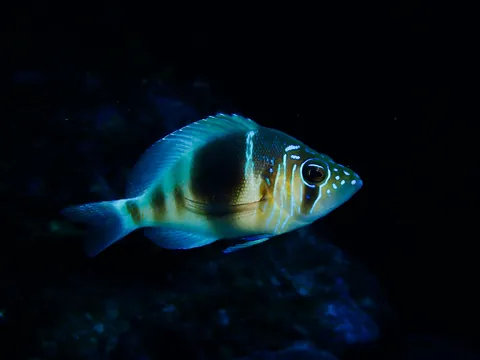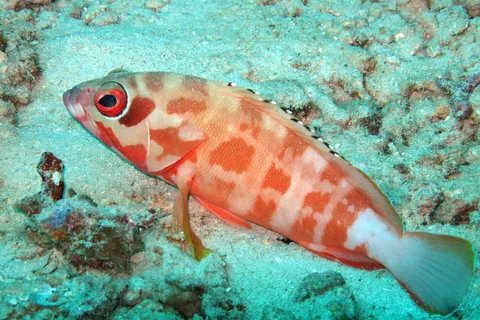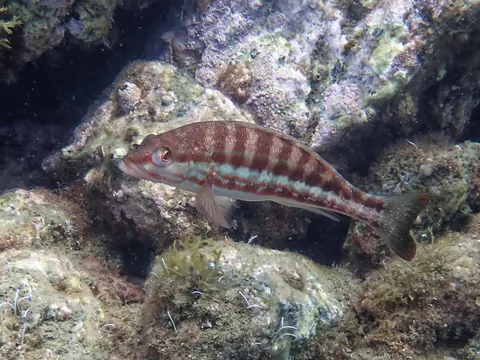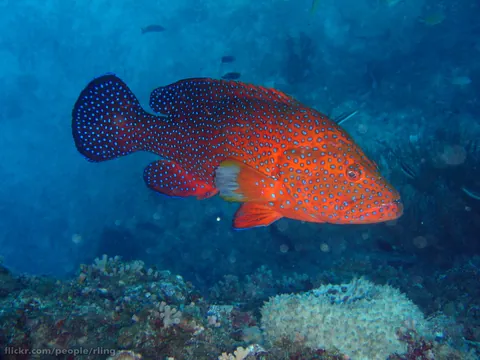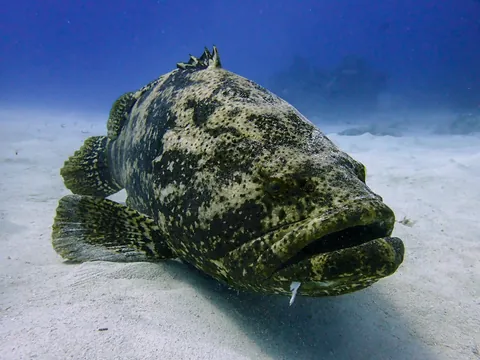
Atlantic goliath grouper
Epinephelus itajara
Variola louti
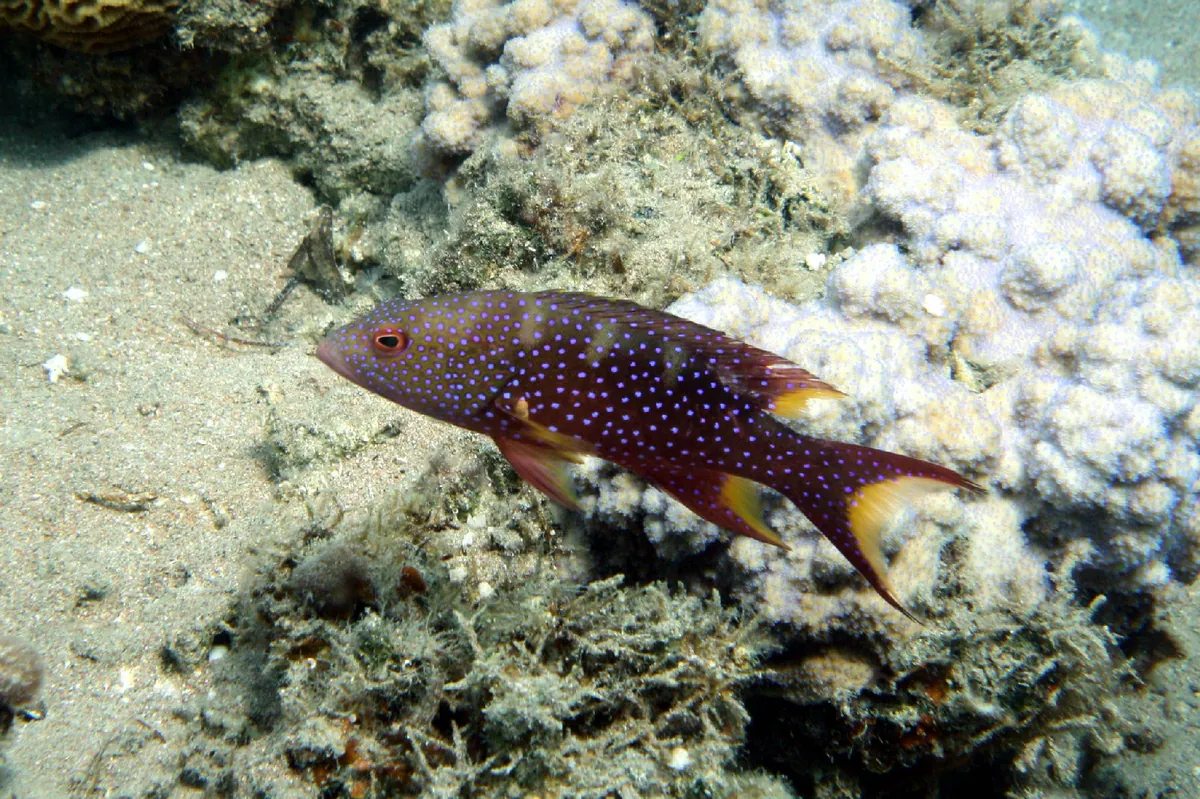
This grouper's flowing, crescent-shaped tail gives it its name, and it can grow to an impressive 83 cm and 12 kg, though most seen are around 75 cm.
Also known as: common lyre-tail cod, lunar-tail cod, lunar-tailed coral-trout, lunar-tailed rock-cod, lunartailed cod, lyre tail coral trout, lyretail grouper, lunar-tailed rock cod, grouper, moontail seabass, coronation trout, moontail sea bass, luna-tail, lyre-tail cod, lunar-tailed coral-trout, fairy cod, coral trout, coronation grouper, yellowedged lyretail, yellow-edged lyretail, lyretail grouper, lunartailed cod, chameleon sea bass, yellow-edge lyretail, lunar-tailed rock-cod, lunar tail cod, common lyretail-cod, lyretail coral trout, lunar-tailed cod, yellow-edged lunartail, yellowedge coronation trout, common lyre-tail cod, yellow-edged lyretail, lunar-tailed grouper, lyretail coral trout, moontail seabass, lunar tail rock cod, fairy cod, coronation trout, coronation grouper, common lyretail-cod, lunar-tailed cod, lyre-tail cod, yellowedged lyretail, yellowedge coronation trout
This grouper is easily confused with its close relative, the white-edged lyretail. The mark to check is the color of the fin edges: this species has yellow rims on its fins, where its relative has white ones.
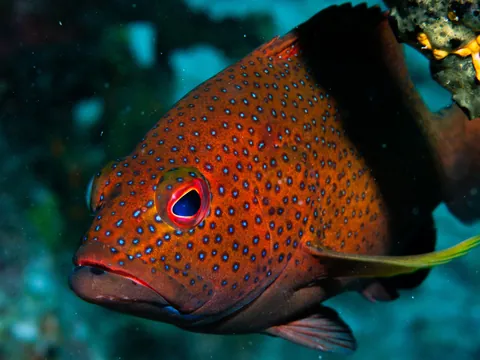
The body is oblong and reddish overall, shading to orange or white on the lower half, and covered in small bluish or pinkish spots on the head, body, and fins. The dorsal and anal fins have pointed rear tips, and the tail is crescent-shaped, with the upper and lower lobes drawn out into long points, giving it a lyre-like shape. The fin edges are yellow. Juveniles mimic the look of goatfish.
It ranges across the Indo-Pacific, from East Africa and the Red Sea to Japan, Australia, and the Pitcairn Islands. It favors clear water around islands and offshore reefs rather than close to the mainland, usually below 15 m and down to 300 m.
As juveniles, this grouper mimics the appearance of goatfish, a completely different family of fish.
Describe what you saw and we name it, then keep every species you find in your Oceandex.