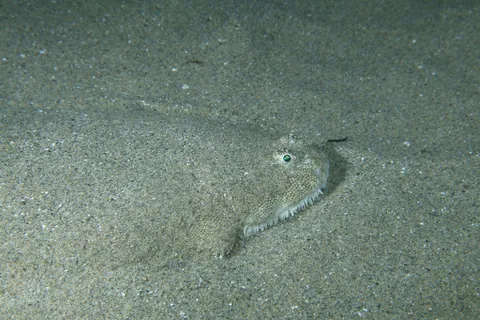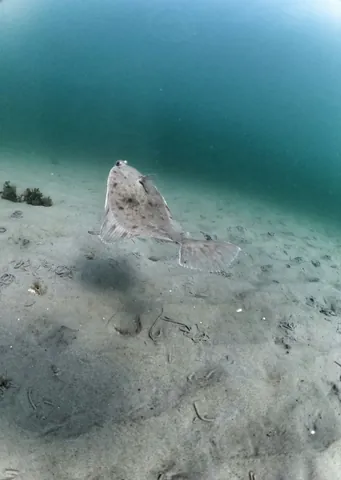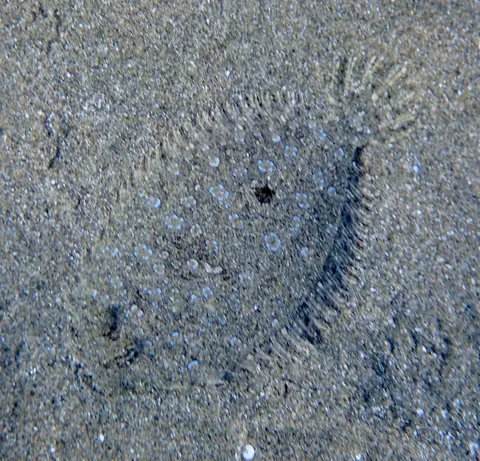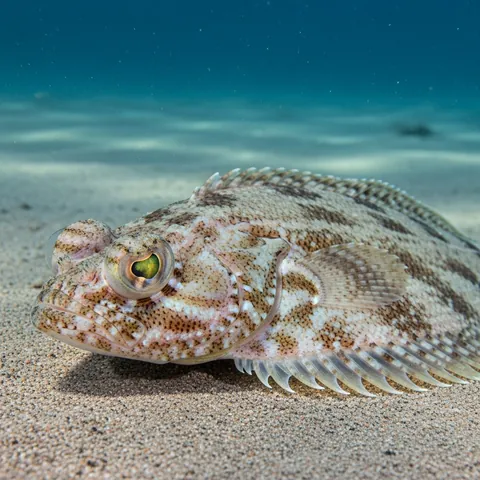
Cape Scaldfish
Arnoglossus capensis
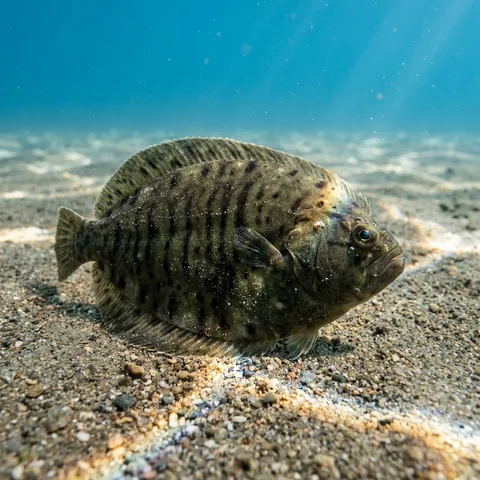
Pseudopleuronectes americanus
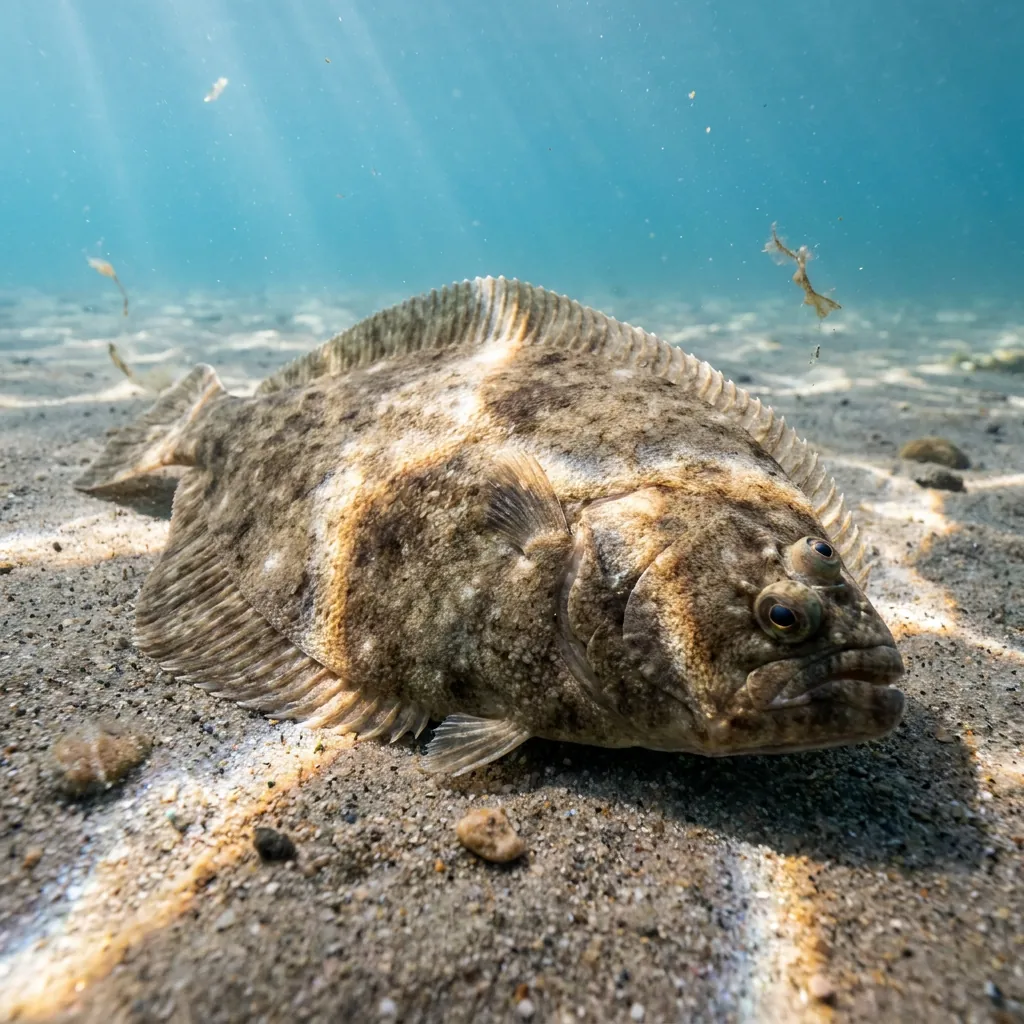
The winter flounder is a flat, bottom-dwelling fish of the western North Atlantic coast, once the backbone of large local fisheries. Also known as the black back, it spends most of its life lying camouflaged on soft seafloor.
Also known as: georges bank flounder, lemon sole, blackback, dab, carrelet
Many flatfish look alike from above. Check which side the eyes are on: the winter flounder is right-eyed, with both eyes on the right side of the head when its pale belly faces down, unlike left-eyed flatfish species.
This is a flat, oval-bodied fish typical of the flounder family, with both eyes on one side of its head. Adults can grow up to 64 cm long and weigh as much as 3.6 kg. Its common name, black back, points to the dark colouring on its upper side.
Winter flounder release large numbers of sticky eggs onto the seafloor near their spawning grounds, rather than letting them drift away. The eggs hatch into tiny larvae that float freely in the water at first. As the larvae grow, one eye slowly moves across the head to join the other, and the young fish settle onto the bottom in their flat adult shape. Juveniles then move into sheltered coves, salt ponds, estuaries, and bays to grow.
Young larvae feed on plankton and tiny invertebrates, shifting toward copepods, amphipods, and worms as they grow. Adults hunt mainly by day near the seafloor, picking off worms, shrimp, crabs, sea urchins, snails, and small bivalves and fish depending on what is available.
Adults migrate between shallow estuaries, where they spawn in late winter or early spring, and deeper estuary or offshore waters the rest of the year. Some individuals stay inshore all year if the water stays cool enough or food is plentiful. Populations in the Gulf of Maine, south of Cape Cod, and on Georges Bank stay largely separate, with little interbreeding between them.
Describe what you saw and we name it, then keep every species you find in your Oceandex.