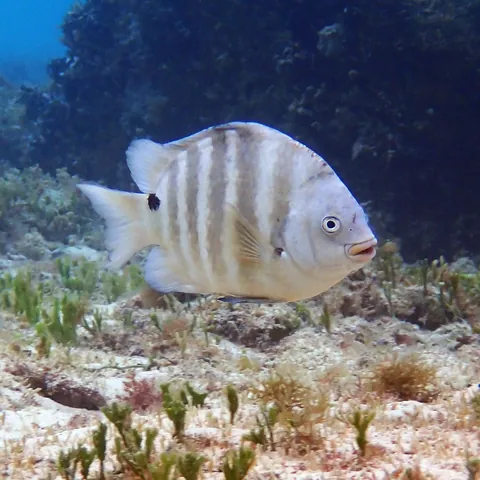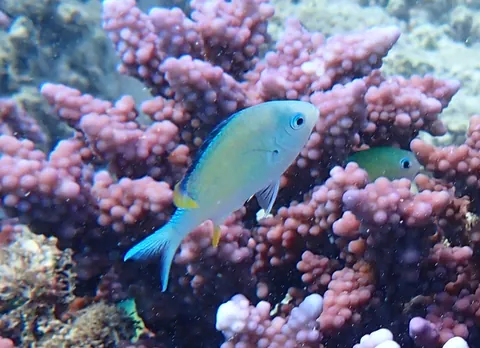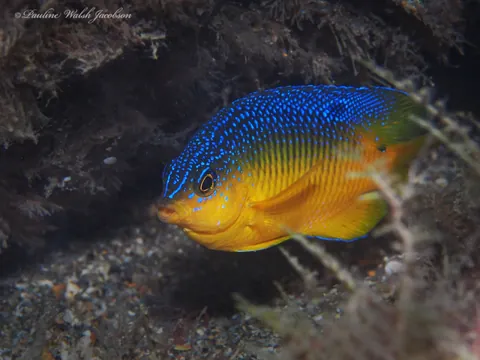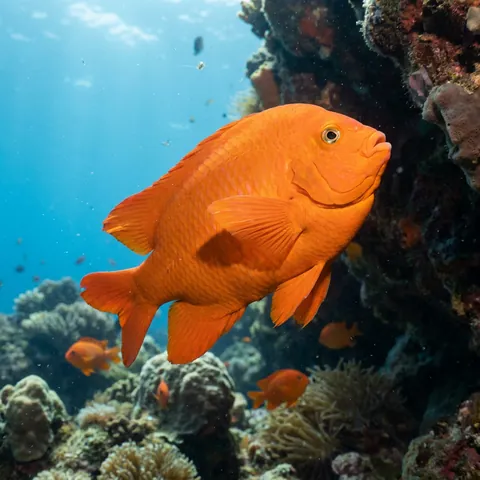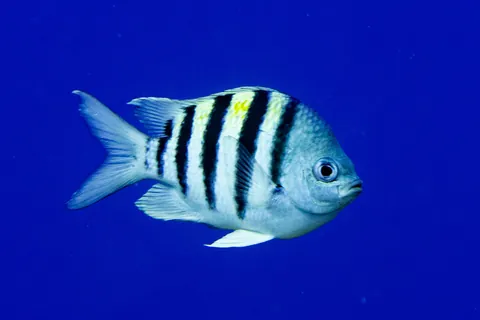
Atlantic Sergeant Major
Abudefduf saxatilis
Dascyllus aruanus
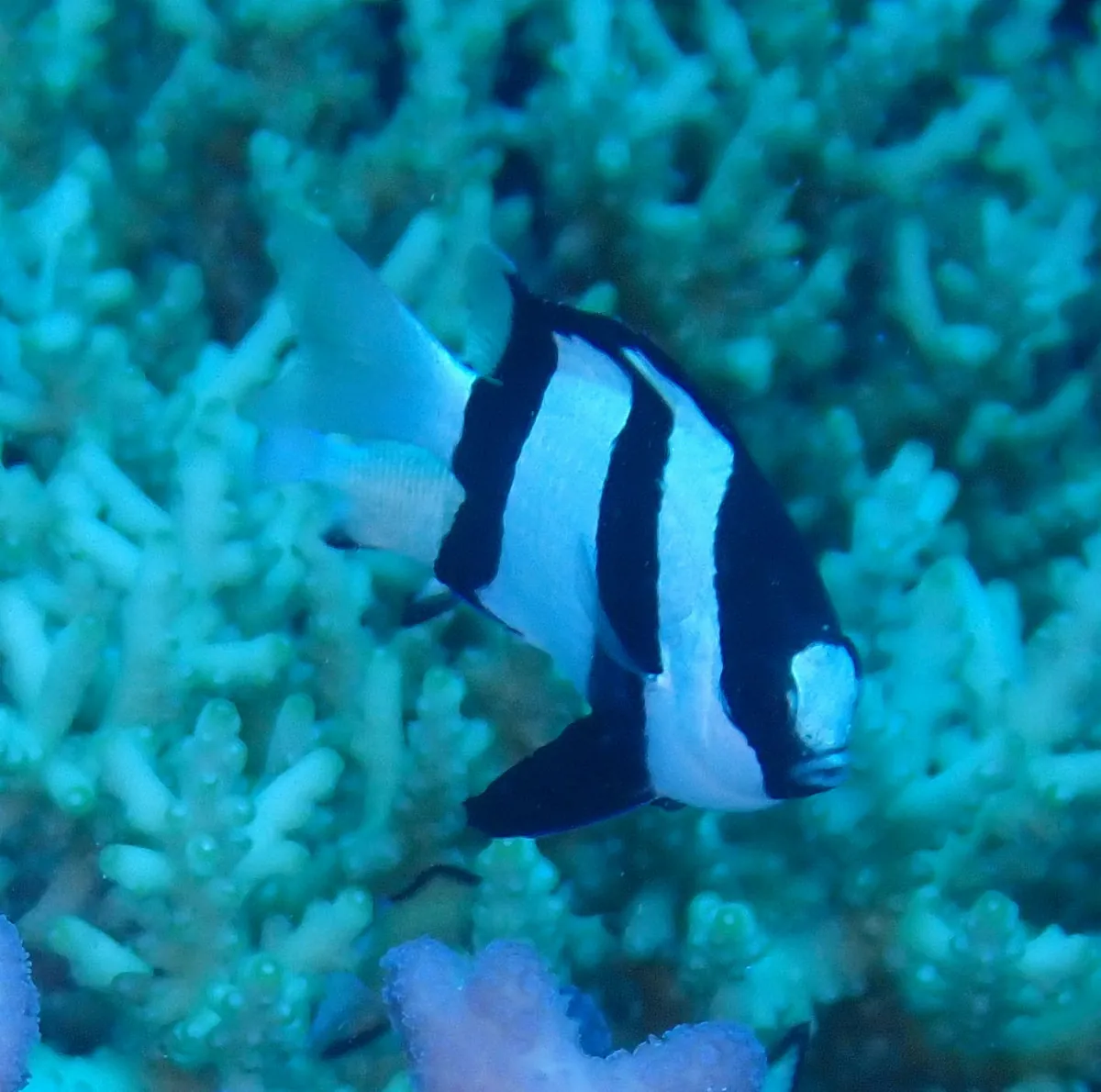
Known as the humbug because of its bold black and white bars, this tiny damselfish spends its whole life defending the same patch of coral. What it lacks in size it makes up for in attitude.
Also known as: white-tailed damselfish, white-tailed footballer, whitetail damselfish, whitetail dascyllus, zebra humbug, banded dascyllus, banded humbug, black and white damselfish, black-and-white damselfish, humbug damselfish, common humbug, white-tailed footballer, zebra humbug, whitetail dascyllus, white-tailed damselfish, three-striped damsel, damselfish, white tailed damselfish, humbug damselfish, black and white damselfish, banded humbug, threestripe damselfish, humbug, three-stripe damsel, white tailed damsel, banded humbug, three-stripe damselfish, whitetail dascyllus, white-tailed damselfish
It looks almost identical to a few close relatives, but the whitetail dascyllus has exactly three black bars; a fourth bar means you are looking at Dascyllus melanurus instead.
This is a small, deep-bodied fish, growing to about 10 cm but often seen at 6 cm. It is white with three black vertical bars and a small white spot between the eyes. Its mouth is small and it has a flattened spine near the fin bases. The colours stay the same throughout its life.
It lives above branching Acropora coral heads on shallow reefs, from the surface down to about 20 m, usually in groups of around 30 fish that rarely stray far from their home coral.
This fish is aggressive and highly territorial, guarding its coral head against almost any other species that comes close. It recognises members of its own species by their black and white pattern rather than by how they move, and juveniles stay close together in schools near their shelter.
Breeding happens daily rather than in a set season. A female can lay a new batch of eggs, sometimes up to two thousand, every two days, and males compete constantly to attract mates. The eggs are laid on the substrate and the male guards them until they hatch.
Warmer oceans are changing how this fish behaves, making it more mobile and less aggressive, which could shift the balance among the many species that share its reef.
Colonies of this fish fertilise their own coral home: by excreting waste as they feed, they help the coral store more energy and resist heat stress.
Describe what you saw and we name it, then keep every species you find in your Oceandex.