Boxfish
box_fish
Ostracion meleagris
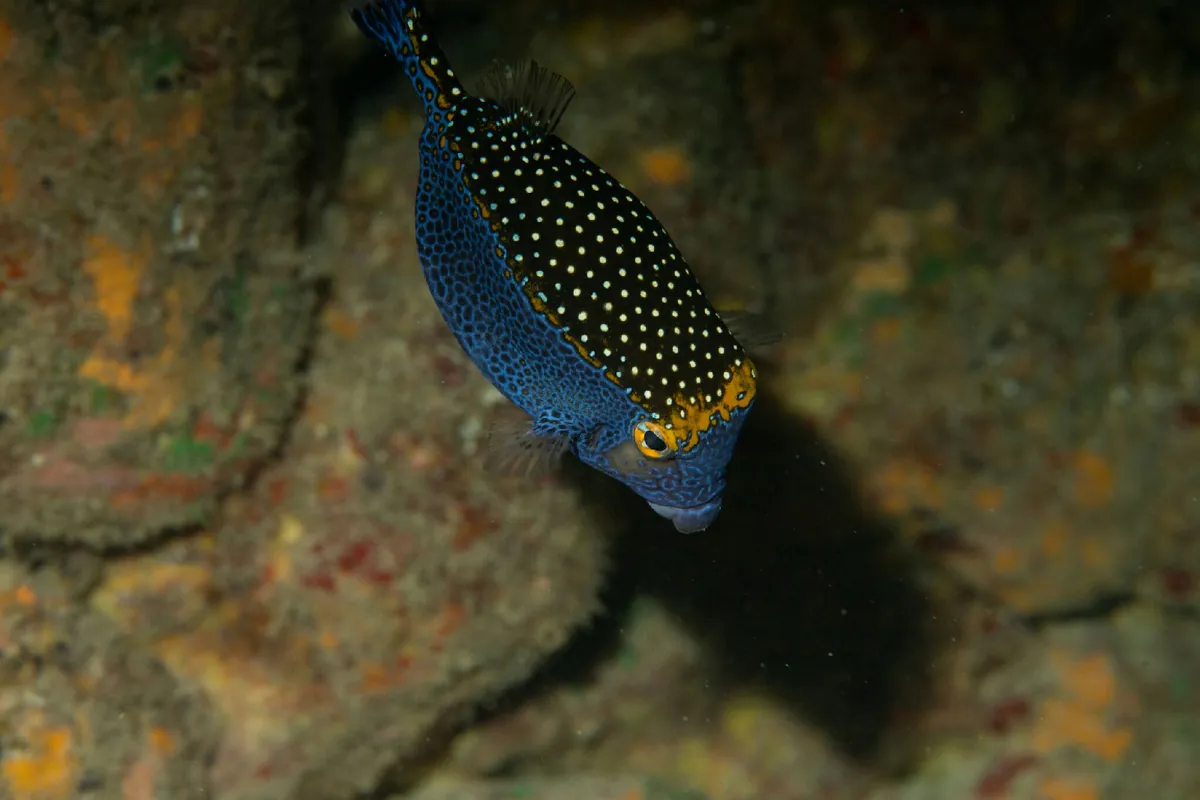
The whitespotted boxfish is a small, boxy reef fish of the Indo-Pacific, growing up to 25 cm long. Its body is encased in a rigid, bony shell, giving it a stiff, angular shape.
Also known as: blue-spotted boxfish, spotted boxfish, spotted trunkfish, pahu, whitespotted boxfish, spotted trunkfish, box, blue-spotted boxfish, spotted boxfish, black box-fish, ornate boxfish
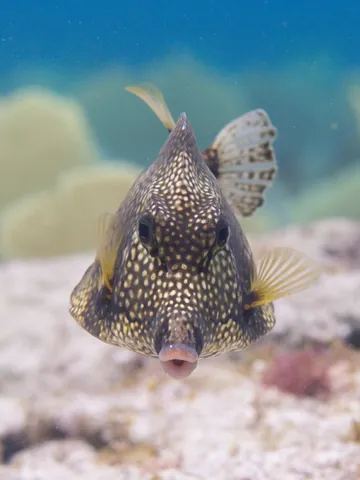
Other reef boxfish share the same rigid, box-shaped body, so shape alone will not confirm this species. Colour settles it: the blue, yellow-banded flanks of a male, or the all-over white spotting on a dark body in females and juveniles, are not matched together with that boxy shape by other Indo-Pacific boxfish.
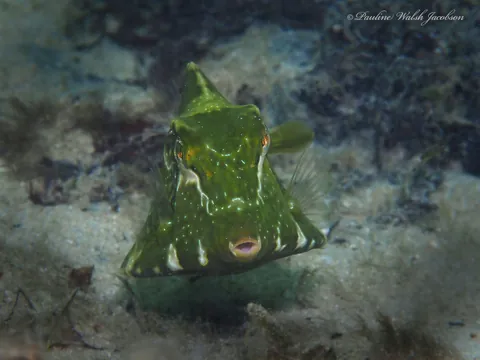
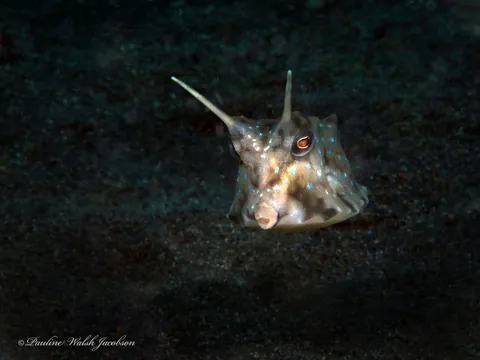
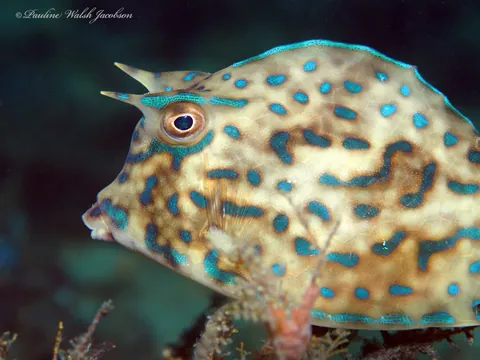
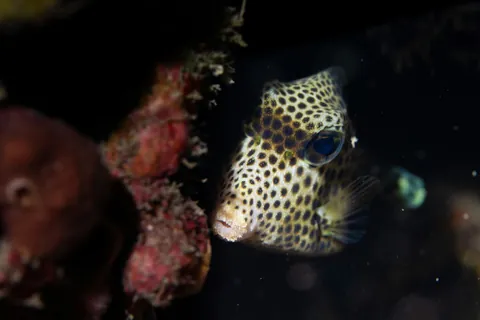
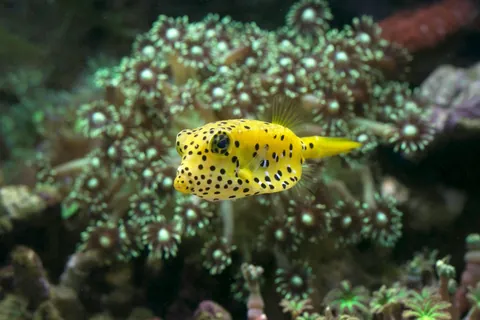
The body is enclosed in a hard box made of joined, hexagonal plates, with openings only for the mouth, eyes, gills, fins and tail. Males are blackish on the back with white spots, and have blue sides marked with bright yellow bands and spots. Females and young fish are dark brown to blackish, covered all over with white spots.
This fish lives on clear lagoon and seaward reefs, from the shallows down to about 30 m. Young fish shelter among rocky boulders, often close to long-spined sea urchins, while adults move out onto reef crests and slopes.
This species mates in the afternoon and early evening. A male circles and nudges a female, and the pair then swims side by side, rising well off the bottom before releasing their eggs and sperm together and returning to the reef.
This fish was first described in 1796 by the English naturalist George Shaw, who recorded its home waters simply as the South Pacific.
Describe what you saw and we name it, then keep every species you find in your Oceandex.